


How to Choose the Right Crate Size for Your Dog Without Guessing
Choosing a crate should feel straightforward, but many dog owners get stuck between sizes and end up guessing. Buy too small and your dog cannot stand, turn, or settle comfortably. Buy too large and potty training can become harder because the space stops feeling like a proper den. A reliable dog crate size guide starts with your dog’s actual measurements, then adjusts for age, body shape, and how you plan to use the crate.
If you have been wondering, “What size crate does my dog need?” the answer is usually not based on breed name alone. Two Labradors can need different crates if one is tall and lean and the other is stockier. The better method is to measure your dog, compare those numbers to crate dimensions, and then choose a setup that matches sleeping, training, or travel use.
How Dogs Should Fit Inside a Crate
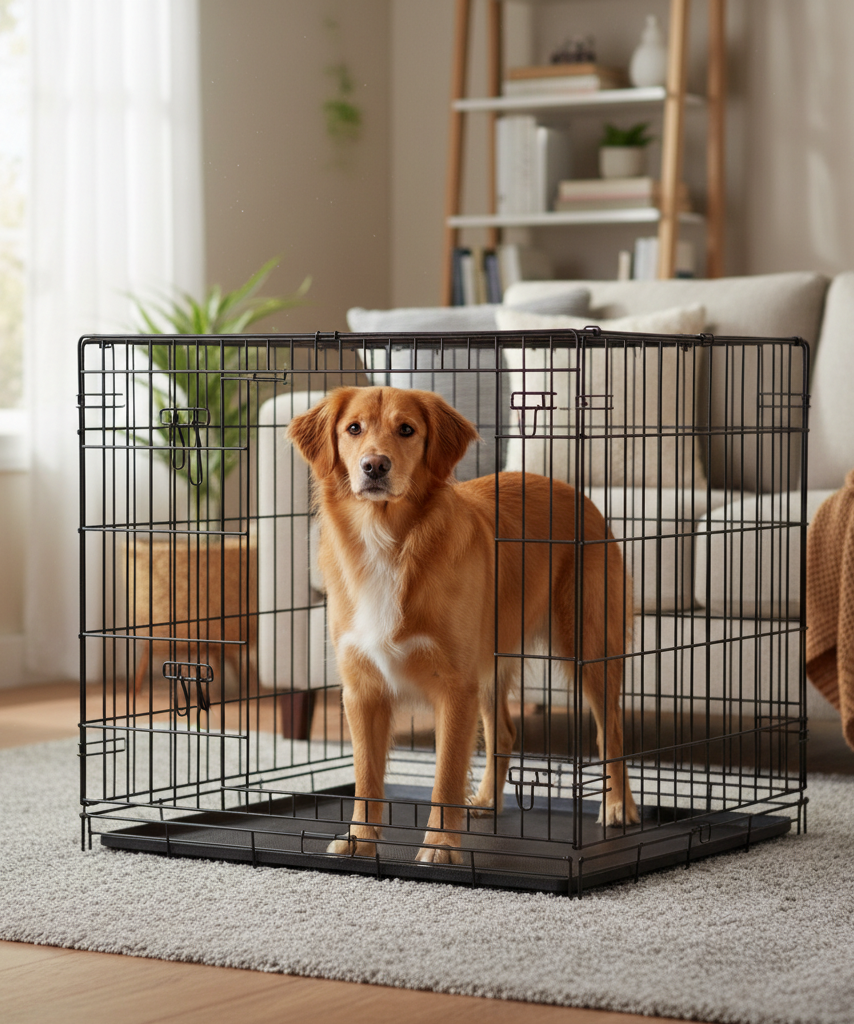
The right crate should let your dog do four basic things without strain:
- stand up without the ears or head rubbing the top
- turn around comfortably
- lie down on their side
- stretch into a natural resting position
That does not mean the crate should feel enormous. For home use and crate training, your dog should have enough room for comfort but not so much room that one end becomes a bathroom and the other becomes a bed. Think of it as comfortably spacious, not oversized.
A quick fit check looks like this:
- Length: your dog can lie down fully without being curled tightly against the walls
- Height: your dog can sit and stand with natural posture
- Width: your dog can turn around without bumping every side
Dogs that like to sprawl may benefit from slightly more floor space, while dogs that curl tightly can still need proper height. This is why crate sizing for dogs works best when you measure the individual dog instead of relying only on generalized size charts.
How to Measure Length and Height Correctly
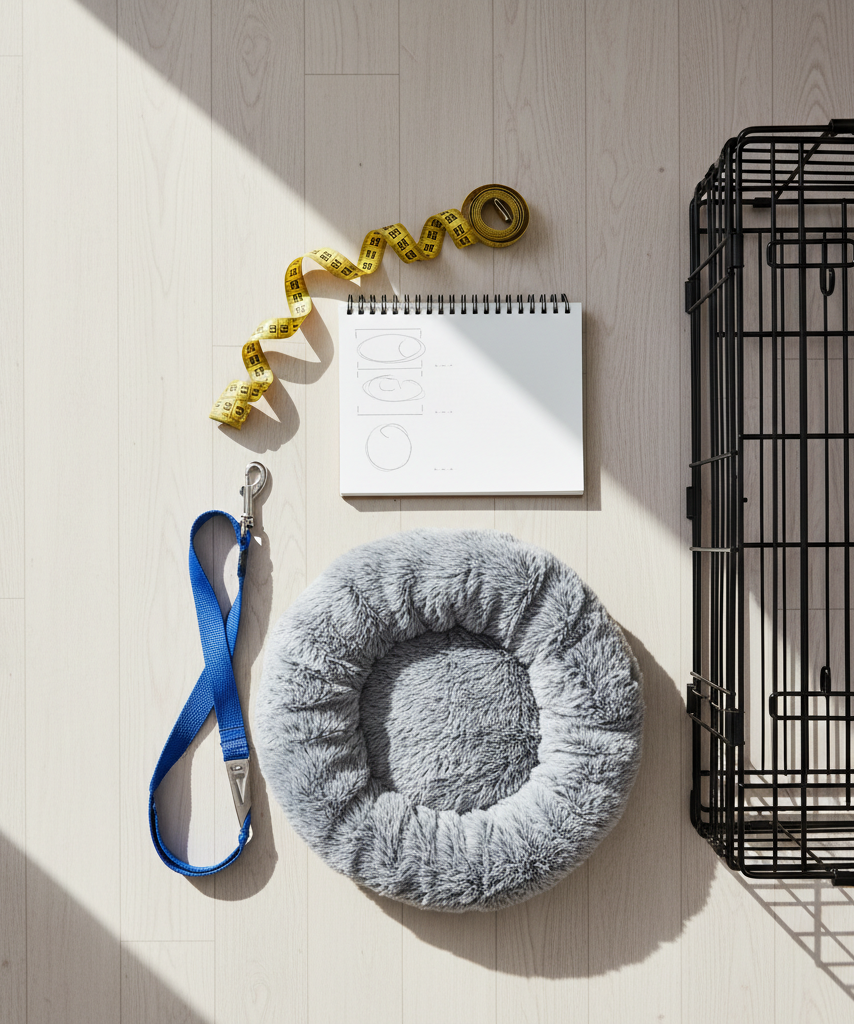
The easiest way to choose dog crate size is to measure two things:
1. Measure body length
Measure from the tip of your dog’s nose to the base of the tail. Do not include the full tail length. Once you have that number, add 2 to 4 inches to create a comfortable crate-length target.
2. Measure standing height
Measure from the floor to the top of your dog’s head or ears, whichever is taller when your dog is standing naturally. Then add 2 to 4 inches for crate height.
These two numbers will do more for you than a generic breed chart ever will.
Simple crate sizing formula
Use this practical formula:
- Crate length target = dog nose-to-tail-base length + 2 to 4 inches
- Crate height target = dog standing height + 2 to 4 inches
If your dog is between crate sizes, the better option depends on the situation:
- for house training, stay closer to the snug-but-comfortable fit
- for lounging or long rest periods, a bit more room is usually fine
- for large, strong dogs, structural durability matters as much as size
For example, if you are shopping for a stronger setup for a medium or large dog that tends to test latches or push on crate panels, a sturdier option like this <a href=”https://petgearhub.com/product/heavy-duty-escape-proof-metal-dog-crate-steel-kennel-dog-cage-with-3-doors-removable-tray-locking-wheels-medium-large-breeds/”>heavy-duty metal dog crate for medium and large breeds</a> makes the most sense only after you confirm the dimensions fit your dog’s measurements.
Puppy Crate Sizing vs Adult Dog Crate Sizing
Puppy crate sizing is where people overcorrect the most. They often buy a crate based on future adult size and give the puppy full access to all that space right away. That usually sounds efficient, but it can work against crate training.
A puppy should have enough room to stand, turn, and lie down, just like an adult dog, but not an oversized setup that encourages accidents. If you are buying for a growing dog, there are two smart options:
Option 1: Buy the adult crate and use a divider
This is usually the most cost-effective choice. The divider lets you shrink the usable area while your puppy is small, then expand it as they grow.
Option 2: Buy a temporary smaller crate
This can work well for toy or fast-growing breeds if you want an exact fit during early training, but it usually costs more in the long run.
Breed-size logic can help as a rough starting point, but it should stay secondary to real measurements:
- Toy and small breeds: often fit smaller crates, but coat volume and ear height can change the final choice
- Medium breeds: can vary widely in build, so measurement matters a lot
- Large and giant breeds: often need extra attention to both interior dimensions and crate strength
A tall, slim dog and a broad, muscular dog may need different crate styles even if their body weights look similar.
Common Crate Size Ranges Buyers See
Most shoppers run into standard crate lengths such as 24-inch, 30-inch, 36-inch, 42-inch, and 48-inch sizes. These labels are useful, but the outside label should never replace the inside measurement check.
Here is the safer way to use those common sizes:
24-inch crate
Best for many very small dogs.
30-inch crate
Often works for small-to-medium dogs.
36-inch crate
Common for medium dogs that need more turning room.
42-inch crate
Frequently chosen for larger breeds.
48-inch crate and up
Usually needed for extra-large or tall dogs.
The important thing is not the label itself. It is whether the crate’s internal usable dimensions match your dog’s body length and standing height.
Common Crate Sizing Mistakes Buyers Make
A lot of crate frustration comes from a few avoidable mistakes.
Choosing by breed only
Breed guides are helpful shortcuts, but they are not precise enough to answer “how to choose dog crate size” on their own. Mixed breeds, unusual body proportions, and individual differences make measuring essential.
Forgetting how the crate will be used
A crate for nighttime sleeping may not need the same setup as a crate used for daytime training, post-surgery rest, or occasional travel. Home and training crates are also different from soft-sided carriers or compact travel kennels.
Buying oversized “just in case”
Bigger is not always better. An oversized crate can undermine early potty training and make a nervous dog feel less secure.
Ignoring your dog’s sleeping style
Dogs that sprawl, sleep on their sides, or stretch their front legs out need enough floor space to rest naturally. Dogs that curl tightly still need proper standing height.
Looking only at exterior dimensions
Wall thickness, tray design, curved tops, and interior lip design can all reduce usable space. Always compare your dog’s measurements to the crate’s actual internal room when possible.
Overlooking crate strength
A correctly sized crate that bends, rattles, or fails at the latch is still the wrong crate. For bigger dogs, anxious dogs, or dogs with escape habits, build quality matters alongside dimensions.
How Use Case Changes the Best Crate Choice
The best dog crate size is not only about inches. It is also about purpose.
For crate training at home
Use a crate that feels secure and appropriately sized. This is where a balanced fit matters most.
For sleeping
Comfort matters more, especially for adult dogs with established house manners. A little extra room can be reasonable if the dog still feels settled.
For travel
Travel crates and carriers follow a different logic. They often prioritize portability, vehicle fit, and travel rules. That is why home crate sizing and carrier sizing should not be treated as the same decision.
For recovery or limited movement
If a vet has recommended restricted activity, follow that guidance first. In those cases, crate size may need to align with a specific recovery plan rather than ordinary home comfort.
A Quick Step-by-Step Way to Pick the Right Size
If you want the shortest path to the right answer, use this checklist:
- Measure your dog’s length from nose to base of tail.
- Measure your dog’s standing height from floor to top of head or ears.
- Add 2 to 4 inches to both measurements.
- Compare those numbers to crate dimensions, especially interior space.
- Adjust for puppy growth, sleeping style, and use case.
- If your dog is strong or anxious, also check crate durability and latch design.
That approach gives you a better answer than guessing, and it lowers the odds of buying twice.
Final Thoughts
The right crate should help your dog feel secure, not cramped and not lost in too much space. If you start with real measurements, think about how the crate will be used, and avoid the usual sizing mistakes, choosing becomes much easier.
When in doubt, do not ask only what size crate matches the breed. Ask whether your dog can stand, turn, and lie down comfortably inside the specific crate you are considering. That is the standard that actually works.
Leave a Reply