

Keeping your dog hydrated sounds simple until you are halfway through a sunny walk, stuck in traffic on a summer road trip, or pausing at a trailhead with a panting dog that suddenly looks more tired than excited. At home, water is always nearby. Outside, hydration becomes something you have to plan.
If you have ever wondered how to keep your dog hydrated on walks without carrying a bulky setup, or you need better dog travel water tips for longer outings, the solution is not just “bring water.” The real answer is to match your dog's water routine to the outing, the weather, the terrain, and the gear you carry.
This guide breaks down what dehydration can look like before it becomes serious, how often to offer water during walks and travel, which portable hydration tools make life easier, and which common mistakes quietly increase risk.
Why outdoor hydration matters more than most owners expect
Dogs lose water faster outdoors than many people realize. Panting, excitement, warm pavement, dry air inside cars, elevation changes, and longer periods between normal bathroom or meal breaks all affect hydration. Even a dog that seems energetic can go from “fine” to overheated faster than expected when activity and temperature stack up.
Hydration also affects more than thirst. A well-hydrated dog is usually better able to regulate body temperature, recover after activity, and stay comfortable during long stretches in the car. That matters whether you are doing a quick neighborhood loop, spending the day at the park, or packing for a weekend trip.
Signs your dog needs water sooner than you think
Some dogs do not stop and ask for water in an obvious way. Instead, they show small changes that are easy to miss if you are focused on the route, traffic, or your own pace.
Watch for these early clues:
- heavier or faster panting than usual
- slowing down on a walk when your dog is normally eager
- a dry-looking tongue or sticky gums
- less interest in treats during activity
- repeatedly seeking shade, cool grass, or damp ground
- lingering near puddles or trying to drink from unsafe water sources
- looking tired or distracted during a road-trip stop
More concerning signs include lethargy, glazed eyes, vomiting, stumbling, or gums that feel tacky instead of moist. If your dog seems weak, confused, or unable to cool down, stop the outing and get veterinary help promptly.
The important part is not waiting until your dog looks dramatically dehydrated. The smartest dog travel water tips are preventive: offer water early and regularly instead of treating hydration as an emergency fix.
How often to offer water during walks and travel
There is no perfect one-size-fits-all schedule, because a senior bulldog on a warm sidewalk and a young border collie on a cool forest trail are not using water the same way. Still, a practical routine works better than guessing.
On everyday walks
For short walks in mild weather, many dogs can wait until they get home, but that does not mean they should have to. If the walk is longer than about 30 minutes, the weather is warm, or your dog pants heavily, start offering a small drink during the outing.
A simple rule of thumb:
- short mild-weather walk: bring water if your dog is small, older, flat-faced, or heat-sensitive
- 30 to 60 minute walk: offer water at least once midway
- longer or hotter walk: offer water every 15 to 20 minutes in small amounts
Small, frequent drinks are usually better than waiting for one huge gulp at the end.
During road trips
Cars create a different hydration pattern. Even with air conditioning, travel can dry dogs out because they pant from excitement, stress, confinement, and unfamiliar surroundings. On long drives, offer water every time you stop and consider giving a few small sips at shorter intervals if the dog is alert and interested.
A practical road-trip rhythm looks like this:
- offer water before loading into the car
- offer a few sips at the first stop, even if your dog seems fine
- repeat at every bathroom or stretch break
- use longer breaks in hot weather so your dog can cool down before drinking more
If your dog tends to drink too fast and then feel nauseous in the car, use controlled portions rather than filling a large bowl all at once.
On hikes, beach days, and outdoor adventures
Activity raises water needs quickly. Hiking on uneven terrain, running on sand, playing fetch at the park, or spending time in exposed sun all increase fluid loss. Offer water before your dog looks tired, not after.
For active outings, think in checkpoints:
- before starting
- after the first burst of activity
- every rest break
- anytime panting spikes or pace drops
- again before returning to the car
If the weather is hot, humid, or there is little shade, shorten the interval between water breaks. This is one of the most useful habits for anyone searching for how to keep your dog hydrated on walks and hikes without overcomplicating the routine.
Best portable hydration tools for outings
The best gear is the gear you will actually carry and use. A perfect hydration setup that stays in the trunk is less helpful than a compact bottle or collapsible bowl that goes with you every time.
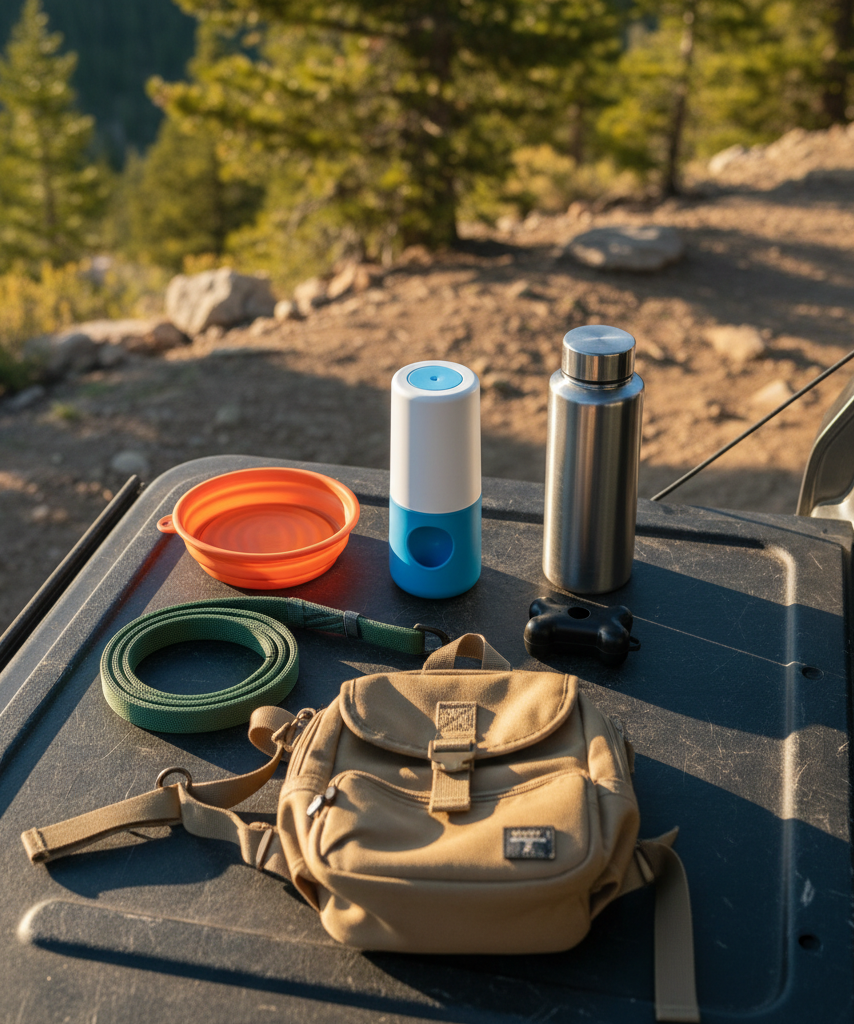
Portable dog water bottles
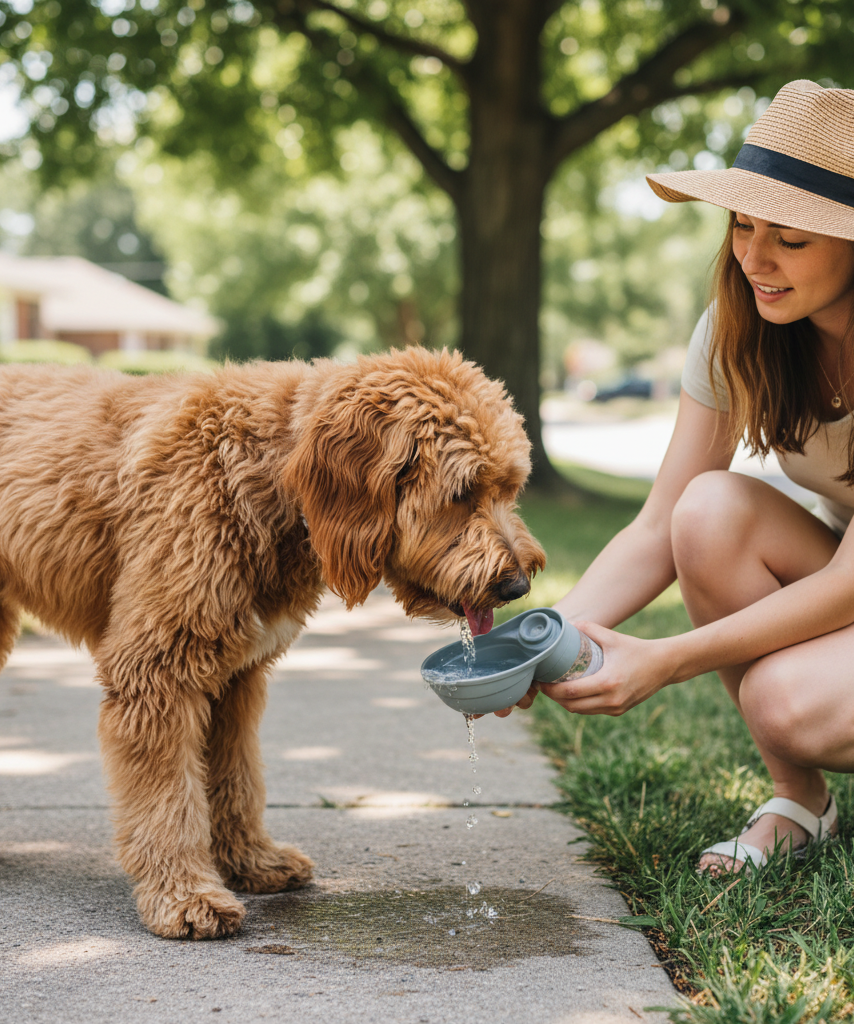
A portable dog water bottle is one of the easiest tools for walks, errands, and quick park visits. Many designs let you squeeze or release water into a small attached bowl, which reduces mess and makes it easier to offer a controlled amount.
Look for features like:
- easy one-hand use while holding a leash
- leak-resistant locking design
- enough capacity for the length of your outing
- a bowl shape your dog will actually drink from
- simple cleaning, especially around seals and lids
Portable dog water bottle tips that matter in real life: test the bottle at home first, teach your dog to drink from it before travel day, and refill it before every outing instead of assuming yesterday's water is enough.
Collapsible travel bowls
A foldable bowl works well for longer walks, trail stops, camp setups, and multi-dog outings. It is also useful when you want to let your dog drink at a calmer pace than some squeeze bottles allow.
Travel bowls are especially handy when:
- you expect longer rest stops
- your dog dislikes bottle-style dispensers
- you are carrying extra water in a larger flask or pack
- you have more than one dog sharing a stop
Silicone bowls are lightweight and easy to rinse, while sturdier travel bowls may be better for larger dogs or rougher outdoor use.
Insulated water storage
For hot days, cool water can encourage better drinking. Insulated bottles or flasks help on longer outings by keeping water from getting unpleasantly warm in the sun or in a parked bag. You do not need ice-cold water, but lukewarm water sitting for hours in heat is less appealing to many dogs.
Travel feeding and watering gear
Some outings blur the line between hydration and routine care. If you are gone for most of the day, you may want gear that supports both food and water breaks. Spill-resistant bowls, clip-on bowls for crates or car setups, and organized travel kits make it easier to stay consistent when the day gets busy.
The best dog travel water tips are not about buying the most gear. They are about removing excuses so offering water feels automatic.
Hot-weather mistakes that increase dehydration risk
Most hydration problems on outings come from timing mistakes, not neglect. Owners often bring water, but they bring too little, offer it too late, or underestimate how the environment changes what their dog needs.
Mistake 1: Waiting until your dog is clearly thirsty
By the time your dog is gulping desperately, panting hard, and searching for muddy puddles, you are already behind. Offer small drinks early and often.
Mistake 2: Assuming the car is a cool recovery zone
Even with air conditioning, a dog can stay warm and excited after activity. If your dog hops straight from a hot trail into the car, do not assume the problem is solved instantly. Pause in shade, let breathing settle a bit, and offer water before the ride continues.
Mistake 3: Counting on public water sources
Parks, campgrounds, and rest areas are unpredictable. Water fountains may be broken, bowls may be dirty, and natural water may be unsafe due to bacteria, algae, parasites, or runoff. Bring your own water every time.
Mistake 4: Forgetting that some dogs are higher risk
Flat-faced breeds, puppies, seniors, overweight dogs, thick-coated breeds, and dogs with certain medical conditions can dehydrate or overheat faster. For these dogs, “normal summer walk” rules may not be safe enough.
Mistake 5: Making the outing too long for the conditions
No bottle can completely fix a bad timing decision. If pavement is hot, shade is limited, and your dog is panting heavily within minutes, shorten the route. The smartest move is often changing the plan.
Smart hydration routines for different scenarios
Neighborhood walk in warm weather
Bring a small portable bottle, leave with your dog already hydrated, and offer a quick drink halfway through. Choose shady routes when possible and shorten exposure on reflective pavement.
Dog-friendly road trip day
Pack a dedicated travel water kit in an easy-to-reach spot, not buried under luggage. Offer water before departure, at every rest stop, and once more before you resume driving after active breaks.
Park play session
Excitement makes many dogs ignore thirst until they are worn down. Build in pauses every 10 to 15 minutes, especially during fetch or group play, and lead your dog to water instead of waiting for self-regulation.
Hiking or outdoor adventure
Carry more water than you think you need, especially if there is elevation gain, direct sun, or no reliable shade. Pair every rest break with a water offer so hydration becomes part of the routine rather than a separate decision.
How to tell if your hydration plan is working
A good plan looks boring in the best way. Your dog stays interested, recovers well after activity, and does not hit a wall halfway through the outing. Drinking happens without drama because you are not waiting too long between offers.
You are probably on the right track if your dog:
- maintains a steady pace instead of fading quickly
- drinks willingly during breaks
- cools down normally after activity
- is not frantically searching for water
- returns home tired but comfortable, not flattened
If your dog consistently refuses water outdoors, practice with the same travel gear at home, use calmer breaks, and try cooler water or a different bowl shape. Sometimes the issue is not thirst; it is unfamiliar equipment or too much stimulation.
Final takeaway
The simplest answer to how to keep your dog hydrated on walks, road trips, and outdoor adventures is this: plan water breaks before your dog asks for them, carry gear that fits the outing, and adjust faster when heat, distance, or excitement change the equation.
For most owners, hydration gets easier when they build a repeatable system: water before leaving, portable gear within reach, small drinks during the outing, and no reliance on finding water somewhere else. That routine is what turns good intentions into safer walks, smoother travel days, and much more comfortable adventures for your dog.
Leave a Reply