


What Size Pet Carrier Does Your Dog or Cat Need for Comfortable Travel?
If you are asking, “what size pet carrier do I need,” the short answer is this: your dog or cat should be able to stand up naturally, turn around without folding awkwardly, and lie down in a comfortable resting position. A carrier that is too small feels cramped and stressful, while one that is too large can leave your pet sliding around and less secure during travel. The right size sits in the middle: roomy enough for comfort, snug enough to feel stable.
That is why a good pet carrier size guide starts with your individual pet rather than a generic small-medium-large label. Breed size helps a little, but body length, shoulder height, weight, coat fluff, and travel style matter more. Whether you need a dog carrier size guide for a small pup or a cat carrier size chart mindset for a nervous adult cat, the best choice comes from a few simple measurements and a realistic comfort check.
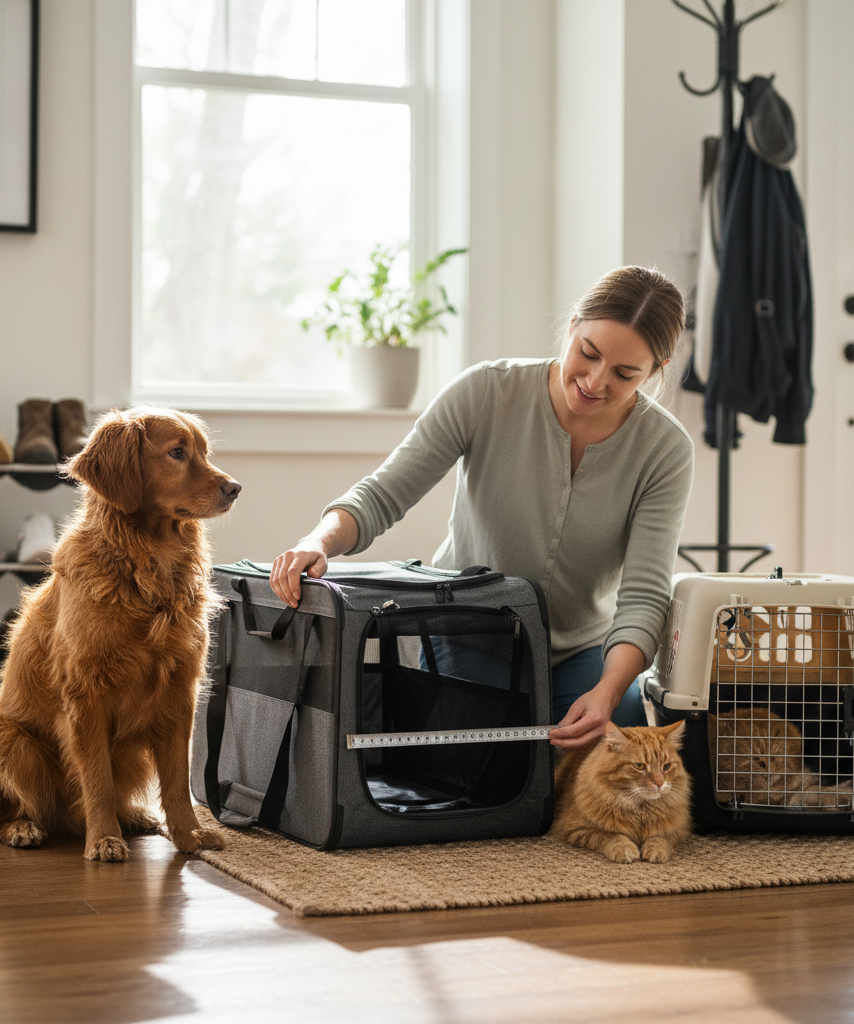
Why Carrier Sizing Matters More Than Most Owners Expect
A carrier is not just a container for transport. It affects comfort, stress level, ventilation, and how safe your pet feels while moving through the car, vet clinic, or airport.
Too small feels restrictive and stressful
When a carrier is undersized, your pet may hunch, press against the roof, or struggle to reposition. That can make even a short trip feel much longer.
Common signs a carrier is too small include:
- your pet cannot stand without the ears or head touching the top the whole time
- turning around requires twisting or backing out awkwardly
- the tail, paws, or body press hard against the sides when lying down
- your pet seems tense before the trip even starts
- airflow feels limited because the body fills too much of the interior space
Too large is not automatically better
Owners sometimes assume extra room is always more comfortable, but a carrier that is overly spacious can create its own problems. During travel, your pet may slide, brace constantly, or feel exposed rather than secure.
A too-large carrier can lead to:
- less stable footing during turns or bumps
- a less enclosed, less den-like feeling for anxious pets
- wasted space that makes the carrier harder to carry
- choosing a size that no longer fits your travel setup well
That is why the goal is not maximum space. It is functional comfort.
How to Measure Your Pet for a Carrier
If you want a reliable dog carrier size guide or cat carrier size chart approach, start with three core measurements instead of guessing from breed labels alone.
1. Measure body length
Measure from the chest area to the base of the tail while your pet is standing naturally. For many carriers, this is the most important number because it tells you how much floor space your pet needs to lie down without curling too tightly.
2. Measure shoulder or seated height
Measure from the floor to the top of the shoulders, or for some pets from the floor to the top of the head when seated upright if that reflects how they naturally ride. This helps you judge whether the interior height allows comfortable posture.
3. Check current weight and body shape
Weight matters, but it is not enough by itself. Two pets at the same weight can need very different carriers if one is long and lean while the other is compact and broad.
When measuring, keep these practical tips in mind:
- measure while your pet is calm and standing normally
- add a little comfort allowance rather than choosing an exact body match
- account for thick coats if your cat or dog is especially fluffy
- remeasure puppies, kittens, or pets still changing body condition
A Simple Pet Carrier Size Guide for Comfortable Fit
Once you have measurements, compare them against the usable interior dimensions, not just the exterior shell. Handles, curves, padding, and tapered walls can all reduce the real interior room.
Your pet should pass these fit checks
A properly sized carrier should allow your pet to:
- stand up without being forced into a crouch the entire trip
- turn around without getting stuck or scraping the sides
- lie down in a natural resting position
- settle without the back or head pressing constantly into the roof
If your pet can technically fit but cannot relax, the size is probably not right.
Comfort fit beats “squeeze fit”
One of the most common mistakes is picking the smallest carrier the pet can be pushed into. That might work for a very short move, but it is rarely the best choice for comfort travel.
A better rule is this: if your dog or cat looks folded, compressed, or stuck in one posture, go up a size. If the interior seems so oversized that your pet shifts around dramatically, go down or look for a better-shaped model instead of just a larger one.
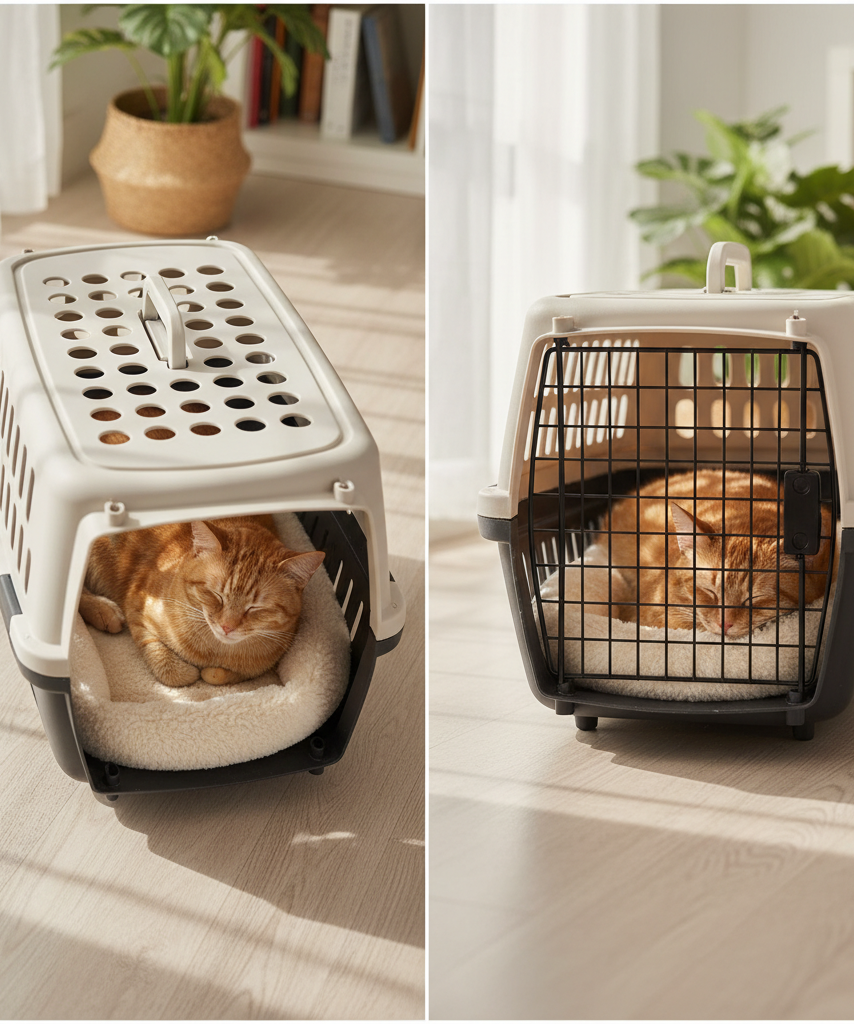
Signs a Carrier Is Too Small or Too Large
Fit problems become obvious once you know what to watch for.
Signs the carrier is too small
Watch for these red flags:
- your pet immediately crouches with no chance to reposition
- the ears, head, or back stay pressed against the top
- turning around looks difficult or impossible
- your pet pants, vocalizes, or resists entry more intensely than expected
- bedding or padding leaves almost no remaining room
Signs the carrier is too large
A carrier may be too large if:
- your pet slides side to side during movement
- your pet cannot brace comfortably because the interior is oversized
- the carrier feels bulky compared with your pet’s body
- your pet stays in one corner and seems less settled rather than more relaxed
The best carrier size for dogs and cats usually feels stable, breathable, and easy for the pet to settle into after a short adjustment period.
Soft-Sided vs Hard-Sided Sizing Considerations
Carrier dimensions do not behave the same way across styles. A soft-sided model and a hard-sided model with similar listed dimensions can feel very different in use.
Soft-sided carriers have more flex, but less structure
Soft-sided carriers can be excellent for lighter pets, closer body fit, and situations where a little flexibility helps. They often feel cozier and may work well when your pet likes an enclosed den-like space.
But sizing still matters because:
- soft walls can press inward when lifted
- thick padding or curved tops can reduce practical room
- a pet who leans heavily may make the interior feel smaller in transit
For soft carriers, avoid going too tight just because the material has some give.
Hard-sided carriers provide clearer usable shape
Hard-sided carriers usually make it easier to judge actual interior room because the walls hold their shape. They can feel more secure for many cats and are often a better choice when you want a stable footprint.
They are especially useful when:
- your pet prefers a firmer enclosed space
- you want more predictable structure during car travel
- you need clear ventilation openings and solid support
- your pet dislikes sagging or shifting sides
A cat carrier size chart mentality often works best with hard-sided carriers because the internal shape stays more consistent.
Travel Comfort and Ventilation Tips
Correct sizing is the foundation, but comfort also depends on what happens inside the carrier.
Do not fill the interior with bulky extras
A thick blanket, oversized bed, or too many accessories can quietly shrink the usable space. Add comfort, but leave enough room for posture changes.
Prioritize airflow and calm positioning
A comfortable travel setup should include:
- strong ventilation on multiple sides
- bedding that adds grip without taking over the floor space
- placement that keeps the carrier level during transport
- a calm introduction before the actual trip
Test before a long trip
Before using a new carrier for a longer outing, do a short at-home test. Let your pet enter, turn, settle, and rest for a few minutes. This is often the fastest way to tell whether the fit is practical or just theoretically acceptable.
Dog Carrier Size Guide vs Cat Carrier Size Chart Thinking
Dogs and cats often use carriers differently, so the fit check should reflect behavior as well as dimensions.
Dogs often need more posture flexibility
Small dogs may shift more, look outward more often, and adjust position repeatedly during travel. That means a dog carrier size guide should focus on whether the dog can reposition without feeling cramped.
Cats usually value secure, stable enclosure
Cats often benefit from a carrier that feels protected and structured. They still need enough room to stand, turn, and lie down, but an overly open or overly large carrier can feel less reassuring.
This is why cat owners should not automatically size up dramatically in search of comfort. Stability matters too.
Final Answer: What Size Pet Carrier Do You Need?
Choose a carrier that lets your dog or cat stand naturally, turn around comfortably, and lie down without being cramped, while still feeling stable during movement. Use your pet’s actual body measurements, compare them to the real interior dimensions, and then sanity-check the fit with a short trial before travel.
If you are stuck between two options, do not think only in terms of bigger or smaller. Think in terms of posture, stability, ventilation, and how your specific pet behaves inside enclosed spaces. That is the most reliable way to choose a carrier that supports comfortable travel instead of adding unnecessary stress.


Leave a Reply