


Treat-Dispensing Dog Toys: Are They Good for Bored Dogs?
Yes, treat-dispensing dog toys can be very good for bored dogs when the boredom comes from under-stimulation rather than just a lack of physical exercise. They work best for food-motivated dogs that need a job to do indoors, but they are not automatically the best answer for every dog. Some dogs do better with puzzle toys, chew toys, or scent-based enrichment depending on how they play and what keeps them engaged.
If your dog seems restless, follows you around the house, raids the trash, or turns every cushion into a project, a treat toy can help by slowing feeding down and turning snack time into problem-solving time. The real question is not whether treat-dispensing toys are “good” in general. It is whether they are the right boredom tool for your dog.
Quick Answer: When Are Treat-Dispensing Toys a Good Choice?
Treat dispensing dog toys are a strong option when your dog enjoys food rewards, gets bored between walks, or needs a calmer solo activity. They are especially useful for dogs that eat too fast, dogs that need indoor enrichment on bad-weather days, and beginner dogs that get frustrated by advanced puzzle toys.
They are usually a good fit when your dog:
- stays motivated by kibble or treats
- enjoys nudging, pawing, rolling, or chasing toys
- needs something more engaging than a plain chew
- gets bored during quiet hours at home
- can work independently for short periods without giving up
They are usually a weaker fit when your dog:
- is not food motivated
- gets overstimulated by rolling or bouncing toys
- destroys plastic toys by heavy chewing
- needs a harder challenge than simple reward release
How Treat-Dispensing Dog Toys Work
Treat-dispensing toys reward movement and persistence. The dog rolls, bats, mouths, or nudges the toy, and food drops out. That immediate cause-and-effect loop is why these toys often work well as dog treat toys for boredom. They give the dog a small, clear task with a visible reward.
Unlike a regular bowl, the toy slows food access down and makes the dog participate in getting it. Unlike a more advanced board puzzle, the challenge often feels intuitive from the start. That makes treat-dispensing toys one of the easiest entry points into enrichment.
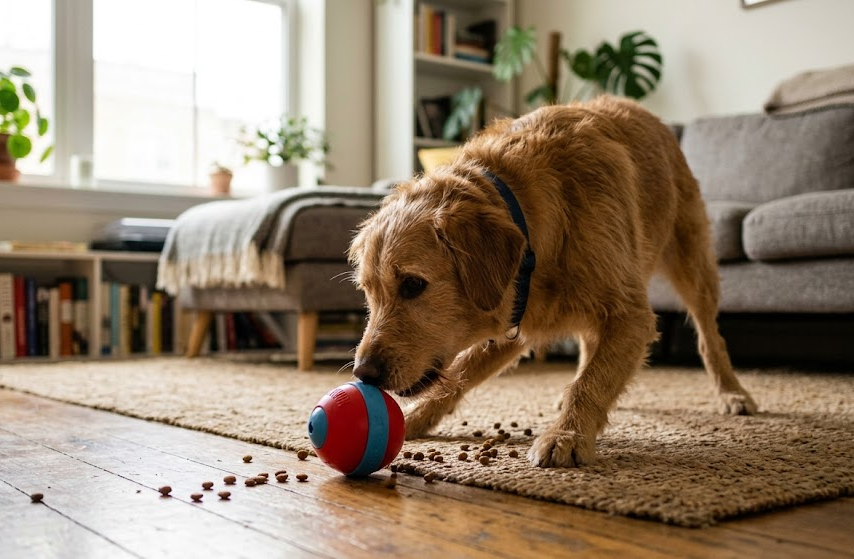
A good toy in this category usually does one or more of these things:
- slows down meals or snack delivery
- encourages repeated problem-solving behavior
- extends engagement beyond a few seconds
- gives the dog a reward for calm effort instead of frantic excitement
That last point matters. Good boredom solutions should leave a dog feeling satisfied, not more wound up than before.
Which Dogs Benefit Most From Treat Toys
Not every bored dog is bored for the same reason. Some need to forage, some need to chew, and some need a more complex mental challenge. Treat-dispensing toys help most when the dog enjoys working for food and benefits from a repeatable, low-friction activity.
Best for food-motivated dogs
These toys are often ideal for dogs that light up around meals. If your dog will happily work for kibble, freeze-dried treats, or tiny training rewards, a treat toy can turn that motivation into a useful daily outlet.
A simple option like this treat-dispensing dog food ball can fit well for beginners because it combines movement, food reward, and easy setup. It is a natural match for owners looking for interactive dog toys for boredom without jumping straight into complicated multi-step puzzles.
Good for dogs that get bored indoors
Apartment dogs, dogs on rainy-day schedules, and dogs recovering from mild injury often need more indoor enrichment, not just another plush toy. A treat-dispensing toy can make ten quiet minutes at home feel like a real task.
Good for fast eaters
Many dog enrichment feeders work well because they turn part of the daily meal into activity. A treat-dispensing toy can help a dog eat slower while also reducing the boredom that comes from gulping food down in sixty seconds.
Less ideal for heavy destroyers
If your dog tends to crush hard plastic, rip rubber seams, or chew through toys once the treats are gone, this category needs more caution. In that case, a tougher chew toy or supervised enrichment setup may be safer and more satisfying.
Pros and Cons Compared With Puzzle Toys and Chew Toys
Treat-dispensing toys are useful, but they are not the universal winner. Comparing them with other dog boredom toys makes it easier to choose the right tool.
Treat-dispensing toys vs puzzle toys
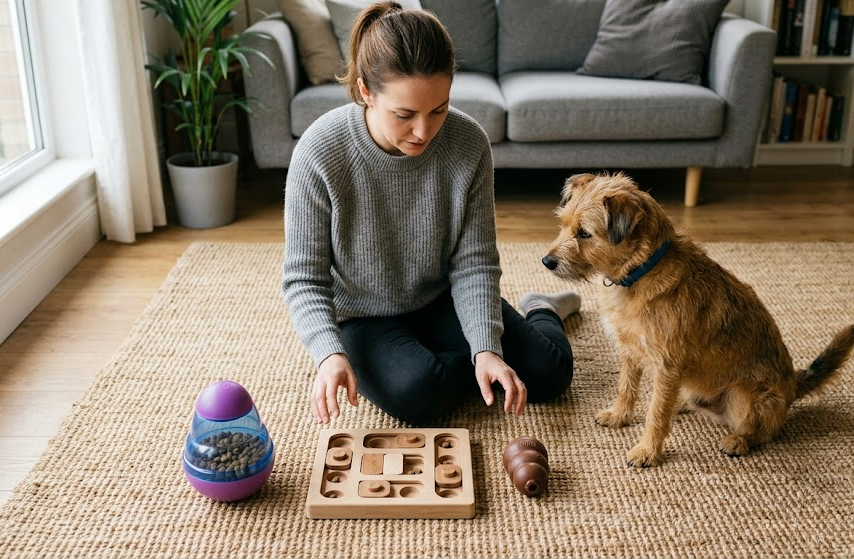
Treat toys are usually easier to understand. The dog moves the toy and gets rewarded. Puzzle toys often require more deliberate actions, such as sliding panels or lifting lids.
Treat-dispensing toys are usually better when:
- your dog is new to enrichment
- you want a lower-frustration activity
- you need something easy to reset
- your dog enjoys movement-based play
Puzzle toys are usually better when:
- your dog solves easy toys too quickly
- your dog likes using paws as well as nose
- you want a more mentally demanding challenge
- your dog stays patient without becoming frantic
Treat-dispensing toys vs chew toys
Chew toys are usually better for dogs that need mouth-based satisfaction and stress relief. Treat-dispensing toys are better for dogs that need a reward loop and light problem-solving.
Chew toys often win when the dog wants to:
- gnaw for long stretches
- decompress after excitement
- satisfy teething or chewing urges
- stay busy without chasing a toy around the room
Treat toys often win when the dog wants to:
- hunt for food
- push objects around
- interact with a changing reward pattern
- turn meals into enrichment
So are they “good” for bored dogs?
Yes, but mainly for the kind of boredom that responds to food-led problem-solving. If your dog is bored because it needs to sniff, shred, chew, or solve a harder puzzle, a treat-dispensing toy may help only partly.
Common Feeding and Calorie Mistakes
This is where many good enrichment ideas go wrong. A treat toy can help with boredom, but it can also quietly add too many calories if owners treat it like bonus entertainment instead of part of the feeding plan.
The most common mistakes are:
Adding extra treats instead of using part of the daily food
If you fill the toy on top of regular meals, calories climb fast. For many dogs, the smarter move is to use part of the dog’s measured kibble or meal portion inside the toy.
Making the reward too easy and too rich
Very large, sticky, or high-value treats can turn the toy into a calorie bomb with almost no real challenge. Smaller rewards usually create better repetition and better pacing.
Using the toy too long when the dog is getting frustrated
Enrichment should feel productive, not irritating. If the toy is nearly empty and the dog is now slamming it around, the session has probably passed its useful point.
Ignoring digestive sensitivity
Some dogs do poorly with sudden treat changes. If you are introducing a new enrichment routine, start with familiar foods and short sessions.
How to Clean and Use Them Safely
The best treat dispensing toys for dogs are not just fun. They are also easy to wash, inspect, and use consistently.
A few practical rules make a big difference:
- clean the toy regularly so oils and food residue do not build up
- check seams, holes, and edges for wear before each reuse
- choose a size your dog cannot swallow or wedge awkwardly in the mouth
- supervise new toys until you know how your dog uses them
- rotate enrichment options so the toy stays interesting
If the toy has tight food channels, cleaning matters even more. Residue trapped inside can smell bad, attract bacteria, and make the toy less appealing over time.
How to Decide Whether a Treat Toy Is the Right Boredom Solution
Use this quick checklist before buying or relying on one:
- Does your dog genuinely care about food rewards?
- Does your dog enjoy batting, nudging, or chasing objects?
- Does your dog need calmer indoor enrichment rather than harder training work?
- Can the toy be used with part of the daily ration instead of extra treats?
- Is the material appropriate for your dog’s chew strength?
If you answer yes to most of those, treat-dispensing toys are probably a worthwhile boredom tool for your dog. If not, you may get better results from scent games, chew enrichment, or more advanced puzzle feeders.
Summary Takeaway
Treat-dispensing dog toys are good for many bored dogs because they combine food motivation, movement, and problem-solving in a format that is easy to introduce. They are especially useful for food-driven dogs, indoor boredom, and meal-based enrichment. They are less effective for dogs that are not food motivated, destroy toys aggressively, or need a more complex challenge than rolling a reward out.
The best choice is not the toy category with the most hype. It is the one that matches how your dog actually likes to work.
FAQ
Are treat-dispensing toys better than puzzle toys for dogs?
They are often better for beginners and food-motivated dogs because the challenge is easier to understand. Puzzle toys can be better for experienced dogs that need a harder mental workout.
Can treat toys make a dog gain weight?
Yes, if owners add extra calories instead of using part of the regular meal inside the toy. Portion control matters.
How long should a dog use a treat-dispensing toy?
For many dogs, five to fifteen minutes is enough for one productive session. Stop sooner if frustration starts replacing focused engagement.
Are treat-dispensing toys safe for aggressive chewers?
Not always. Some are better for nudging and rolling than for heavy chewing, so material strength and supervision matter.
Leave a Reply