

Dog Toys for Aggressive Chewers: What Lasts and What to Avoid
If your dog destroys most toys in minutes, the best dog toys for aggressive chewers are usually made from dense natural rubber, durable nylon, or thick braided rope used under supervision, while thin latex, low-grade plush, and brittle plastic are the materials most likely to fail fast or break into unsafe pieces.
Dogs that chew hard need more than a “cute” toy. They need something matched to bite strength, chewing style, and body size. A toy that works for a gentle retriever may be shredded instantly by a determined power chewer, and once pieces start coming off, the issue shifts from frustration to safety.
This guide breaks down what tends to last, what tends to fail, and how to choose safer, more durable dog chew toys without wasting money on products that are clearly the wrong fit.
Quick answer: what lasts best for aggressive chewers?
For most heavy chewers, the safest starting point is this order:
- Dense natural rubber toys for dogs that like to compress, gnaw, and carry toys around.
- Tough nylon chew toys for dogs that prefer long, repetitive chewing sessions.
- Heavy rope toys for supervised tug and short chewing sessions, not all-day unsupervised use.
- Treat-dispensing puzzle toys when you need durability plus slower engagement.
What usually fails fastest:
- thin plush toys with exposed seams
- soft latex toys that collapse under pressure
- brittle plastic toys that crack
- toys with glued-on parts, small squeakers, ribbons, or decorative pieces
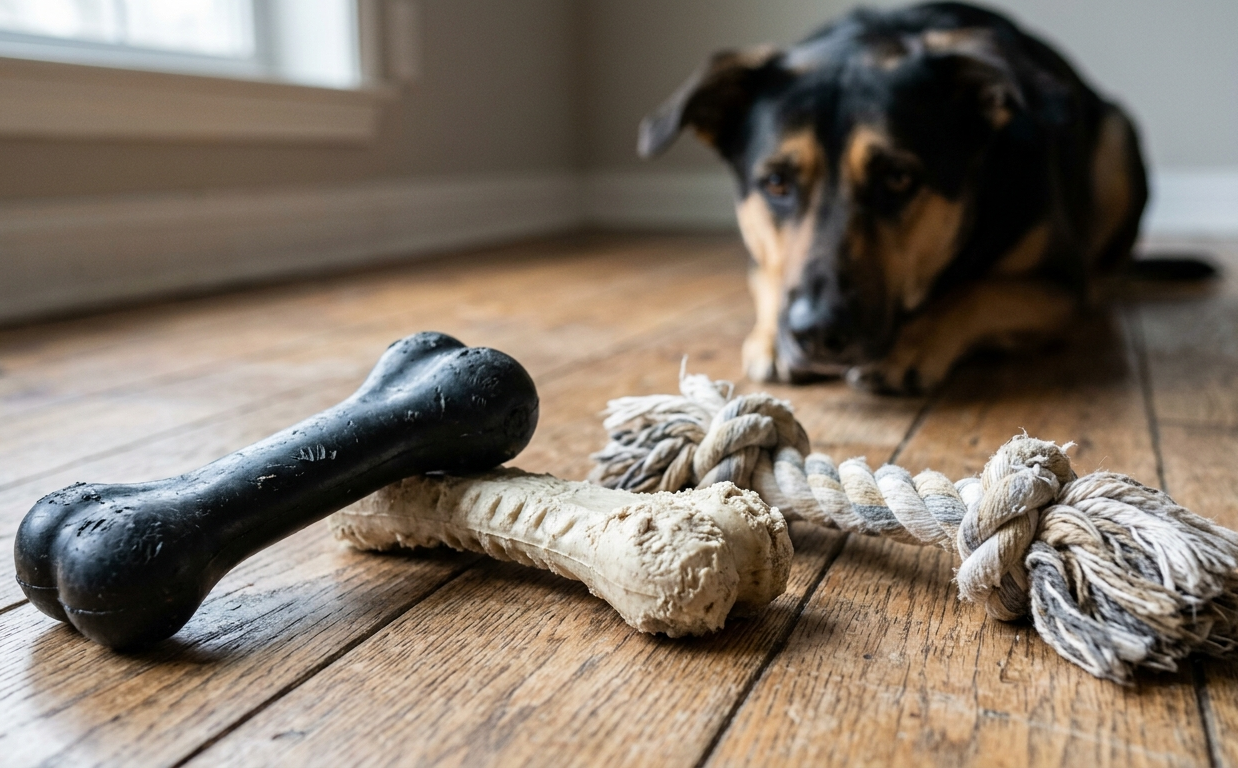
Why some dogs destroy toys faster than others
Not all “aggressive chewers” are doing the same thing. Understanding your dog’s chewing style matters because toy durability depends on how the force is applied.
Bite strength and jaw style
Some dogs clamp down and grind repeatedly with their back teeth. Others rip, shake, and tear. A toy that survives steady gnawing may still fail if your dog likes to grab an edge and thrash it side to side.
Breed tendencies and body size
Large dogs, bully breeds, shepherds, working breeds, and athletic mixes often apply more sustained force than smaller companion dogs. Size alone is not the whole story, but bigger jaws plus stronger neck and shoulder movement usually mean toys wear out faster.
Chewing motivation
A bored puppy, a teething adolescent, and an adult power chewer can all destroy toys, but for different reasons. Puppies may chew to soothe gums. High-drive adult dogs may chew to release energy. That difference affects whether a dog needs a softer teething option, a harder chew, or an interactive toy that works the brain as well as the mouth.
Destructive style changes what “durable” means
For some dogs, durable means “won’t split.” For others, it means “won’t be disemboweled at the seam.” That is why safe dog toys for aggressive chewers should always be judged by real wear patterns, not by marketing labels alone.
Best toy materials for heavy chewers
When owners search for the best chew toys for aggressive chewers, material matters more than shape or color. The right material usually determines whether the toy lasts for weeks or fails in a single afternoon.
Dense natural rubber
Dense rubber is often the best all-around choice for dogs that bite hard but still enjoy some flexibility. Good rubber toys compress slightly instead of cracking, which helps them survive repeated chewing.
Why it works:
- gives slightly under pressure instead of splintering
- can be stuffed or frozen for longer engagement
- often works for fetch and chew sessions
- tends to be easier on teeth than rock-hard materials
A good example of this style is a durable rubber option like the KONG Extreme dog toy, which makes sense for dogs that need both durability and a food-stuffing challenge.
Best for:
- medium to large dogs with strong but steady chewing habits
- dogs that enjoy lick, chew, and treat-focused enrichment
- owners who want one toy to do more than one job
Tough nylon
Nylon chew toys usually last longer than plush or soft rubber, especially for dogs that want to sit and grind away for extended periods. They can be useful for dogs that are obsessed with chewing and need something long lasting.
Why it works:
- resists compression better than softer materials
- lasts well for repetitive gnawers
- often comes in shapes that help dogs grip and chew slowly
What to watch:
- extremely hard nylon can be too much for some dogs’ teeth
- once sharp edges form, the toy should be replaced
- not ideal for dogs that try to snap off chunks
Best for:
- committed chewers that spend long periods gnawing
- households focused on durability first
Thick braided rope
Rope can work well, but it is often misunderstood. It is not automatically one of the toughest dog toys for aggressive chewers if the dog is left alone to shred and swallow strands. Rope is most useful for supervised tug, short chew sessions, and interactive play.
Why it works:
- good for tug and grip-based games
- softer feel than nylon
- can satisfy dogs that like to pull and carry
What to watch:
- loose strands can become a swallowing risk
- wet, frayed rope should not stay in rotation
- not the best unsupervised option for dogs that unravel fabric quickly
Reinforced treat-dispensing toys
Treat toys made from durable rubber or heavy-duty composite materials can keep hard chewers occupied longer because the challenge shifts from pure destruction to problem solving.
Best for:
- dogs that destroy toys out of boredom and intensity combined
- owners who need a toy to hold attention longer than a plain chew
What lasts longest by toy type
Different toy categories hold up differently, even when the marketing sounds similar.
Usually the longest lasting
- solid rubber stuffable toys
- one-piece rubber balls made for power chewers
- thick nylon chews with no glued parts
- reinforced treat-dispensing toys with thick walls
Moderate durability with supervision
- heavy rope tug toys
- layered fabric toys designed for tug rather than solo chewing
- thick rubber fetch toys used in short sessions
Usually the shortest lifespan
- standard plush squeaky toys
- thin hollow rubber toys
- tennis balls for nonstop chewing
- toys with ears, tails, ribbons, stuffing, or decorative attachments
Toy types to avoid for safety reasons
A toy can look tough and still be the wrong choice. For aggressive chewers, failure mode matters as much as overall durability.
Thin plush and seam-heavy toys
Plush toys are usually the first to die under hard chewing. Once seams split, stuffing, squeakers, and crinkle material can become the real problem.
Avoid if your dog:
- targets seams immediately
- rips fabric within minutes
- swallows loose stuffing or squeaker parts
Brittle plastic
Some hard plastic toys seem durable at first because they resist compression. The problem is that brittle materials can crack suddenly, leaving sharp edges that are unsafe for gums and mouths.
Low-quality latex and hollow toys
Very soft toys often fail because they collapse, puncture, and tear too quickly. They may be fine for gentle mouthing, but they are rarely a strong match for dog toys for heavy chewers.
Tennis balls as chew toys
Tennis balls are better as fetch items than chew items. The fuzzy outer surface can wear down teeth over time, and determined chewers can break the ball apart faster than many owners expect.
Toys with glued-on extras
Eyes, ears, handles, straps, and decorative features often create the first weak point. Aggressive chewers find those edges fast.
How to size chew toys correctly
Even the most durable dog chew toys become risky when they are too small.
Use your dog’s full mouth width, not just body weight
A toy should be large enough that your dog cannot get the entire thing deep into the back of the mouth. If your dog can fit most of the toy behind the molars, it is probably too small.
Size up when your dog is between sizes
For heavy chewers, the safer choice is usually the larger size unless the manufacturer clearly says otherwise. More material usually means better durability and lower swallowing risk.
Match shape to chewing style
- Ball-shaped toys: better for dogs that carry, chase, and mouth
- Bone- or stick-shaped toys: better for dogs that pin with paws and grind with the back teeth
- Stuffable toys: better for dogs that stay engaged longer with food-based enrichment

When to replace damaged toys
No toy is permanent. Long lasting dog toys still need regular inspection.
Replace a toy immediately if you notice:
- cracks, splits, or missing chunks
- sharp edges or jagged surfaces
- exposed stuffing, squeakers, or rope strands
- a toy becoming small enough to swallow
- pieces shaving off during chewing
A useful rule is simple: if you would not feel comfortable pressing the damaged area against your own hand, it is probably no longer safe for your dog’s mouth.
Supervision matters more than marketing claims
“Indestructible” is mostly a marketing word. Some toys absolutely last longer than others, but none are universal. A toy that is excellent for one dog can be a poor match for another depending on jaw force, chewing style, and persistence.
For the safest outcome:
- introduce new toys under supervision
- rotate durable options instead of leaving every toy out all the time
- inspect toys after heavy chew sessions
- remove toys your dog is actively dismantling
- use food-stuffing or freezing to increase engagement without increasing risk
Summary takeaway
The best dog toys for aggressive chewers are the ones that match both material and chewing style. In most cases, dense rubber and well-made nylon last longest, while plush, brittle plastic, thin latex, and heavily decorated toys fail fastest. If a toy starts shedding pieces, cracking, or shrinking to a swallowable size, replace it immediately rather than trying to squeeze out a little more life.
FAQ
Are rubber toys or nylon toys better for aggressive chewers?
Rubber is often better for dogs that like some flex and enjoy treat-stuffing, while nylon is usually better for dogs that want long, repetitive chewing sessions. The better choice depends on your dog’s chewing style and tooth sensitivity.
Are rope toys safe for aggressive chewers?
They can be safe for supervised play, especially tug, but they are not ideal for dogs that shred and swallow strands. Once rope starts fraying heavily, it should be removed.
What dog toys should aggressive chewers avoid?
Aggressive chewers should usually avoid thin plush toys, brittle plastic, low-quality latex, and toys with small glued-on parts or easy-to-tear decorative features.
How do I know if a chew toy is too small?
If your dog can fit most of it into the back of the mouth or carry it in a way that makes swallowing realistic, it is too small. When in doubt, size up.
How often should I replace a durable chew toy?
There is no fixed schedule. Replace it as soon as it cracks, sheds pieces, develops sharp edges, or becomes small enough to swallow.

Leave a Reply