


Stainless Steel vs Plastic Cat Water Fountains: Which Is Easier to Keep Clean?
If your main priority is hygiene with less long-term hassle, a stainless steel cat water fountain is usually easier to keep clean than a plastic one. Stainless steel resists odor retention, buildup, and wear better over time, while plastic fountains can still be a practical choice if you clean them regularly and replace them once scratches start trapping residue.
Quick Answer: Which Material Is Easier to Keep Clean?
For most households, stainless steel wins the cleaning comparison.
Here is the short version:
- Stainless steel is easier to keep clean long term because its surface is less likely to hold odors, stains, or bacteria-friendly scratches.
- Plastic can be easy enough in the short term if the fountain is well-designed and washed often.
- The biggest hygiene difference is surface wear: when plastic gets scratched, it can hold slimy residue and lingering smells more easily.
- The easiest-to-clean cat water fountain is often the one with fewer crevices, dishwasher-safe parts, and a pump that is simple to take apart.
For shoppers comparing a stainless steel vs plastic cat water fountain, material matters, but design matters too. A poorly designed stainless fountain can still be annoying to scrub, while a smooth, high-quality plastic fountain may stay manageable with disciplined maintenance.
Material Comparison Table
| Cleaning Factor | Stainless Steel Cat Water Fountain | Plastic Cat Water Fountain |
|---|---|---|
| Daily wipe-down | Usually quick and simple | Usually simple at first |
| Odor retention | Low | Moderate to higher over time |
| Surface scratches | More resistant | More prone to scratching |
| Residue buildup visibility | Easier to spot and remove | Can hide buildup in worn areas |
| Dishwasher friendliness | Often very good for top parts | Varies by model |
| Long-term hygiene | Strong | Depends heavily on condition |
| Best for | Owners prioritizing durability and hygiene | Budget-conscious owners who clean often |
How Stainless Steel and Plastic Differ in Daily Use
In day-to-day use, both materials can hold clean drinking water safely when the fountain is maintained properly. The difference usually shows up after weeks and months of use rather than on day one.
A water fountain for cats stainless steel model often feels easier to reset after cleaning because the surface rinses clean with less lingering film. Hair, biofilm, and mineral spots are usually easier to notice, which helps you scrub the right places before buildup gets worse.
Plastic fountains often start out looking perfectly smooth and convenient. The problem is that daily use, repeated washing, and contact with claws or rough cleaning tools can gradually wear the material. That does not make every plastic fountain unhygienic, but it does mean owners usually need to watch condition more closely.
Odor, Residue, and Scratch-Related Hygiene Concerns
When people ask about the best cat water fountain material, they are often really asking which one stays fresher with less effort.
Why odor retention matters
Odor retention is one of the clearest differences in this comparison. Stainless steel is non-porous and does a better job resisting trapped smells after repeated exposure to water, saliva, wet food residue, and room-temperature air. That makes it easier to wash the fountain and feel like it is actually clean.
Plastic is not automatically a bad option, but it is more likely to develop a stale smell over time, especially if the bowl or top housing stays damp between cleanings. This is one reason some owners feel that a plastic vs stainless steel pet fountain becomes harder to maintain after months of use.
Why surface scratches change the hygiene picture
Surface scratches are where plastic often loses ground. Even small scratches can create tiny places for slime, mineral deposits, and residue to cling to. That affects both cleaning effort and fountain hygiene.
Stainless steel can still show water spots or buildup, but it is generally less vulnerable to the kind of surface wear that makes scrubbing progressively harder. In a real-world cat fountain hygiene comparison, scratches are often the turning point that decides whether a fountain still feels worth keeping.
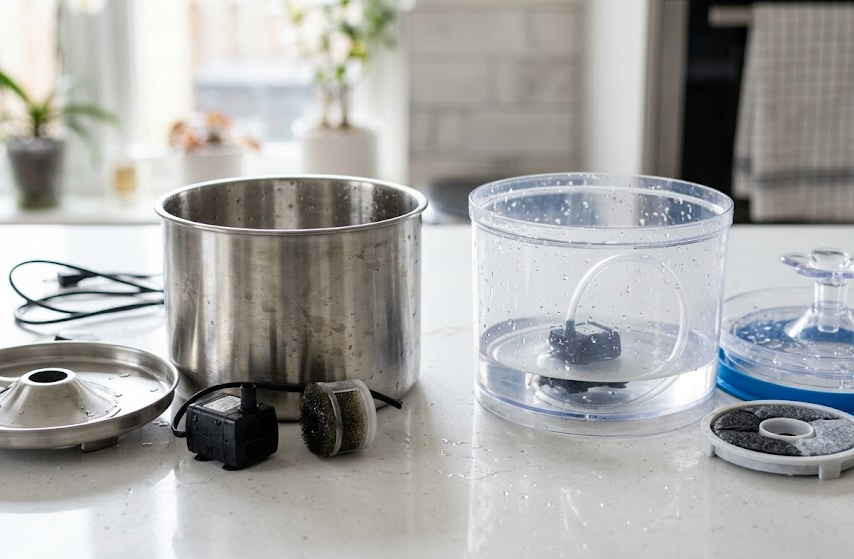
Cleaning Effort and Dishwasher Friendliness
Cleaning effort depends on more than surface material alone, but stainless steel still tends to have the edge.
Stainless steel fountain cleaning strengths
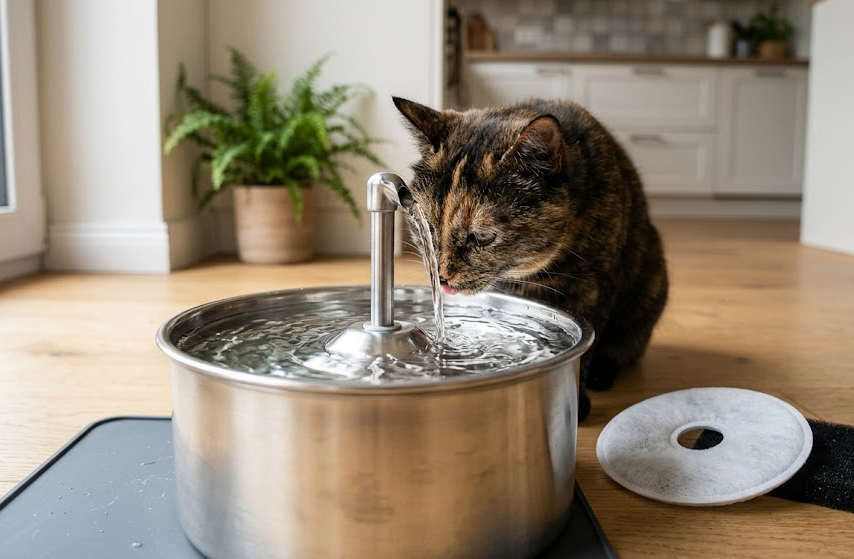
A stainless steel cat water fountain is often easier to keep clean because:
- smooth metal surfaces release residue more easily
- odors are less likely to linger after washing
- many stainless top trays are dishwasher safe
- visible film and mineral spots are easier to notice early
If you like quick maintenance routines, stainless steel usually supports that habit better.
Plastic fountain cleaning tradeoffs
A plastic fountain can still work well when:
- the parts are smooth and well-made
- the design comes apart easily
- the owner cleans it every few days
- worn or scratched components are replaced when needed
The tradeoff is that plastic asks for more vigilance. If you miss cleanings or keep using scratched parts too long, the fountain may become harder to freshen up fully.
The pump matters almost as much as the bowl
No matter which material you choose, the pump is often the hardest part to clean. Hair, slime, and mineral scale tend to collect inside the pump housing and around the impeller.
That means the easy to clean cat water fountain question should include:
- how easily the pump opens
- whether replacement filters are easy to find
- whether corners and seams are easy to reach
- how many separate pieces need regular washing
Pros and Cons
Stainless steel pros
- easier long-term cleaning performance
- lower odor retention
- better resistance to visible wear
- often a more durable option for multi-cat homes
- usually feels more hygienic over time
Stainless steel cons
- often costs more upfront
- may still include some plastic internal parts
- water spots can show more visibly in hard-water areas
Plastic pros
- often more affordable
- widely available in different sizes and styles
- can be lightweight and easy to move
- can be perfectly serviceable with regular care
Plastic cons
- more likely to scratch over time
- may trap odor more easily
- long-term cleanliness depends more on careful upkeep
- older worn parts may need replacement sooner
When Each Material Makes More Sense
Choose stainless steel if you:
- want the easiest long-term cleaning routine
- care most about odor resistance
- expect heavy daily use from one or more cats
- prefer a more durable fountain surface
Choose plastic if you:
- want a lower upfront cost
- are comfortable cleaning frequently and thoroughly
- are buying a temporary or secondary fountain
- have found a high-quality design with simple removable parts
For many shoppers, the real answer is not that plastic is bad. It is that stainless steel is more forgiving. If your cleaning routine is not perfect every single week, stainless steel usually holds up better.
What Else Affects Cat Fountain Hygiene?
Material is only one part of keeping a fountain clean. These habits matter just as much:
- change water regularly instead of only topping it off
- wash fountain parts on a consistent schedule
- clean the pump interior, not just the visible bowl
- replace filters on time
- replace worn plastic components once scratches become obvious
- keep the fountain away from dusty litter zones when possible
A neglected stainless steel fountain can still become dirty. But when comparing the same cleaning routine across both materials, stainless steel usually keeps its cleanable surface longer.
FAQ
Is stainless steel better than plastic for a cat water fountain?
For hygiene and long-term maintenance, yes, stainless steel is usually better. It is less likely to hold odors and less likely to develop scratches that trap residue.
Are plastic cat fountains harder to clean?
They can be, especially after extended use. New plastic fountains may be easy to wash, but scratches and lingering smells can make them more difficult to keep fresh over time.
What fountain material is most hygienic for cats?
Stainless steel is generally considered the more hygienic choice because it resists odor retention and surface wear better than plastic. That said, any cat fountain still needs regular cleaning and pump maintenance to stay sanitary.
Summary Takeaway
If you are choosing between stainless steel and plastic based mainly on cleaning effort, stainless steel is usually the better pick. A plastic fountain can still be a reasonable option for budget-minded owners with strong cleaning habits, but stainless steel tends to stay fresher, resist wear better, and demand less long-term maintenance effort.
Leave a Reply