

How to Get Your Dog or Cat to Use a Water Fountain
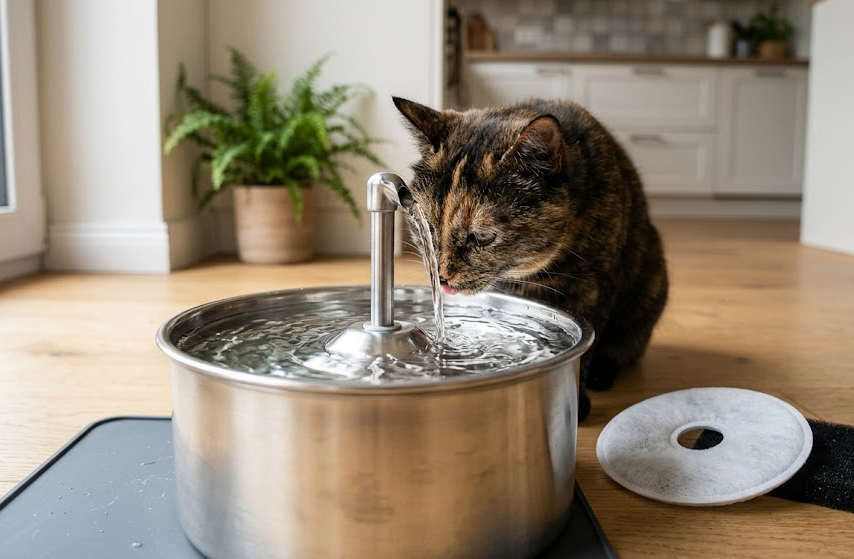
To get a dog or cat to use a water fountain, put it in a familiar low-stress spot, keep the water flow gentle, and let your pet investigate it gradually before you remove their regular water bowl. Most pets do not reject fountains because they dislike moving water forever—they usually reject a new sound, a new location, or a setup that feels unfamiliar too fast.
If your dog will not drink from a water fountain or your cat keeps ignoring a new fountain, the fix is usually a better introduction plan rather than forcing the switch in one day. Pets often need time to trust the noise, the shape, and the exact place where the water sits.
Quick answer: easiest ways to improve adoption
If you want the shortest version, start here:
- put the fountain where your pet already expects to find water
- begin with the lowest possible water flow
- leave the old water bowl out for the first few days
- let your pet sniff and inspect the fountain while it is turned off first
- reward curiosity with praise or a treat, not pressure
- keep the fountain clean so the smell and taste stay familiar
In other words, the best pet fountain setup tips are not complicated. Familiar placement plus a slow transition usually works better than trying to make the fountain the only water source immediately.
Why some pets avoid fountains at first
A water fountain makes sense to humans because moving water often looks cleaner and fresher. To a pet, though, it can feel like a strange appliance that suddenly appeared in a trusted area.
Here are the most common reasons a dog or cat avoids a fountain at first:
- new sound: the motor hum or trickling noise can feel suspicious
- new movement: some pets stare at moving water before they decide it is safe
- wrong placement: a busy hallway, laundry room, or food corner can make drinking feel stressful
- strong flow: water that splashes too much can intimidate cautious pets
- plastic or filter smell: some fountains smell “new” until washed thoroughly
- too-fast transition: removing the regular bowl too early can make the pet avoid both options
Cats are often more sensitive to noise and novelty, while some dogs simply prefer the bowl shape or water height they already know. That is why the question is not just “do dogs like water fountains” or “do cats like fountains.” The better question is whether the setup matches the pet's comfort level.
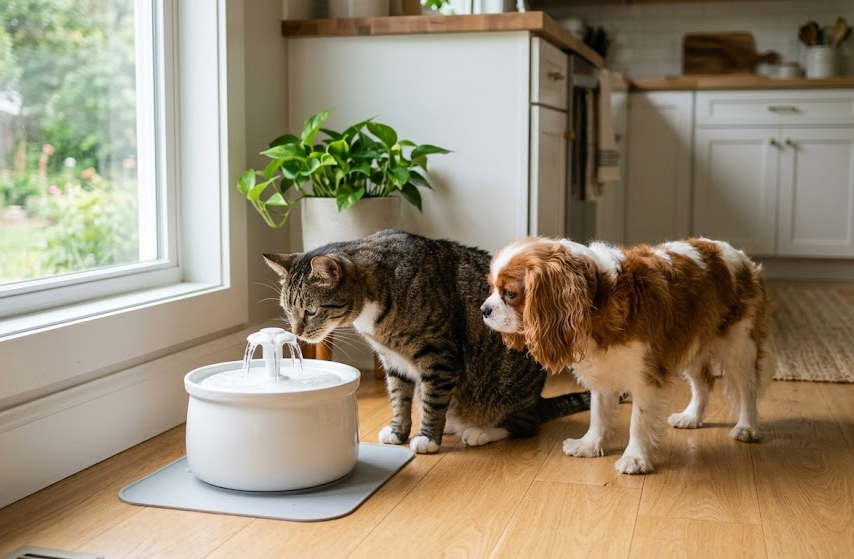
How to introduce a water fountain gradually
Step 1: Let your pet inspect the fountain before using it
Before you expect drinking, let your pet smell the fountain while it is clean and empty or switched off. This lowers the novelty factor. Put it near their usual water area and give them time to investigate without hovering.
For a cautious cat, this may mean leaving the fountain nearby for a day before turning it on. For a dog, it may be enough to let them sniff it during a calm moment and then walk away.
Step 2: Start with the fountain next to the regular bowl
This is one of the most effective ways to introduce a pet water fountain. Keep the regular bowl available at first. The old bowl acts like a safety net, and the fountain becomes a low-pressure option instead of a forced replacement.
This matters because trust grows faster when the pet still feels in control. A dog or cat that can choose is more likely to test the fountain on their own.
Step 3: Use the gentlest water flow possible
If the fountain has adjustable flow, start low. Strong bubbling or splashing often slows adoption. A gentle stream is easier for pets to approach and helps the fountain placement feel less intrusive.
Water flow matters because:
- lower flow reduces noise
- lower flow makes the fountain look less unpredictable
- lower flow helps timid pets drink without getting whiskers or noses splashed
Step 4: Make the water taste normal
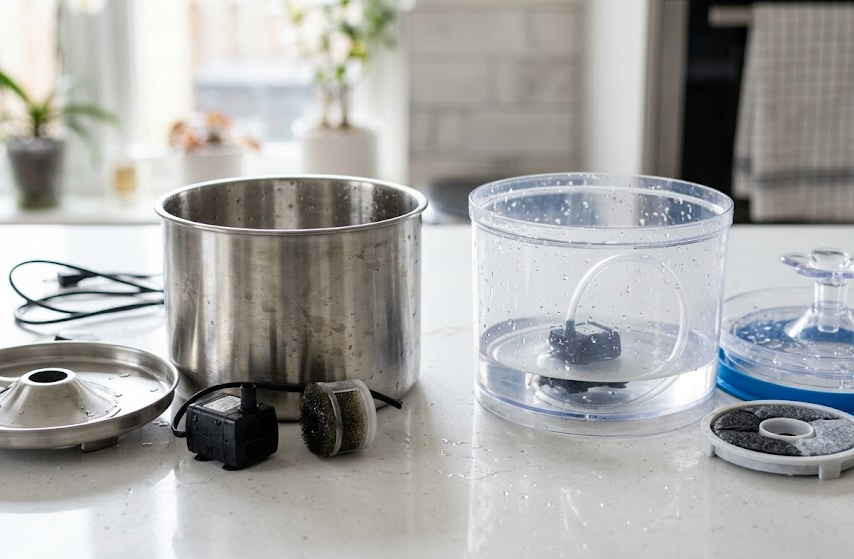
Rinse the entire fountain well before use, including filters, pump parts, and reservoir pieces if the instructions allow. Then fill it with the same fresh water your pet already drinks.
Some pets are not rejecting the fountain itself. They are reacting to a “new product” smell, leftover manufacturing residue, or a slightly different taste from an un-rinsed filter.
Step 5: Reward curiosity, not just drinking
Do not wait until your pet takes a full drink to reinforce the behavior. If they walk over, sniff the fountain, or touch it calmly, that already counts as progress.
Useful rewards include:
- gentle praise
- one small treat placed near the fountain, not in the water area
- a calm voice and then space
Do not push your pet's face toward the fountain. That usually makes cautious pets more suspicious.
Step 6: Remove the old bowl only after the fountain feels normal
Once you see your pet returning to the fountain on their own, you can slowly reduce reliance on the old bowl. For some pets this happens in a day or two. For others, especially cautious cats, it can take a week or longer.
A slow switch works because familiar routine plus repeated safe exposure builds confidence better than abrupt change.
Best placement and noise-level tips
Water fountain placement is one of the biggest factors in adoption. Even a good fountain can fail in the wrong spot.
Put the fountain in a familiar, low-stress area
Good locations usually have these traits:
- easy to reach
- quiet enough that the pet can drink without surprise noises
- not directly beside a litter box
- not squeezed into a corner where a pet feels trapped
- not in a high-traffic path where feet keep passing by
For many cats, a little distance from the food bowl can actually help because some cats prefer water separated from food. For many dogs, a stable everyday spot matters more than a perfect theory-based location.
Reduce background stress
If the fountain sits near a loud appliance, busy doorway, or playful child zone, the pet may avoid it even if the fountain itself is fine. The relationship is simple: low-stress location -> more relaxed approach -> better drinking habits.
Keep the sound consistent
A quiet fountain is usually easier to accept. If the motor is louder than expected, check whether the water level is too low or whether the pump is not seated properly. Sometimes what looks like “my cat won't drink from water fountain” is really “the fountain is making an annoying sound.”
Troubleshooting table: why your pet still is not using the fountain
| Problem | Likely cause | What to try |
|---|---|---|
| Pet sniffs but will not drink | novelty or caution | leave regular bowl out longer and reward investigation |
| Pet startles at the fountain | motor or trickling noise | lower the flow and move it to a quieter area |
| Pet drinks from bowl only | transition was too fast | keep both water sources available for several more days |
| Pet approaches then backs away | splashing or awkward bowl design | reduce flow and check the drinking surface height |
| Pet ignores fountain completely | poor placement | move it near the old bowl or a more familiar room |
| Pet used it once, then stopped | taste or cleanliness issue | deep-clean the fountain and replace water and filter |
Mistakes that make pets avoid fountains
A lot of fountain problems come from setup mistakes, not stubborn pets.
Common do and don't list
Do:
- wash the fountain before first use
- start with low flow
- give the pet time to choose it voluntarily
- monitor whether they are still drinking enough overall
- clean the fountain regularly so smell and taste stay appealing
Don't:
- remove the regular bowl on day one
- place the fountain in a noisy or cramped area
- assume every pet likes strong bubbling water
- push your pet toward the fountain
- ignore signs that the design itself may not fit your pet
When the issue is the fountain design itself
Sometimes the real problem is not behavior. It is the fountain.
A fountain may be a poor fit if:
- the basin is too small for a bigger dog
- the drinking height is awkward
- the stream splashes directly into the pet's face
- the motor hum is noticeable in a quiet room
- whisker-sensitive cats dislike the narrow drinking area
This is where “dog won't drink from water fountain” and “cat won't drink from water fountain” can have very different meanings. A dog may need easier access and a bigger basin. A cat may need a quieter fountain with a gentler surface and more personal space.
If your pet seems comfortable around water in general but repeatedly avoids one specific fountain, the design may simply not match their preferences.
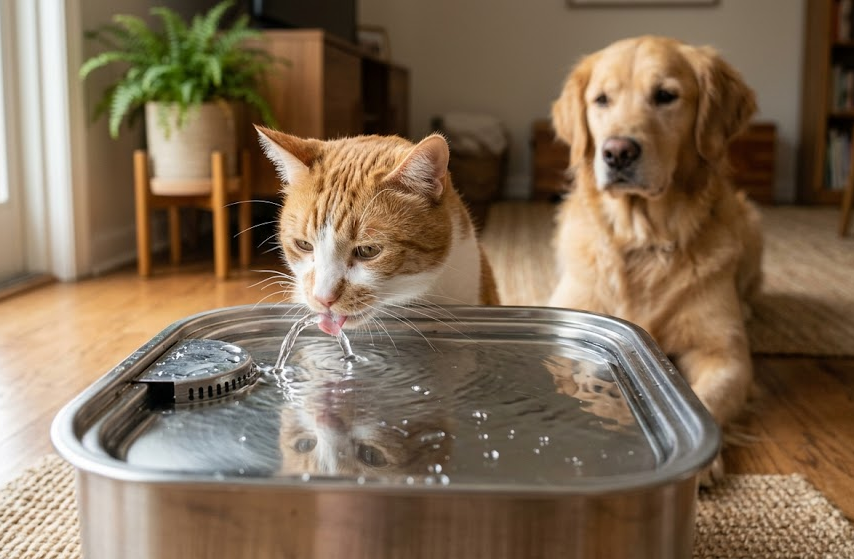
Signs your pet is finally drinking enough
Once the transition starts working, the signs are usually pretty clear:
- your pet walks to the fountain without hesitation
- they take normal drinks instead of only sniffing
- they return at different times of day on their own
- their overall water intake looks normal or improved
- the old bowl matters less and less
The main goal is not forcing your pet to “like the gadget.” It is improving dog hydration or cat hydration in a way that feels natural and repeatable.
FAQ
Why won't my dog drink from a water fountain?
Most dogs avoid a new fountain because the sound, height, or water movement feels unfamiliar at first. Try placing it where the usual bowl sits, lowering the flow, and keeping the regular bowl available during the transition.
How long does it take a cat to get used to a fountain?
Some cats adjust in a day or two, while cautious cats may need a week or longer. The slower the introduction and the quieter the setup, the better the odds.
Should I leave the regular water bowl out at first?
Yes. Leaving the regular bowl out at first reduces stress and makes the fountain feel optional instead of forced. Remove the old bowl only after your pet uses the fountain confidently.
Can fountain noise scare pets away?
Yes. Even a low hum or trickling sound can put cautious pets off. If the fountain sounds louder than expected, lower the flow, check the water level, and move it away from noisy household appliances.
Final takeaway
If you want to know how to get your dog or cat to use a water fountain, think less about “training” and more about trust. Put the fountain in a familiar place, keep the flow gentle, make the transition gradual, and let your pet choose it without pressure. Most adoption problems improve when the fountain feels less like a strange machine and more like a normal part of the pet's daily routine.
Leave a Reply