

Leaving for work, errands, or even a quick trip out can feel routine for you—but for an anxious dog, it can trigger pacing, whining, scratching at doors, destructive chewing, or accidents in the house. Separation-related stress is one of the most common behavior issues dog owners face, and it often gets worse when the root cause is misunderstood.
The good news is that most dogs can learn to feel safer and more settled when home alone. The key is to combine a smart departure routine, better environmental support, the right calming tools, and gradual training that builds confidence over time.
If you’re trying to calm an anxious dog when you leave home, this guide walks through what actually helps, what can make things worse, and how to create a reliable plan that supports both your dog’s emotional well-being and your daily schedule.
Why Dogs Get Anxious When You Leave
Dogs are social animals, and many form strong attachment patterns around their people. When those patterns become overdependent—or when past experiences, inconsistent routines, lack of stimulation, or general fearfulness are involved—being left alone can feel genuinely distressing.
Common triggers behind dog separation anxiety
A dog may struggle when left alone because of:
- sudden schedule changes
- moving to a new home
- adoption or rehoming history
- reduced exercise or mental stimulation
- noisy environments outside the home
- overexcited greetings and departures
- lack of independent rest habits
Some dogs show mild uneasiness. Others experience full separation anxiety that may require a structured behavior plan with veterinary input.
Signs your dog may be dealing with separation stress
Look for patterns such as:
- barking or howling shortly after you leave
- destructive chewing focused on doors, windows, or crates
- pacing, drooling, or panting when alone
- indoor accidents despite normal house training
- refusal to eat treats once you’re gone
- frantic behavior when you pick up keys, shoes, or a bag
The timing matters. If these behaviors happen mainly around departures or during your absence, anxiety is a likely factor.
Start by Changing the Way You Leave
One of the fastest ways to reduce stress is to make departures less emotionally loaded. Many owners accidentally build tension by turning leaving into a dramatic event.
Keep exits calm and boring
Avoid long goodbyes, repeated reassurance, or high-energy affection right before walking out. A quiet, matter-of-fact exit helps prevent your dog from reading your departure as a major emotional moment.
Instead of saying goodbye for several minutes, try this:
- give your dog a pre-prepared enrichment item
- move through your normal leaving routine calmly
- step out without fanfare
This feels counterintuitive to many dog owners, but neutral departures often work better than emotional ones.
Desensitize departure cues
Dogs learn patterns quickly. If picking up keys or putting on shoes predicts a stressful absence, those cues can trigger anxiety before you even open the door.
Practice these actions without actually leaving:
- pick up your keys and set them down
- put on your shoes, then sit on the couch
- grab your bag and walk to another room
- open and close the front door without exiting
This gradual desensitization teaches your dog that departure cues do not always mean isolation.
Build a Pre-Departure Routine That Promotes Calm
A predictable routine can lower arousal and help your dog shift into rest mode before alone time starts.
Use exercise strategically
A dog with pent-up energy is more likely to struggle emotionally when left alone. Depending on your dog’s age, breed, and health, a walk, sniff session, short play session, or training game before departure can help take the edge off.
The goal is not to overstimulate your dog right before you leave. Aim for:
- moderate physical activity
- time to sniff and decompress
- a few minutes of cool-down before departure
Mental exercise can be just as useful as physical exercise for anxious dogs.
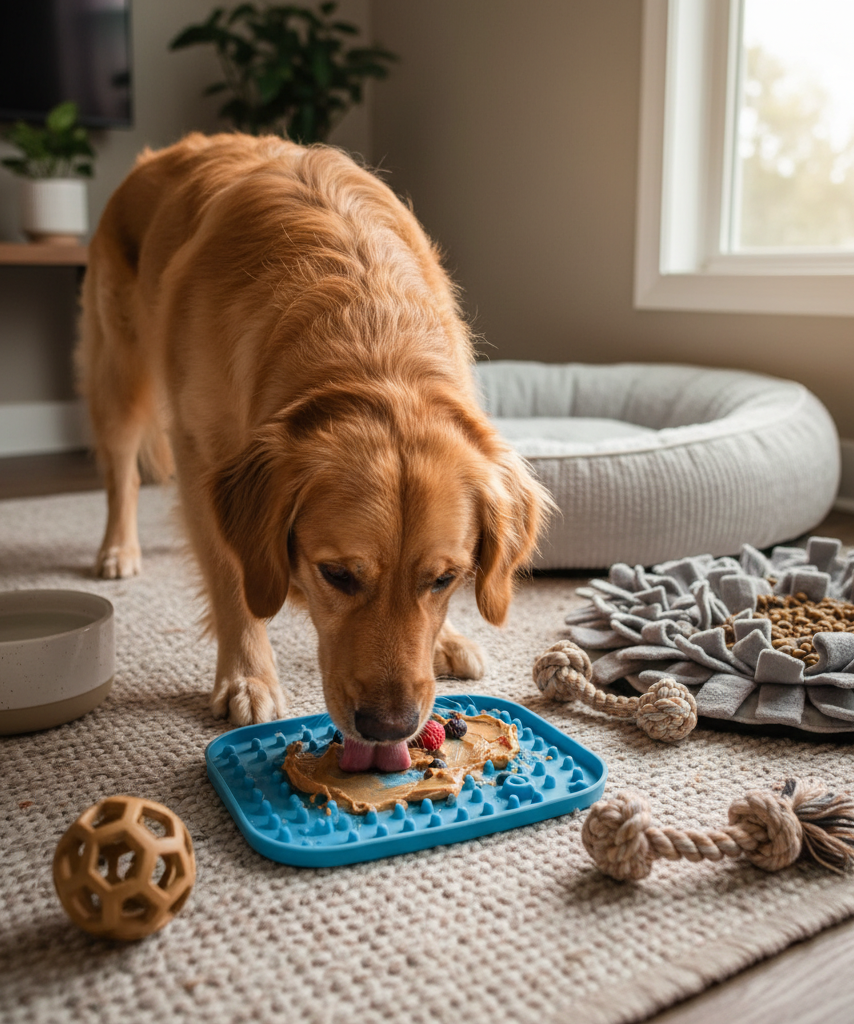
Add food-based enrichment
Licking, sniffing, and problem-solving can all support calmer behavior. Good options include:
- a stuffed food toy
- a frozen lick mat
- a snuffle mat with kibble or treats
- a long-lasting chew approved for your dog
These tools help create a positive association with alone time while giving your dog something constructive to focus on.
Create a More Comforting Home Environment
The environment your dog stays in can either increase tension or support relaxation.
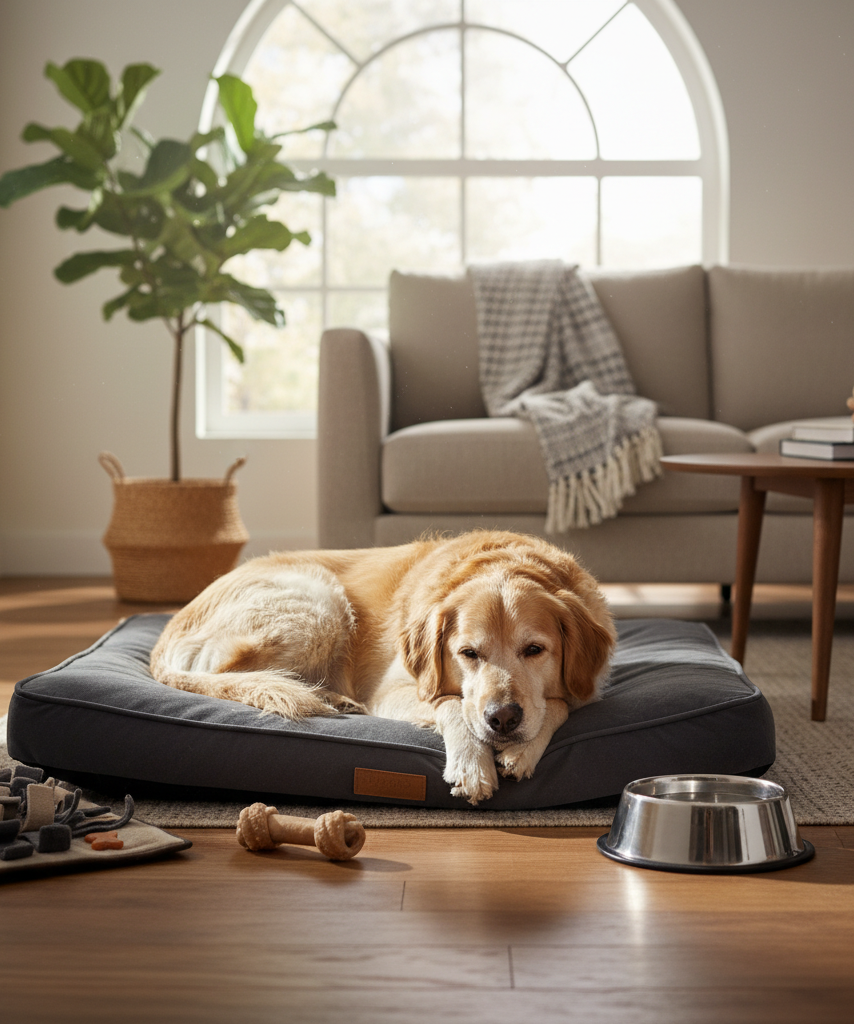
Set up a safe, restful zone
Many dogs do better with a consistent area that includes familiar smells and comforting routines. This space might be a gated room, part of the living room, or a cozy corner rather than a crate—especially if the crate has become associated with panic.
A calming setup often includes:
- a supportive dog bed
- water access
- safe chew items
- familiar blankets carrying your scent
- reduced visual chaos
- comfortable room temperature
Not every anxious dog wants confinement. If your dog panics in a crate, forcing crate time can intensify the problem.
Try sound masking and calming audio
Some dogs relax more easily with low, consistent background sound. White noise, soft music, or dog-calming audio may help reduce outside triggers like hallway noise, passing cars, or neighborhood dogs.
Support calm with the right gear
Certain products may help some dogs feel more secure, especially when combined with training rather than used as a standalone fix. Depending on the dog, helpful tools can include:
- calming dog beds with bolstered edges
- anxiety wraps or pressure vests
- puzzle toys and treat dispensers
- slow feeders and lick mats
- pet cameras for monitoring behavior changes
- pheromone diffusers designed for dogs
The best calming products for dog anxiety are the ones your dog willingly uses and consistently associates with safety.
Train Your Dog to Feel Safer Alone in Small Steps
If your dog has more than mild stress, management alone will not solve the issue. You need gradual alone-time training that keeps the dog under threshold whenever possible.
Practice very short absences first
Start with departures so short that your dog can stay calm—sometimes that means only a few seconds. Step out, return before your dog escalates, and repeat until the routine feels easy.
Then slowly increase duration:
- a few seconds
- 15 to 30 seconds
- 1 to 3 minutes
- slightly longer intervals over multiple sessions
Progress too quickly, and anxiety often spikes again. Slow training is frustrating, but it works better than repeated overwhelming absences.
Watch for subtle signs of stress
Many owners wait until barking or destruction starts, but earlier signs matter too:
- freezing
- staring at the door
- lip licking
- panting
- refusing food
- tense posture
If you see these signals, the training step may already be too difficult.
What Usually Makes Separation Anxiety Worse
Well-meaning owners often try fixes that accidentally reinforce the cycle.
Avoid these common mistakes
- using punishment after anxiety-related destruction
- forcing independence too abruptly
- expecting one product to solve the problem
- leaving a panicked dog crated if the crate increases distress
- making departures and returns overly dramatic
- increasing alone time faster than the dog can handle
Punishment is especially unhelpful because your dog is not being “bad”—your dog is overwhelmed.
When to Talk to a Veterinarian or Behavior Professional
Some dogs improve with routine changes, enrichment, and gradual desensitization. Others need more support.
You should consider professional help if:
- your dog injures themselves trying to escape
- the barking or destruction is severe
- your dog refuses food when alone
- the anxiety is getting worse instead of better
- progress stalls despite a careful training plan
A veterinarian can rule out medical contributors and discuss whether short-term or longer-term anti-anxiety support makes sense. A qualified positive-reinforcement trainer or veterinary behavior professional can also help design a separation anxiety training plan tailored to your dog.
Practical Daily Plan for Calming an Anxious Dog
If you want a simple starting framework, use this:
Before you leave
- give your dog a walk or sniff-based outing
- allow a cool-down period
- prepare an enrichment activity
- keep departure cues calm and low drama
While you’re gone
- leave your dog in a comfortable, familiar space
- use white noise or soft music if helpful
- offer safe calming tools your dog already enjoys
After you return
- greet your dog calmly
- wait for calmer behavior before adding excitement
- note what worked and what triggered stress
Consistency matters more than perfection. Small repeated wins are what help anxious dogs build confidence.
Frequently Asked Questions About Leaving an Anxious Dog Home Alone
Can I cure my dog’s separation anxiety quickly?
Usually not. Mild cases may improve relatively fast, but true separation anxiety is best handled as a gradual training process. Quick fixes are rare.
Do calming treats work for anxious dogs?
They may help some dogs take the edge off, but they work best as part of a larger plan that includes routine, enrichment, and training.
Should I crate my anxious dog when I leave?
Only if your dog already feels safe in the crate. If crate time triggers panic, it is usually not the right answer.
Is leaving the TV or music on useful?
For some dogs, yes. Background sound can reduce sudden external noises and create a steadier environment.
Final Thoughts
If you want to calm an anxious dog when you leave home, the most effective approach is usually a combination of calmer departures, better enrichment, a more secure environment, and slow confidence-building practice with short absences. Products can help, but they work best when they support a thoughtful behavior plan rather than replace one.
Start small, stay consistent, and pay attention to what your dog is actually telling you. With the right setup and patient training, many dogs learn that being home alone is not something to fear.
Leave a Reply