


Crash-Tested vs Non-Crash-Tested Dog Seat Belt Harnesses: What’s the Real Difference?
If you want the short version, crash-tested dog seat belt harnesses are usually the better choice for car travel because they have at least some impact-testing evidence behind them, while non-crash-tested options mainly offer basic restraint with far less proof of how they hold up in a collision.
A dog seat belt harness for car travel is not the same thing as a simple tether, a walking harness, or a casual travel accessory. The real difference comes down to whether the product was designed and evaluated as a car restraint that may face crash forces, or whether it was made mostly to keep a dog from moving around the vehicle.
Quick answer: does crash-tested actually matter?
Yes—if your main concern is collision safety, crash-tested labeling matters because it gives you a higher level of confidence that the harness design, stitching, webbing, buckles, and attachment point were built with impact forces in mind.
That does not mean every crash-tested harness is automatically perfect. It means there is at least some validation process behind the product claim. A non crash tested dog harness may help reduce driver distraction or keep a dog from roaming across the cabin, but it offers weaker safety assurance when the question is what happens during a sudden stop or an actual crash.
Quick comparison table
| Factor | Crash-tested dog seat belt harness | Non-crash-tested dog harness |
|---|---|---|
| Safety evidence | Some impact-test data or stated testing protocol | Often little or no collision-specific evidence |
| Design purpose | Built more deliberately as a car restraint | Often adapted from walking or general travel use |
| Attachment point strength | Usually a bigger focus in design and marketing | May not be engineered for crash loads |
| Price | Usually higher | Usually lower |
| Best use | Frequent car travel, highway driving, safety-first buyers | Short local trips, budget use, light restraint needs |
| Confidence level | Higher, though still varies by brand | Lower and more uncertain |
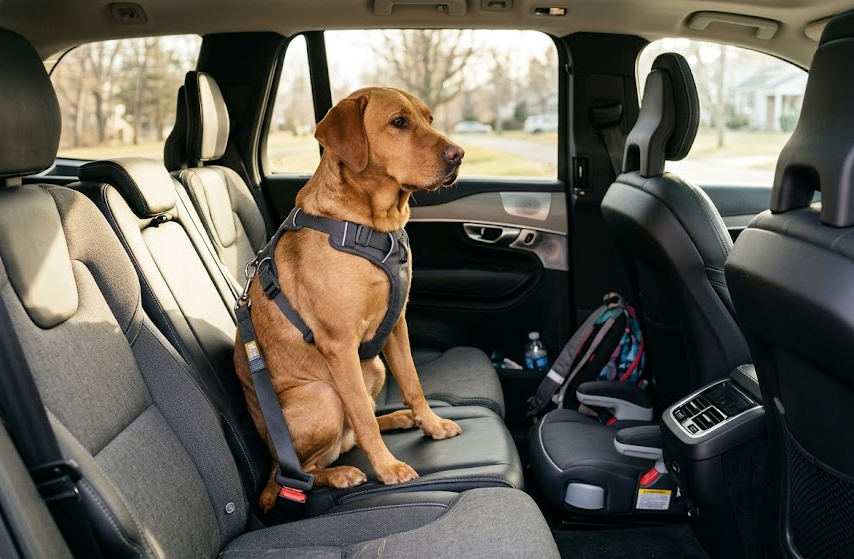
What crash-tested means in pet travel gear
A crash-tested harness is a dog car safety harness that has been put through some form of simulated collision testing rather than being sold only on comfort or convenience claims. Depending on the brand, that may mean sled-style testing, internal test protocols, or references to third-party standards used for pet travel products.
The key idea is simple: the manufacturer is not only saying, “This harness can clip into the car.” It is also saying, “We evaluated how this restraint behaves under impact conditions.”
That matters because a moving vehicle creates forces that are far beyond normal leash walking. In a crash or hard brake, the weak point is often not the padded chest panel but the attachment point, stitching, hardware, or the way the harness spreads force across the dog’s body. A crash-tested harness is more likely to address those issues intentionally.
What crash-tested does not automatically guarantee
The label still needs context. “Crash-tested” does not mean every product was tested under the same standard, with every dog size, in every vehicle type. It also does not mean injury risk disappears. A crash-tested harness simply gives you more evidence than a product with no testing disclosure at all.
That is why smart buyers look past the headline claim and ask:
- What testing standard or protocol was used?
- What dog weights or sizes were included?
- Was the harness tested with the included connector?
- Does the brand explain how the restraint should be fitted and anchored?
How non-crash-tested harnesses differ
A non-crash-tested dog harness may still look sturdy, padded, and well-made. The problem is that appearance alone does not tell you how it will perform when crash forces hit all at once.
Many non-crash-tested products fall into one of these categories:
- a walking harness that happens to include a seat belt clip
- a general travel harness marketed for convenience
- a simple tether system paired with a standard harness
- a low-cost restraint with minimal technical information
These products can still be useful in a limited sense. They may keep a dog from climbing into the front seat, jumping on passengers, or pacing around the back row. That helps with day-to-day control. But control is not the same as collision protection.
Why that difference matters in real use
For buyers, the practical question is not whether a non-crash-tested harness is “better than nothing.” It often is. The real question is whether it should be trusted for higher-speed travel, longer road trips, or regular highway driving where impact protection matters more.
If your dog rides in the car once in a while for a short drive to the groomer, a non-crash-tested setup may feel acceptable to some owners. If your dog travels often, rides long distances, or you simply want the best available evidence-backed restraint, the gap becomes much more meaningful.
Key safety features beyond the label
Even when you are shopping for a crash tested dog seat belt harness, the label itself should not be your only filter. Some details matter a lot more than flashy packaging.
1. Harness construction
Look for broad chest coverage, strong webbing, reinforced stitching, and a shape that spreads force across the torso rather than concentrating it at the neck. A harness that resembles a casual walking vest may be comfortable, but that does not automatically make it a safer car restraint.
2. Reliable attachment point
The attachment point is where many weaker products fall short. If the hardware, strap path, or clip connection is flimsy, the whole system is compromised. Strong materials and a clearly designed restraint path matter more than a generic clip tossed into the box.
3. Fit for your dog’s build
A dog car safety harness only works if it fits correctly. Too loose, and the dog may gain excess movement or slip out. Too tight, and comfort suffers, which can lead to poor compliance on longer trips. Chest depth, body length, and weight range matter more than assuming all medium or large dogs fit the same.
4. Vehicle compatibility
Not all dog seat belt harness for car systems work the same way. Some connect through the vehicle’s seat belt path, while others use a separate tether or latch-style connector. Compatibility matters because the safest-looking harness can become a weak solution if the connector is poorly matched to your car.
5. Clear testing and usage instructions
Good restraint brands usually explain setup clearly. If a product is vague about how it should be worn, anchored, tightened, and used in the rear seat, that is a warning sign.
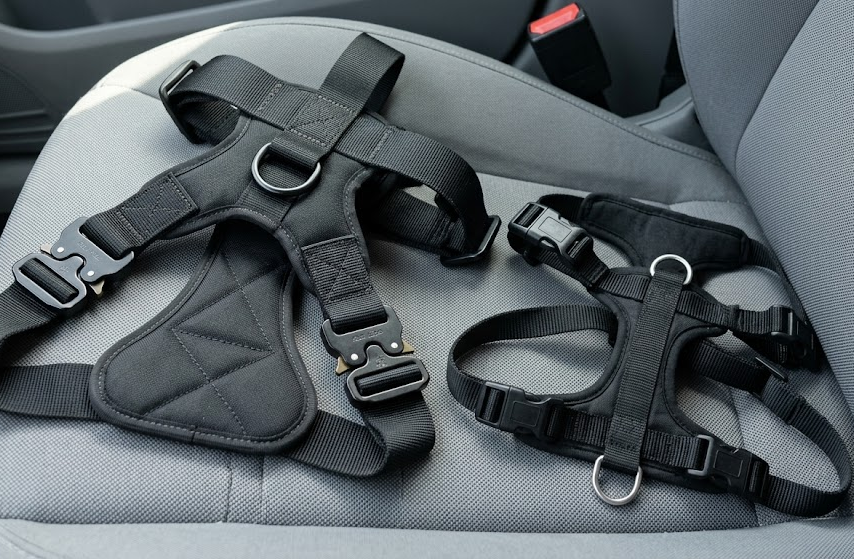
Crash-tested vs non-crash-tested: pros and cons
Crash-tested harness pros
- Stronger safety confidence for real car travel
- Better evidence that the design was built as a restraint
- Often better hardware and more deliberate construction
- Better fit for owners who drive on highways or travel often
Crash-tested harness cons
- Usually costs more
- Claims can still vary in quality from brand to brand
- Bulkier designs may be less comfortable for some dogs
- Fit can take more time to get right
Non-crash-tested harness pros
- Lower upfront cost
- Easier to find in general pet stores and online marketplaces
- May be sufficient for light restraint on short drives
- Often lighter and simpler for casual use
Non-crash-tested harness cons
- Limited or unclear collision evidence
- May rely on walking-harness construction
- Hardware and seams may not be intended for crash loads
- Lower confidence for regular road-trip use
When paying more makes sense
Paying more for a crash-tested harness usually makes sense when your goal is risk reduction rather than simple convenience.
It is often worth the extra cost if:
- your dog rides in the car several times a week
- you do frequent highway or long-distance driving
- your dog is large, strong, or highly active in the vehicle
- you want more than a basic anti-roaming solution
- you compare pet restraints the same way you would compare child or human travel safety gear: evidence first, marketing second
On the other hand, if your dog only takes occasional short neighborhood trips and budget is the main limiting factor, a non-crash-tested harness may still provide basic restraint benefits. Just be honest about what you are buying. In that case, you are mostly paying for positioning and movement control, not the same level of tested safety confidence.
Buyer checklist before you choose
Use this checklist before buying any dog restraint for car travel:
- Confirm whether the product is truly described as crash-tested, not just “car-friendly”
- Look for mention of a testing standard or documented protocol
- Check the listed dog size and weight compatibility
- Review the restraint path and attachment point design
- Make sure it is intended for rear-seat travel
- Verify whether the included connector is part of the tested setup
- Read fit instructions carefully before the first drive
- Avoid confusing a walking harness with a true dog seat belt harness crash tested for vehicle use
Best fit scenarios by dog size and trip length
Small dogs on shorter trips
Small dogs may seem easier to secure, but that does not remove the value of a tested system. Lightweight dogs can still be thrown forward in a sudden stop. For frequent city driving, a compact crash-tested harness is still the stronger choice when available.
Medium dogs on mixed city and highway trips
This is where the difference becomes very noticeable. Medium dogs generate enough movement and force that a better-built car restraint can offer a meaningful upgrade in control and confidence.
Large dogs or long road trips
For large breeds, repeated travel, or long-distance driving, a crash-tested harness becomes the more sensible default. Bigger dogs place more demand on the structure, stitching, and attachment hardware, so evidence-backed design matters more, not less.
Common mistakes buyers make
One of the biggest mistakes is assuming that any harness with a car clip is automatically a safe dog restraint for car travel. It is not.
Other common mistakes include:
- clipping a tether to a neck collar instead of a harness
- using the front seat instead of the rear seat
- buying by looks instead of fit and test information
- ignoring weight ranges and chest measurements
- assuming “heavy-duty” marketing language equals real test validation
FAQ
What does crash-tested mean for a dog harness?
It means the harness has undergone some type of impact or simulated collision evaluation intended to show how it performs as a car restraint, rather than being sold only as a comfort or walking product.
Is a non-crash-tested dog car harness still safe?
It may provide basic restraint and help reduce cabin movement, but it usually offers weaker safety assurance because there is less evidence for how it performs in an actual crash.
Do all dog seat belt harnesses work the same way?
No. They differ in construction, connector style, vehicle compatibility, fit range, and especially in whether they were designed and validated as a real car restraint instead of a convenience accessory.
Summary takeaway
If you are deciding between crash-tested vs non-crash-tested dog seat belt harnesses, the real difference is evidence. Crash-tested options are not perfect, but they are generally the better buy for people who want a dog car safety harness built with collision forces in mind. Non-crash-tested options can still help with basic restraint, yet they are usually a weaker choice for serious in-car safety.



Leave a Reply