


Best Dog Seat Belt Harness for Car Travel: What Safety Features Matter Most?
The best dog seat belt harness for car travel is one that combines a secure vehicle attachment, strong materials, proper fit, and credible safety testing for your dog’s size. If a harness looks convenient but lacks strength at the buckle, stitching, and restraint connection point, it may not give much real protection when the car stops suddenly.
If you are trying to choose the best dog seat belt harness for your next road trip, focus less on marketing words and more on how the harness manages force, stays positioned on the body, and connects to the car safely. A good dog seat belt harness for car use should help limit dangerous movement, reduce the chance of escape after a crash or hard brake, and stay comfortable enough that your dog can ride without constant stress.
Quick Answer: What Makes a Dog Seat Belt Harness Worth Buying
A dog car travel harness is usually worth buying when it checks these boxes:
- It has a secure car restraint connection that works with your vehicle setup.
- It uses wide straps, reinforced stitching, and sturdy hardware instead of thin fashion-style webbing.
- It fits snugly without rubbing, especially around the chest and shoulders.
- It has credible crash-tested or safety-tested support, not vague claims with no details.
- It keeps the load on the chest and body, not the neck.
- It is practical for real use, so you will actually buckle your dog in every trip.
For most owners, the best choice is not the most padded or the cheapest one. It is the harness that balances restraint strength, proper fit, and believable testing for the size of dog riding in the car.
Key Safety Features to Check Before Purchase
1. A Real Vehicle Attachment Point
The first thing to check is how the harness connects to the car. Some products include a short seat belt tether, while others are designed to work directly with the vehicle seat belt path. Either can work better than no restraint, but the connection should feel stable and purpose-built.
Look for:
- a reinforced metal attachment point or strong webbing loop
- hardware that does not look flimsy under tension
- a restraint path that keeps your dog from roaming across the seat
- enough range for comfort, but not so much slack that the dog can be thrown far forward
A weak clip is one of the easiest ways a “safety” harness turns into a false sense of security.
2. Strong Construction in the Right Places
A crash event puts stress on the whole system, not just one strap. That is why a dog safety harness for car travel should have broad load-bearing straps, dense stitching, and buckles that do not feel like lightweight walking-harness hardware.
The strongest designs usually spread pressure across the chest and torso instead of concentrating it on a narrow point. This matters because the attachment point and the body fit work together. Strong materials help, but they are not enough if the harness twists badly or rides up.
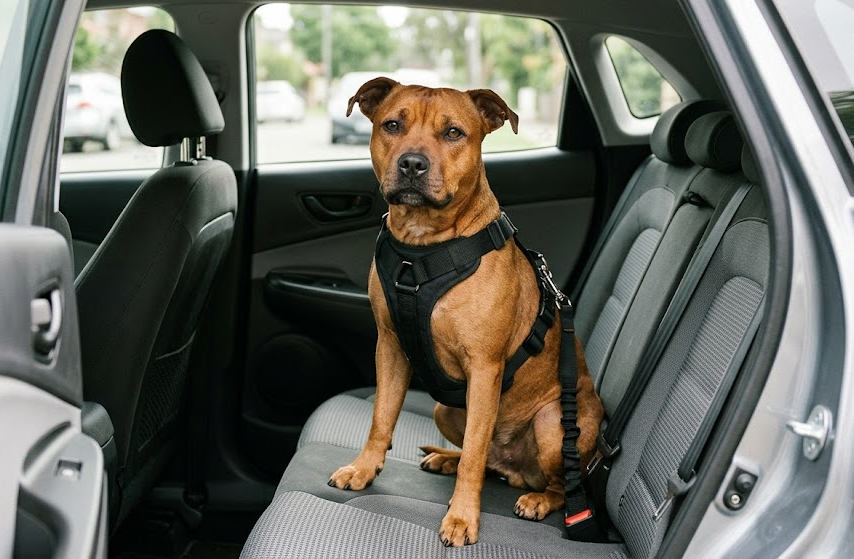
3. Chest Coverage and Force Distribution
A basic tether attached to a collar is not a safer substitute. In a sudden stop, neck-only restraint can create concentrated pressure where you do not want it.
A better dog seat belt harness uses the chest and torso to manage force. That does not mean every harness is equally protective, but it does mean you should prefer designs that look built to spread load across stronger parts of the body.
4. Fit That Stays Stable in Motion
Fit matters just as much as materials. If the harness shifts sideways, gaps at the chest, or lets a dog back out when tension changes, the safety story falls apart fast.
A good harness for car rides should:
- stay centered when your dog sits and lies down
- keep the chest strap behind the front legs
- avoid pressing into the throat
- allow normal breathing and shoulder movement
- remain secure even if the dog turns or braces during travel
Crash-Tested vs Non-Tested Claims
Many owners search for a crash tested dog harness because they want something more trustworthy than generic marketing. That instinct is right. “Crash tested” can be meaningful, but only if the claim is backed by specifics.
What a Better Safety Claim Looks Like
A more credible product page or brand explanation usually tells you:
- what kind of testing was done
- whether dog size or weight ranges were considered
- how the harness was used with the vehicle restraint
- whether the result was about containment, reduced forward movement, or general durability
What a Weak Safety Claim Looks Like
Be cautious when a product says things like:
- “safety tested” with no details
- “car approved” without naming any method
- “for vehicle use” but with no explanation of force handling
- strong-looking photos that show no real restraint logic
A non-tested harness is not automatically useless, but it should be judged more conservatively. If the brand cannot explain how the harness is meant to function in the car, treat it as a comfort harness first and a safety harness second.
Comparison Table: What to Prioritize
| Feature | Why it matters in car travel | What to prefer | What to avoid |
|---|---|---|---|
| Attachment point | Connects the dog to the vehicle restraint system | Reinforced loop, metal hardware, stable routing | Thin clip, weak plastic, vague connection method |
| Harness structure | Helps manage force across the body | Wide chest panel, strong stitching, balanced design | Narrow decorative straps, fashion-first design |
| Fit | Prevents twisting, escape, and pressure points | Snug, centered, adjustable around chest and torso | Loose gaps, armpit rubbing, shifting to one side |
| Safety testing | Adds confidence to performance claims | Specific crash-test or restraint-test details | Generic claims with no supporting information |
| Practical use | Determines whether owners will use it every trip | Easy to put on correctly, clear setup | Confusing buckles, awkward setup, poor adjustability |
Fit and Sizing Tips for Car Travel
Even the best dog seat belt harness can underperform if it fits poorly. Car travel adds movement, seat angles, and braking force, so a harness that feels acceptable on a short walk can still be a bad travel choice.
Use these fit rules:
- You should be able to slide two fingers under key straps.
- The harness should sit high enough on the chest to avoid easy escape.
- The chest area should stay behind the front legs instead of rubbing the armpits.
- Your dog should be able to sit and lie down comfortably without excessive slack.
- The restraint should be short enough to reduce roaming, but not so short that it forces an awkward posture.
If your dog is between sizes, do not buy based on weight alone. Chest shape, coat thickness, and how the harness adjusts matter more in practice.
When a Harness Is Better Than a Basic Tether
A tether alone can limit movement, but it does not solve the core issue of how force is managed on the dog’s body. That is why a dog car travel harness is generally a better choice than clipping a restraint to a collar or relying on a simple strap without body support.
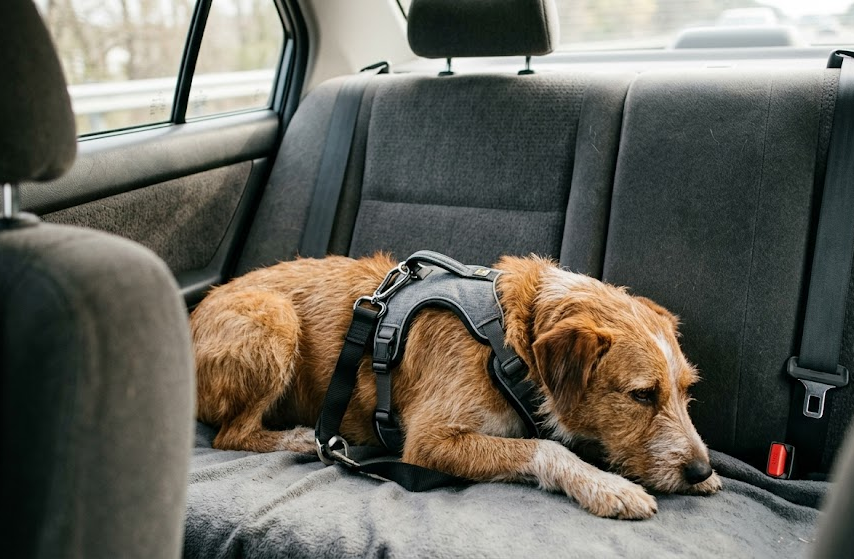
If you want a practical example of the kind of design worth checking, this adjustable padded dog harness with vehicular lead support is relevant because it combines a chest-based harness structure with travel-oriented positioning rather than acting like a basic neck restraint.
That does not automatically make any one model the best for every dog, but it shows the difference between a harness meant to stabilize the body and a simple tether that only limits movement.
Common Buying Mistakes to Avoid
Choosing by Looks Instead of Structure
Soft fabric, trendy colors, or a cute silhouette do not tell you much about restraint quality. For car travel, structure beats style every time.
Trusting Marketing Without Checking Fit Logic
A harness can sound impressive and still be wrong for your dog if the adjustment range is poor or the chest area sits in the wrong place.
Buying Too Much Slack for Comfort
Owners often leave extra room because they do not want the dog to feel restricted. In the car, too much slack usually means more forward movement, more twisting, and less stability.
Ignoring Your Dog’s Size and Travel Habits
A calm 10-pound dog on short rides has different needs from a large, strong dog that shifts around on long drives. The best dog harness for car rides should match both body size and travel behavior.
FAQ
What makes a dog seat belt harness safer than a tether alone?
A dog seat belt harness is safer than a tether alone because it spreads restraint force across the chest and body instead of concentrating it at the neck or a single narrow connection point.
Do dog car harnesses need to be crash tested?
They do not legally need to be crash tested in every case, but credible crash-tested or well-documented safety testing is one of the strongest signals that a harness was designed with real restraint performance in mind.
How should a dog seat belt harness fit?
It should fit snugly enough to stay centered and secure, but loose enough for two fingers to slide under key straps without rubbing or limiting breathing and shoulder movement.
Summary Takeaway
The best dog seat belt harness for car travel is one that keeps restraint secure, spreads force across the chest, fits properly, and backs up safety claims with something more than vague marketing. If you compare attachment strength, construction quality, fit, and testing details before you buy, you are far more likely to choose a harness that actually improves car travel safety.


Leave a Reply