


Do You Need a Refrigerated Automatic Cat Feeder for Wet Food?
You usually need a refrigerated automatic cat feeder for wet food only when meals must sit out for longer periods, your home runs warm, or your cat’s feeding schedule leaves little margin for food sitting at room temperature. For shorter feeding windows, a standard timed wet food feeder with covered compartments or an ice-pack design is often enough.
That is the key decision point many shoppers miss. The real question is not whether refrigeration sounds better in theory. It is whether your routine actually demands longer freshness protection than a basic timed feeder can realistically provide.
If you are asking do you need a refrigerated cat feeder, focus on three things first: how long the food will wait before your cat eats it, how warm the feeding area gets, and whether your cat is eating one delayed meal or several small meals through the day.
Quick answer: when refrigeration is necessary
A refrigerated automatic cat feeder is usually the safer choice when wet food may need to stay usable for extended periods, especially in warmer rooms or during longer workday gaps. If the meal delay is shorter and the feeder keeps portions covered until opening, refrigeration is often helpful but not always necessary.
Refrigeration matters most when:
- your cat’s wet meal may sit for a long time before being eaten
- your home gets warm during the day
- you need dependable midday or late-day wet meals while nobody is home
- your cat is picky about texture and stops eating once food warms up or dries out
- you want a bigger safety margin instead of relying only on covered compartments or ice packs
A simpler timed wet food feeder is often enough when:
- the feeding window is relatively short
- the tray stays covered until the meal opens
- the room stays fairly cool
- you can pre-chill the tray or use an ice pack system
- you are solving a scheduling problem more than a long-hold freshness problem
Decision tree: refrigerated or standard timed feeder?
Use this quick decision tree before you buy:
- Will the wet food need to wait for a longer stretch before your cat eats it?
- If yes, lean toward a refrigerated automatic cat feeder.
- If no, continue to the next question.
- Does the feeder stay in a warm room or near afternoon sun?
- If yes, refrigeration becomes more valuable.
- If no, a covered timed feeder may still be enough.
- Are you feeding one short-delay meal or multiple spaced meals?
- Multiple spaced wet meals usually increase the value of better cooling.
- Is your cat sensitive to dried edges, warmed food, or changing texture?
- If yes, stronger cooling is often worth it.
- Are you mainly trying to automate one breakfast or one midday meal?
- If yes, a standard timed wet food feeder may solve the problem at lower cost and complexity.
How long wet food can sit out safely
This is the part that should drive the purchase. A feeder does not make wet food immune to time and temperature. It only changes how well the meal is protected while it waits.
Why room conditions matter
Wet cat food reacts differently depending on the feeding environment. A cool room, covered tray, and short delay create a very different situation from a warm kitchen, direct sunlight, and multiple meal slots waiting through the day.
That is why wet food cat feeder safety depends on the whole setup, not just the product label. The useful question is: what conditions will this feeder face in your home, not in ideal marketing photos?
What refrigeration actually changes
A true refrigerated feeder gives you a larger freshness buffer. It helps slow warming, texture changes, and the general decline that can make wet food less appealing or less reassuring to leave out. That does not mean every buyer needs one. It means refrigeration becomes more valuable as your schedule gets longer, warmer, or less predictable.
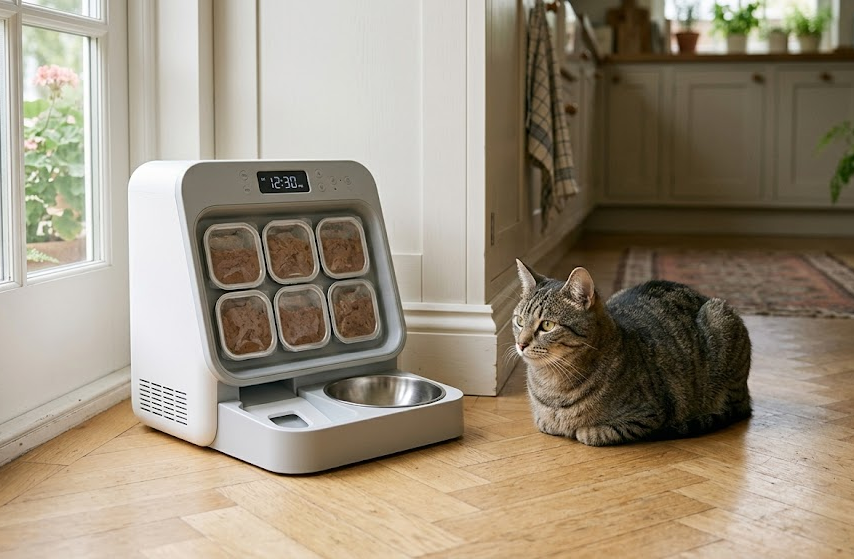
Who benefits most from a refrigerated feeder
A refrigerated model usually makes the most sense for cat owners in one of these situations.
Workday feeding with a long gap
If you leave home in the morning and need wet meals to stay fresher deeper into the day, refrigeration is easier to justify. The longer the gap, the less sense it makes to rely on wishful thinking about food staying fine just because the lid is closed.
Overnight feeding or very early morning meals
Some cats want wet food on a schedule humans hate. If you are setting up a meal far ahead of the actual feeding time, refrigeration can be the more comfortable choice because it gives you more margin than a basic flip-lid tray.
Warm climates or hot rooms
If the feeder sits in a room that runs warm for much of the day, cooling matters more. Climate changes the answer. A setup that feels perfectly reasonable in a cool room may be much less appealing in a warmer apartment, sunroom, or summer kitchen.
Texture-sensitive or fussy cats
Some cats will not touch wet food once it warms, dries at the edges, or loses its just-opened texture. For those cats, a refrigerated automatic cat feeder for wet food can be worth it even if the safety window is not extreme, because food acceptance matters too.
When a standard timed feeder is enough
This is the other half of the decision, and for many buyers it is the more practical answer. If your routine involves shorter timing gaps and you mainly need help with one scheduled wet meal, a standard timed feeder may do the job without the extra cost or bulk of refrigeration.
A standard feeder is usually enough when:
- you are covering one breakfast, lunch, or short daytime meal
- the food stays covered until the tray opens
- your home is not especially warm
- you can use an ice-pack-assisted tray or pre-chilled compartments
- your cat tends to eat soon after the meal opens
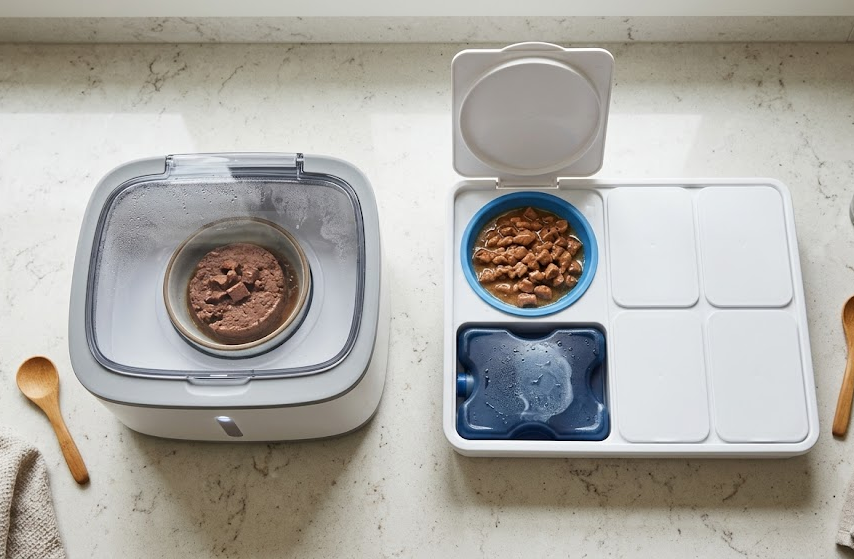
A good example is a multi-compartment timed feeder designed specifically for wet meals rather than a dry-food hopper pretending to do everything. In that scenario, a smart 5-meals pet wet food feeder with app control can fit the need naturally when your main goal is portion timing and covered meal rotation instead of maximum cold retention.
Climate, schedule, and portion-size factors
The best buying decision usually comes from looking at all three together.
| Factor | Lean toward refrigerated feeder | Lean toward standard timed feeder |
|---|---|---|
| Home temperature | Often warm, stuffy, or sunny | Usually cool and stable |
| Meal delay | Longer wait before cat eats | Shorter wait after opening |
| Daily routine | Multiple spaced wet meals | One or two short-gap meals |
| Cat preference | Sensitive to warming or drying | Eats promptly once served |
| Convenience goal | Stronger freshness margin | Simpler scheduling help |
Portion size changes the risk too
Larger wet portions can sit differently than smaller servings. If your cat eats small meals quickly, a timed feeder may be enough. If portions are larger and likely to linger, refrigeration becomes easier to defend because the food may spend more time exposed after opening.
Covered compartments still help
A non-refrigerated timed feeder is not the same as leaving wet food in an open bowl. Covered compartments, rotating trays, and ice-pack support can all improve performance for shorter use cases. That is why the answer is not automatically “buy refrigerated or you are doing it wrong.” It depends on how hard you are pushing the feeder.
Safety checklist before you decide
Before buying any automatic cat feeder wet food refrigerated or otherwise, check this list:
- Holding time: How long will each meal realistically wait before your cat eats it?
- Room temperature: Is the feeder placed in a cool room or a warm spot?
- Compartment design: Does the food stay covered until feeding time?
- Cooling method: True refrigeration, ice pack, insulated tray, or no meaningful cooling?
- Meal count: Are you scheduling multiple wet meals that stretch the waiting period?
- Cat behavior: Will your cat eat promptly, or let food sit after the tray opens?
- Cleanup routine: Can you keep the tray clean enough for repeated wet-food use?
If several of those answers point toward long waits and warmer conditions, a refrigerated feeder is easier to justify. If most point toward short waits and controlled feeding windows, a standard timed feeder may be all you need.
Is a refrigerated cat feeder worth it?
It is worth it when refrigeration solves a real routine problem, not just when it sounds more advanced. Buyers who need longer hold times, warmer-room protection, or better consistency for picky cats are more likely to feel the upgrade is justified. Buyers handling short, predictable feeding gaps may be better served by a simpler timed wet food feeder.
FAQ
How long can wet cat food stay out in an automatic feeder?
That depends on the feeder design, room temperature, and whether the meal stays covered and cooled before opening. In general, the longer the wait and the warmer the room, the stronger the case for refrigeration becomes.
Is a refrigerated cat feeder worth it?
Yes, when your schedule or home conditions make a standard timed feeder less reassuring for wet food. No, not always—many cat owners only need covered meal timing for shorter feeding windows.
Can a standard timed feeder be used for wet food?
Yes, a standard timed feeder can work for wet food when the meal delay is short enough, the portions stay covered until opening, and the overall setup matches a conservative food-safety routine.
Final takeaway
If you are wondering whether you need a refrigerated automatic cat feeder for wet food, the honest answer is: only sometimes. You usually need one when time, temperature, or cat pickiness push a normal timed feeder beyond a short, controlled window. If your schedule is simpler and the meal does not need to wait that long, a covered timed feeder is often the better-value choice.
Leave a Reply