

Best Slow Feeder Dog Bowls for Wet Food: What Should You Look For?
The best slow feeder dog bowl for wet food has wider channels, easy-clean material, and enough stability to keep messy meals from smearing or tipping during feeding. For most dogs, the right choice is not the most complicated maze—it is the bowl that slows licking and gulping without trapping soft food in deep corners that are annoying to wash every day.
Wet meals change what matters. A bowl that works for dry kibble can become frustrating with canned food, fresh food, toppers, or mixed meals because sticky residue clings to sharp ridges and narrow grooves. If you want a slow feeder dog bowl wet food routine that actually feels practical, focus on channel shape, cleaning ease, material, and bowl stability before you focus on fancy patterns.
Quick answer: what makes a slow feeder good for wet food
If you want the short version, look for these things first:
- wider and smoother channels
- rounded edges instead of tight corners
- easy-clean material that does not hold grease or odor
- enough weight or grip to stop sliding
- a depth that matches your dog's muzzle size and meal size
- a pattern that slows eating without turning every meal into a frustrating puzzle
The key relationship is simple: more sticky food -> more cleanup burden, so cleaning ease matters more for wet meals than it does for dry kibble.
Why wet food needs a different kind of slow feeder
Wet dog food behaves differently inside the bowl. It smears, spreads, and settles into corners instead of rolling between ridges like kibble. That means a maze design that looks effective online may be miserable in real life if the channels are too narrow or the pockets are too deep.
A good slow feeder for wet dog food should create slower bites, not harder cleanup. Soft food should stay accessible enough that your dog can finish a meal without scraping awkwardly at unreachable bits. Owners usually notice the difference quickly: the right bowl slows pace while keeping meals tidy enough that rinsing and washing do not become a second chore after feeding.
Features that matter most for wet meals
1. Groove width and openness
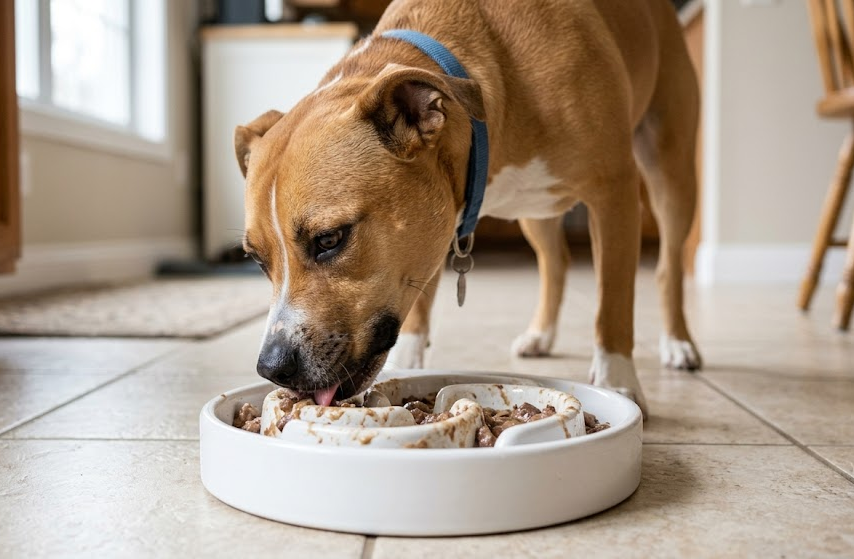
This is the first thing I would judge. Wider channels are usually better for wet meals because they still interrupt big mouthfuls without packing soft food into hard-to-reach corners. Extremely intricate maze layouts can work for dry food, but with wet meals they often create more mess than benefit.
Look for:
- open lanes rather than tiny puzzle pockets
- rounded bends instead of sharp dead ends
- enough room for a spoon or brush to reach the full surface when cleaning
2. Groove depth
Groove depth should match the dog and the food. Deep grooves are not automatically better. With wet food, very deep channels can make food smear along the sides and collect at the bottom, especially for short-muzzled dogs or small breeds.
As a rule:
- shallow to medium depth works best for small dogs and soft meals
- medium depth works well for most average dogs eating canned or mixed meals
- deeper ridges only make sense when a larger dog truly bolts food and the pattern still stays open enough to clean
3. Base stability
Wet food adds weight and slipperiness. If the bowl slides, tips, or rotates, the meal gets messier fast. A non-slip ring, heavier base, or broad footprint makes a bigger difference than many buyers expect.
This relationship matters: less stable bowl -> more smearing and pushing -> more cleanup around the bowl, not just inside it.
4. Practical portion control
A useful wet food slow feeder bowl should still let you portion meals clearly. If the design makes it hard to spread one can, one pouch, or a measured mixed meal evenly, feeding becomes inconsistent. Bowls with visibly divided channels often help distribute food more evenly without requiring constant adjustment.
Materials that are easiest to clean after sticky food
When soft food is involved, bowl material becomes one of the most practical buying decisions.
Stainless steel
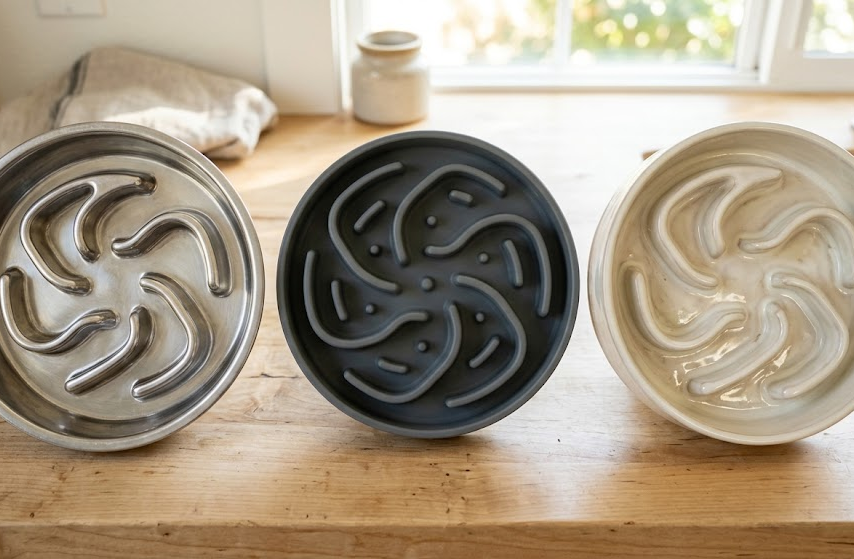
Stainless steel is usually one of the best materials when daily hygiene matters. It tends to release oily residue more easily, resists odor retention well, and handles regular washing without much fuss. The downside is that you often get fewer pattern choices than with plastic or silicone.
Best for:
- owners who feed wet food every day
- dogs that leave greasy or sticky residue behind
- buyers who care more about cleaning ease than novelty
Silicone
Silicone inserts or silicone-based slow feeders can be a smart option when you want flexibility and gentler edges. Many are easy to rinse, and the softer material can be practical for mixed wet-and-dry routines. The catch is that some inserts shift inside existing bowls if the fit is not solid.
Best for:
- moderate fast eaters
- owners who want a removable insert
- households that switch between bowl setups
Plastic
Plastic offers the most shape variety, but that is not always a win for wet meals. Some plastic bowls are perfectly usable, but very intricate plastic mazes can hold residue and develop scratches over time if cleaned aggressively. Smooth, simpler plastic designs are much safer bets than deep puzzle-style ones.
Best for:
- budget-focused shoppers
- dogs that do not need an extreme slow-feed pattern
- owners willing to prioritize simple geometry over complex design
Ceramic
Ceramic can be excellent for stability because it is often heavier, but the best option depends on build quality and shape. A well-made ceramic bowl with rounded channels can work beautifully for wet meals, though it is usually heavier and can chip if dropped.
Best for:
- home feeding setups where stability matters most
- owners who want a weighty bowl that stays put
- dogs that push lighter bowls across the floor
Material comparison at a glance
| Material | Best for | Strengths | Watch-outs |
|---|---|---|---|
| Stainless steel | daily wet food use | easy to sanitize, less odor retention, practical cleanup | fewer design options |
| Silicone | inserts and mixed feeding | flexible, softer edges, often easy to rinse | can shift if fit is poor |
| Plastic | budget options | affordable, easy to find, many patterns | can trap residue in complex mazes |
| Ceramic | stability-focused setups | heavier, often stays put well | can chip, heavier to handle |
Groove shape and depth for different dog sizes
Small dogs
Small dogs usually do best with shallower channels and tighter overall bowl diameter, but not with deep narrow traps. Wet food should remain easy to lick without forcing the dog to strain into corners.
Medium dogs
Medium dogs have the most flexibility. A medium-depth bowl with open spirals or broad wave-style barriers is often enough to slow eating without making cleanup annoying.
Large dogs
Large dogs need more room and a sturdier base. The bowl should offer enough surface area for a full wet meal while still slowing gulping. For many big dogs, the best answer is not deeper grooves—it is a wider bowl with clear raised sections and strong grip underneath.
Common mistakes when using wet food in slow feeders
The usual mistakes are pretty predictable:
- choosing the most complicated maze instead of the most washable one
- buying deep grooves for a small or flat-faced dog
- ignoring how hard the bowl will be to scrub every day
- picking a light bowl that slides during enthusiastic feeding
- assuming any slow feeder works equally well for kibble and canned food
- forgetting that wider channels often work better than narrow puzzle paths for soft meals
A lot of people chase “maximum slowdown” when what they really need is “enough slowdown with reasonable cleanup.” For wet meals, that distinction matters.
Buying checklist
Before you buy, make sure the bowl passes this checklist:
- Does the pattern have wide, rounded channels for soft food?
- Is the material easy to wash after sticky meals?
- Will the bowl stay in place on your floor?
- Does the groove depth match your dog's muzzle size?
- Can you portion wet food evenly without it piling into one area?
- Is the design simple enough that you will still like using it every day?
Feature checklist for the best slow feeder dog bowl wet food buyers
If the goal is practical day-to-day use, prioritize these features in order:
- cleaning ease
- channel width and rounded shape
- bowl stability
- appropriate groove depth
- portion-friendly layout
- overall durability
That order is intentional. For wet meals, a bowl that is slightly less “slow” but much easier to clean is often the better long-term purchase.
FAQ
Can you use wet food in a slow feeder dog bowl?
Yes. Wet food works well in a slow feeder as long as the bowl has open, rounded channels and does not trap soft food in deep narrow corners.
What material is best for a slow feeder bowl with wet food?
For many owners, stainless steel is the most practical choice because it is easy to clean and less likely to hold odors or greasy residue. Ceramic can also work well when stability matters, and silicone can be useful when you want a removable insert.
Are deep grooves bad for wet dog food?
Not always, but they are often less practical. Very deep grooves can hold wet food in corners, increase cleanup time, and make eating awkward for smaller dogs or short muzzles.
Summary takeaway
The best slow feeder dog bowl for wet food is usually the one with wide channels, easy-clean material, and enough grip to keep messy meals under control. If you focus on cleaning ease, sensible groove depth, and stability instead of the most aggressive maze pattern, you are much more likely to end up with a bowl that works well every day.
Leave a Reply