

Dog Booster Seat vs Seat Belt Harness: Which Is Better for Small Dogs in the Car?
For small dogs, a booster seat can improve visibility and comfort, while a seat belt harness usually gives more direct restraint; the better choice depends on whether the priority is calmer positioning or stronger movement control. If your dog is tiny, likes to look out the window, or settles better in a contained space, a properly attached booster seat can work well. If your dog squirms, tries to climb forward, or needs firmer movement control during car travel, a seat belt harness is usually the safer first choice.
Quick Answer
- Choose a dog booster seat if your small dog is calm, under the product’s weight limit, and rides better when elevated and able to see out.
- Choose a seat belt harness if your small dog is active, curious, nervous in a way that leads to pacing, or likely to lunge, twist, or try to get into the front seat.
- Choose both together only if the booster seat is designed to anchor securely and you clip your dog in with a short safety tether or crash-minded restraint setup.
- Avoid either option if it does not fit correctly. A loose booster seat or a poorly fitted harness can reduce protection instead of improving it.
Quick Answer by Dog Type
| Small dog situation | Usually better choice | Why |
|---|---|---|
| Calm toy breed on short city rides | Booster seat | Better visibility and a cozy perch often help the dog stay settled |
| Curious dog that keeps moving around | Seat belt harness | Gives more direct restraint and reduces roaming |
| Motion-sensitive small dog | Booster seat in some cases | Elevation and a snug bed-like space may help some dogs feel more stable |
| Nervous dog that spins or tries to climb onto you | Seat belt harness | Better movement control matters more than visibility |
| Long highway trips | Depends on the dog | Comfort matters, but restraint and fit matter more |
| Very tiny dog that dislikes pressure on the chest | Carefully fitted booster seat with secure tether | Some tiny dogs tolerate this better than a bulky harness |
Scenario Matrix
| Scenario | Booster seat strengths | Harness strengths | Better pick for most small dogs |
|---|---|---|---|
| Frequent short errands | Quick comfort, raised view, easy routine | Less setup bulk, direct clip-in | Tie; choose based on your dog's behavior |
| Long road trips | Cozy nest-like feel, easier resting for calm dogs | Better control during stops, turns, and entry/exit | Harness if your dog stays restless; booster if truly calm |
| City driving with lots of starts and stops | Helps some dogs stay put if they like a contained perch | Better at limiting sudden body movement | Harness |
| Dog gets carsick or anxious | Elevated viewing can help some dogs, enclosed sides can feel secure | Some anxious dogs fight the harness and get more worked up | Booster seat for calm-but-nauseous dogs; harness for restless anxious dogs |
| Dog tries to reach the driver | Not enough on its own unless tethered very well | More direct restraint | Harness |
| Dog loves looking out the window | Excellent visibility | Limited visibility compared with a raised seat | Booster seat |
How Dog Booster Seats Work for Small Dogs
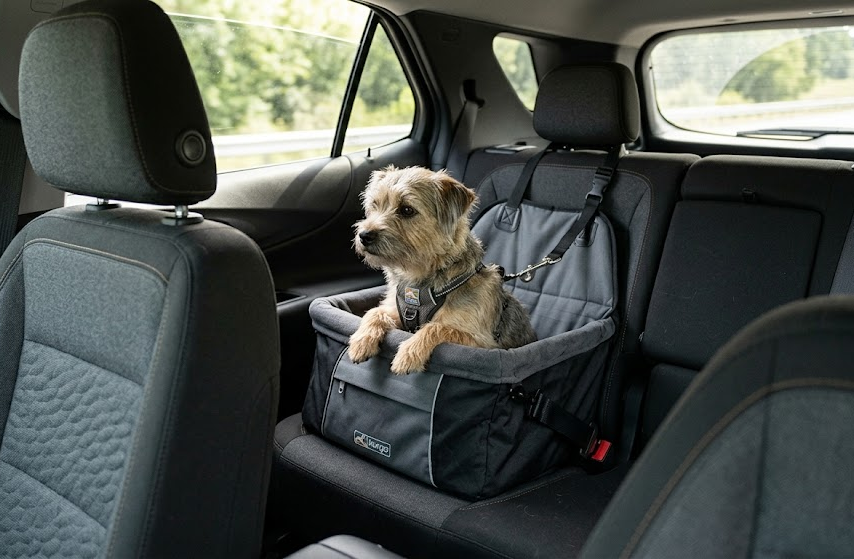
A dog booster seat is usually a raised fabric or structured seat that straps to the car seat and gives a small dog a contained place to sit or lie down. The biggest advantage is visibility. Many small dogs are calmer when they can see out rather than sliding around on a flat seat.
A good dog booster car seat can also improve comfort because it creates a clear resting area instead of leaving the dog to brace against every turn. For very small breeds, that can make ordinary car travel feel less chaotic.
That said, a dog booster seat is not automatically a complete restraint system. It still needs to be attached properly to the vehicle seat, and the dog usually still needs to be clipped to a short tether inside the seat so it cannot jump out during braking or turns.
Best fit for a booster seat
A booster seat tends to work best when your small dog:
- stays fairly still once settled
- enjoys looking out the window
- curls up rather than pacing
- is within the seat’s stated size and weight limit
- does not chew or claw wildly at restraints
How Seat Belt Harnesses Work for Small Dogs
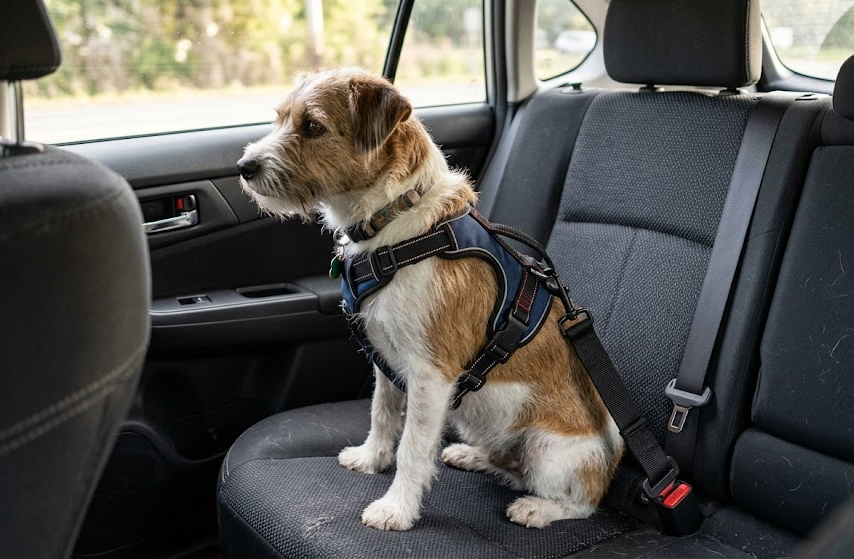
A dog seat belt harness for small dogs connects a properly fitted body harness to the car’s seat belt system or to a vehicle restraint attachment point. Its biggest advantage is restraint. It is designed to limit how far the dog can move around the vehicle.
For small dogs that stand up, circle, bark at every window, or try to crawl onto a person’s lap, that extra movement control is often more important than comfort perks. A well-fitted harness can also make loading and unloading easier because the restraint system stays consistent from trip to trip.
The tradeoff is that some small dogs dislike harness pressure, especially if the harness is bulky, rubs under the front legs, or lets the dog twist awkwardly. A poor fit can make the dog more uncomfortable instead of more secure.
Best fit for a seat belt harness
A harness usually makes more sense when your small dog:
- keeps changing position in the car
- tries to move into the front seat
- gets overexcited by passing people, dogs, or bikes
- needs firmer movement control on daily trips
- tolerates wearing a body harness well outside the car too
Best Option for Anxious, Curious, or Motion-Sensitive Small Dogs
Temperament matters as much as size.
For anxious but fairly still dogs
If your dog trembles, pants, or looks uneasy but mostly stays in one place, a booster seat may help because it creates a more defined little zone. Small dogs often relax faster when they have soft side support and a better view.
For curious dogs that keep popping up
A seat belt harness is usually the better option. Curious dogs often turn every car ride into a balancing act, and better restraint matters more than extra visibility.
For motion-sensitive dogs
This depends on what seems to trigger the discomfort. Some small dogs do better when they can look out from a booster seat. Others need the most stable, minimal-movement setup possible. In either case, secure positioning, ventilation, and smooth driving still matter.
For dogs that get overexcited near the driver
Pick the seat belt harness first. The risk here is not just comfort. It is driver distraction and uncontrolled movement.
Safety and Comfort Tradeoffs
For most small dogs, the real comparison is visibility versus restraint.
Where booster seats win
- Better view for small dogs that hate sitting too low
- Cozy, bed-like feeling for calm riders
- Good everyday comfort on short and medium trips
- Often easier for tiny dogs to settle into
Where seat belt harnesses win
- More direct movement control
- Better for dogs that pace, lunge, or twist around
- Stronger choice when the dog may distract the driver
- Usually more versatile across different cars
Pros and Cons
Booster seat pros
- Helps many small dogs feel less lost on a big car seat
- Supports a more relaxed posture for calm riders
- Often better for dogs that want to see outside
- Can feel more natural for very tiny breeds
Booster seat cons
- Needs secure installation to work well
- Not enough by itself if the dog can jump out
- Less ideal for highly active or impulsive dogs
- Some models are too shallow or flimsy for real stability
Seat belt harness pros
- Better direct restraint for active small dogs
- Helps prevent roaming around the car
- Useful for daily commutes and frequent short rides
- Easier to use in different vehicles when the fit is right
Seat belt harness cons
- Some small dogs dislike wearing harnesses in the car
- Poor fit can cause rubbing or awkward posture
- Does not provide the elevated view that some small dogs prefer
- Can still allow too much motion if the tether is too long
What to Check Before Buying
Fit Checklist
Before you buy a small dog car seat or harness, check these points:
- Dog size and weight: Stay inside the stated limits. Small dogs vary a lot, and a 5-pound dog and a 20-pound dog do not need the same setup.
- Attachment method: The booster seat should strap firmly to the vehicle seat. A harness should connect to an appropriate restraint point without too much slack.
- Tether length: Long tethers allow extra movement. Shorter, controlled positioning is usually better.
- Chest fit: A harness should sit securely across the chest without digging into the throat or armpits.
- Seat shape: Booster walls and cushion depth should match how your dog actually sits or curls up.
- Trip type: City driving, school-run errands, and highway travel can change which setup feels better.
- Behavior pattern: Pick for the dog’s real behavior, not the behavior you wish it had.
Which Is Better for Small Dogs in the Car?
If you want the clearest rule, here it is: a seat belt harness is usually the better first choice for active, wiggly, or distraction-prone small dogs, while a booster seat is often the better comfort choice for calm small dogs that settle nicely and benefit from being elevated.
That is why this is not a one-size-fits-all decision. The best car restraint for small dogs depends on how your dog behaves once the car starts moving.
If your dog is calm and enjoys the ride, a booster seat can make car travel more pleasant without feeling restrictive. If your dog turns every ride into a scramble, the better answer is usually a harness that limits movement more directly.
FAQ
Are dog booster seats safe for small dogs?
They can be safe for small dogs when the seat is attached correctly, the dog is within the weight limit, and a secure tether keeps the dog from jumping out. A booster seat should not be treated as safe just because it raises the dog up.
Is a seat belt harness better than a booster seat?
For movement control, yes, a seat belt harness is usually better. For visibility and cozy comfort, a booster seat may be better. The right pick depends on whether your small dog needs calmer positioning or firmer restraint.
Can a dog use both a booster seat and a harness?
Yes, many small dogs do best with a booster seat that is securely attached plus a short safety tether connected to a well-fitted harness. The key is making sure the combination does not create extra slack or awkward twisting.
Summary Takeaway
For small dogs in the car, booster seats are usually best for calm riders who want comfort and a better view, while seat belt harnesses are usually best for dogs that move too much and need stronger restraint. Choose based on your dog’s behavior during actual car travel, and never rely on elevation alone when secure restraint is still needed.
Leave a Reply