


Dog Travel Bag Buying Guide: What to Look for on Weekend Trips and Road Trips
A good dog travel bag should match the length of your trip, keep food and supplies organized, and be easy to carry, clean, and grab during travel stops.
If you only take short weekend outings, a compact bag with a few smart compartments is usually enough. If you regularly do road trips, you will want more capacity, better separation for food and cleanup items, and a layout that makes it easy to reach essentials without unpacking everything at once.
That is why the best dog travel bag is not simply the biggest one. The right choice depends on how long you travel, how much your dog needs on the move, and whether you want one organized system instead of stuffing leashes, treats, bowls, and waste bags into random totes.
Quick answer: who actually needs a dog travel bag
A dog travel bag is worth buying if you regularly leave home with enough pet supplies that a regular tote becomes messy, hard to clean, or annoying to unpack. It is especially useful for dog owners who take weekend trips, road trips, daycare drop-offs, hotel stays, camping trips, or long day outings where pet supplies need to stay organized.
You probably need a dedicated dog travel bag if:
- you pack food, bowls, medications, cleanup supplies, and toys together
- you make frequent car stops and want to grab one bag instead of several loose items
- you need to separate clean items from used or messy gear
- your current tote turns into a pile of zipped pouches, shopping bags, and backup containers
- you travel with more than one dog or with a dog that has feeding, medication, or comfort routines
If you only bring a leash, a water bottle, and a few treats for short neighborhood outings, a full pet travel bag for supplies may be overkill. But once your trips start involving meals, backup gear, and car organization, a dedicated bag starts making sense fast.
What a dog travel bag should be big enough to hold
The right size is about capacity with control, not just extra volume. A bag that is too small forces you to overpack and cram things together. A bag that is too large often becomes a black hole where small essentials disappear.
As a baseline, most dog owners should look for a bag that can comfortably hold:
- food for the trip length
- collapsible bowls or travel bowls
- leash, harness, or backup lead
- poop bags and cleanup items
- a towel or small blanket
- treats or training rewards
- a favorite toy or chew
- medications if needed
- vaccination or travel paperwork when relevant
For a weekend trip, this usually means a moderate-capacity bag that keeps core supplies in separate sections. For a road trip, the ideal dog essentials travel bag should leave room for extra food, backup cleanup supplies, seasonal gear, and a few comfort items without becoming bulky or awkward to carry.
Bag size, compartments, and portability features
When comparing options, focus less on marketing labels and more on how the layout works in real use. The most useful dog travel bag buying guide criteria are usually size, compartments, portability, cleanability, and quick-access design.
Size: match the bag to trip length
A small-to-medium bag works best for overnight stays, day trips, and weekends with one dog. A medium-to-large bag is more practical for longer road trips, multi-dog travel, or dogs with more feeding and gear needs.
A useful rule is simple:
- short trip = compact and streamlined
- one to two nights = medium capacity with clear sections
- long road trip = larger bag with separate zones and exterior pockets
Bigger is only better if the space is actually organized well enough to use.
Compartments: the feature that matters most
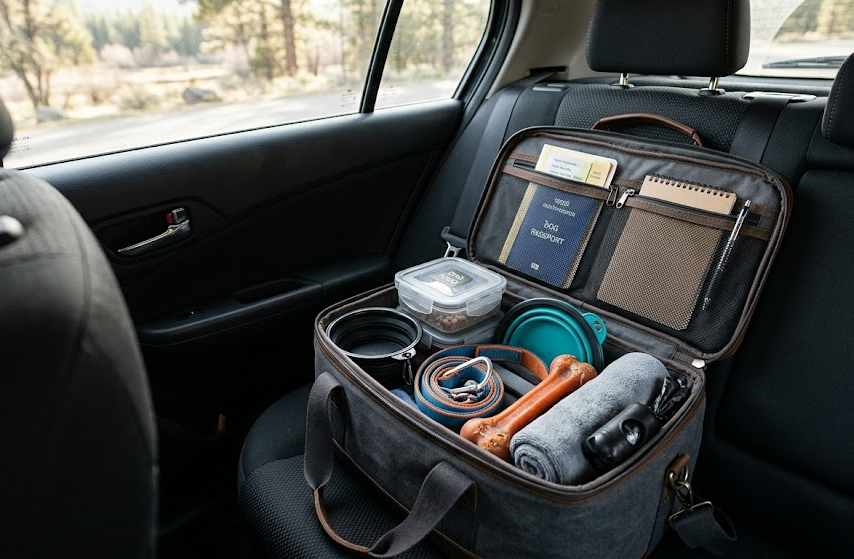
Storage compartments are what separate a true dog travel bag from a generic duffel. Good organization makes every travel stop easier.
Look for compartment setups that let you separate:
- food from cleanup items
- clean bowls from used bowls
- treats from full meal storage
- paperwork or small valuables from bulky pet supplies
- frequently used items from backup items
A bag with several purposeful compartments will usually outperform a single large cavity, even if the total capacity is similar.
Portability: easy to carry beats clever-looking
A pet travel bag for supplies should feel manageable from the parking lot to the hotel lobby to the rest stop. Padded handles, a comfortable shoulder strap, balanced weight distribution, and a shape that sits well in the car matter more than flashy extras.
Useful portability features include:
- padded shoulder strap or reinforced grab handles
- luggage sleeve or shape that stacks easily with your own bag
- structured sides so the bag does not collapse into itself
- wide opening so you can see everything quickly
- lightweight material that does not add bulk before you even pack it
Easy-clean materials matter more than many buyers expect
Dog travel gear gets dirty. Treat dust, damp bowls, muddy leashes, and occasional food spills are normal. A bag with wipe-clean lining or water-resistant fabric is much easier to live with than one that absorbs every mess.
For many buyers, this is the difference between a bag that stays in rotation and one that ends up ignored in a closet.
Weekend trips vs road trips: what changes
The biggest mistake people make is buying one bag based on appearance instead of travel scenario. Weekend trips and road trips create different demands.
Best bag profile for weekend trips
For a weekend trip, the best dog travel bag is usually compact, structured, and fast to pack. You do not need excessive space. You need enough room for one or two days of food and supplies without carrying a bulky extra piece of luggage.
A good weekend-trip bag should prioritize:
- moderate size
- a few well-designed compartments
- easy carry between home, car, and destination
- quick packing and unpacking
- just enough structure to keep essentials separated
This is the kind of bag that works well for overnight family visits, pet-friendly hotel stays, cabin weekends, or short beach trips.
Best bag profile for road trips
A road trip bag needs more flexibility and more separation. You may be feeding your dog at several stops, wiping paws after breaks, rotating toys, carrying extra water, and keeping backup supplies handy in case the drive runs long.
For road trips, prioritize:
- larger usable capacity
- multiple exterior quick-access pockets
- easier food organization
- stronger cleanup-item separation
- room for seasonal gear like cooling towels or extra blankets
- stable shape that fits well in a trunk or back seat
A road trip bag should reduce rummaging. If you have to pull everything out just to reach poop bags, treats, or a bowl, the layout is wrong for this kind of travel.
Feature checklist: what to compare before you buy
Use this checklist when comparing any dog travel bag:
- Trip length fit: Is it sized for day use, weekends, or longer drives?
- Compartment quality: Are there enough storage compartments to separate food, bowls, toys, and cleanup gear?
- Quick-access design: Can you reach the things you use at stops without unpacking the whole bag?
- Carry comfort: Will it still feel manageable when fully loaded?
- Material quality: Is the fabric durable, wipe-clean, and resistant to light spills?
- Opening style: Does it open wide enough to see what you packed?
- Car organization: Will it sit neatly in your back seat, trunk, or footwell?
- Mess control: Is there a place for used bowls, damp towels, or dirty accessories?
- Dog-specific fit: Does the layout make sense for your dog’s size, feeding routine, and comfort needs?
- Overpacking risk: Does the design help you stay organized, or does it invite clutter?
If a bag looks stylish but fails on quick-access use, cleanup separation, or compartment logic, it will probably frustrate you on actual trips.
Food, leash, toy, and cleanup storage considerations
Different supplies create different storage problems, which is why a regular tote often falls short.
Food storage
Food takes up more space than many buyers expect, especially for road trips. Bags that make room for sealed food containers or dedicated food sections are more practical than bags that expect kibble to share space with everything else.
If your dog follows a strict feeding routine or has a sensitive stomach, food organization matters even more because you do not want scoops, treats, and full meals mixed together loosely.
Leash and harness storage
Leashes and harnesses are grab-first items. They should sit in a place you can reach quickly at rest stops or when arriving at a hotel. Deep interior storage is fine for backups, but your primary walking gear should not be buried under food and towels.
Toys and comfort items
For anxious travelers, a toy, blanket, or chew can matter as much as food. That means the bag should leave a little flexible space for comfort items instead of being packed so tightly that every extra item feels forced.
Cleanup supplies
Cleanup items deserve their own zone. Waste bags, wipes, paw-cleaning cloths, and anything damp or messy should not share open space with feeding supplies.
For example, if you already carry a dedicated dog poop bag holder for quick walks and roadside stops, it pairs best with a travel bag that still gives cleanup gear its own separate pocket instead of forcing everything into one section.
That kind of separation is a small detail until you are opening the bag right before feeding time.
When a travel bag is better than using a regular tote
A regular tote works until it does not. It can hold pet supplies, but it usually does not organize them well. That becomes obvious when you are traveling, because travel creates repeated moments where you need one specific thing immediately.
A dog travel bag is better than a regular tote when you want:
- predictable organization
- cleaner separation between food and dirty items
- easier loading and unloading in the car
- fewer loose pouches floating around
- a bag that feels designed for repeated pet-related stops
A regular tote is still fine for occasional short outings. But if you travel often enough to have a pet routine, a dedicated bag saves time and lowers friction every single trip.
Mistakes to avoid when buying a pet travel bag
Buying based on size alone
Large bags look versatile, but they are frustrating if they lack structure. Capacity without organization is just clutter with handles.
Ignoring how you actually travel
A compact weekend bag and a road trip bag solve different problems. Buy for your real use case, not your most ambitious hypothetical trip.
Underestimating cleanup needs
Messy items need separation. If the bag has nowhere sensible for wipes, waste bags, or damp gear, it will feel chaotic fast.
Choosing style over access
Some bags photograph well but are annoying to use. Narrow openings, floppy sides, and poorly placed pockets become obvious during real travel.
Forgetting your dog’s routine
Your dog’s size, diet, medication needs, and comfort habits should shape the bag choice. A minimalist setup may work for one dog and fail badly for another.
Scenario comparison: which type of dog travel bag fits you best?
| Travel scenario | Best bag style | Why it works |
|---|---|---|
| Day outings and short local trips | Small structured bag or compact organizer | Keeps essentials together without overpacking |
| Weekend trip with one dog | Medium dog travel bag with a few compartments | Balances capacity and portability |
| Long road trip | Larger bag with multiple storage compartments and quick-access pockets | Handles food, cleanup gear, and repeated stops better |
| Multi-dog travel | Large organized bag or two-bag system | Prevents food and gear from becoming mixed up |
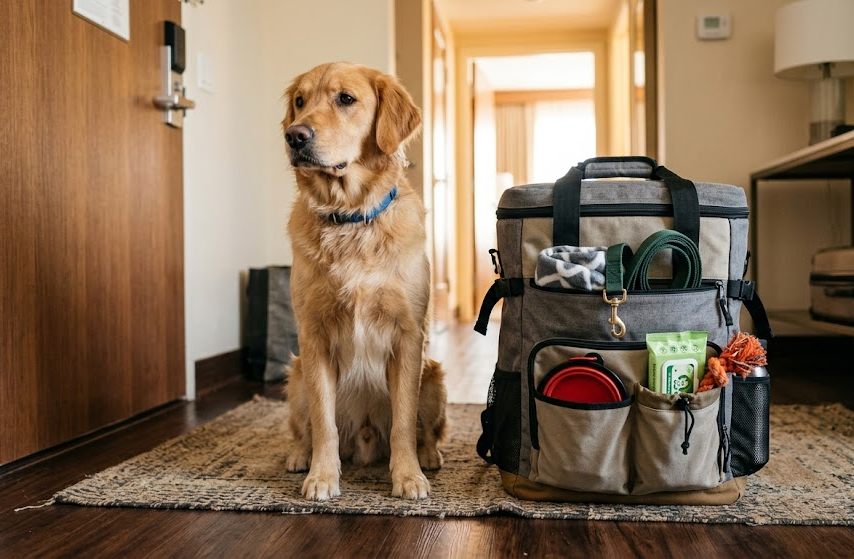
| Hotel stays and frequent loading/unloading | Structured upright bag with wide opening | Faster access and easier repacking |
Summary takeaway
The best dog travel bag is the one that matches your trip length, your dog’s routine, and the way you actually use pet supplies on the road. For weekend trips, keep it compact and organized. For road trips, choose more capacity, better storage compartments, and easier stop-by-stop access.
If a bag helps you separate food, cleanup items, and quick-grab essentials without turning into clutter, it is probably a good fit. If it only gives you more space without better organization, skip it.
FAQ
What should a dog travel bag be big enough to hold?
At minimum, it should hold food, bowls, leash gear, cleanup supplies, treats, and one or two comfort items. For road trips, it should also leave room for extra food, wipes, towels, and backups.
Is a dog travel bag worth buying for short trips?
Yes, if you take frequent weekend trips, hotel stays, or long day outings and want your pet supplies organized in one place. No, if you only carry a few basics occasionally and a regular tote already works well.
What features make a pet travel bag easier to use?
The most helpful features are practical storage compartments, quick-access pockets, easy-clean fabric, comfortable carrying options, and a wide opening that lets you find essentials fast.
Leave a Reply