


What Size Cat Carrier Is Airline Approved? A Simple Guide for Flying With a Cat
An airline-approved cat carrier is usually one that fits your airline’s under-seat limits while still giving your cat enough room to stand, turn around, and lie down comfortably. In practice, many in-cabin carriers land somewhere around 17 to 19 inches long, 10 to 12 inches wide, and 10 to 11 inches high, but the exact approved size varies by airline, aircraft, and even seat row.
Quick Answer
If you are asking what size cat carrier is airline approved, the safest answer is this: choose a soft-sided carrier that matches your airline’s under-seat dimensions, then confirm your cat can still fit inside without being cramped. The carrier itself matters, but so does the cat’s body length, shoulder width, and standing height.
A good cat travel carrier airline approved for cabin use should check all of these boxes:
- fits within the airline’s listed in-cabin pet carrier dimensions
- slides under the seat in front of you
- allows your cat to stand, turn, and settle naturally
- has breathable mesh panels and secure zippers
- is flexible enough to compress slightly if the airline expects a soft-sided fit
Typical Airline Approved Cat Carrier Size
There is no single universal size that every airline accepts. That is the first thing that trips people up. When people search for airline approved cat carrier size, they often expect one exact measurement, but airlines usually publish a maximum under-seat footprint, not one global pet standard.
Still, a practical rule of thumb is that many cabin-friendly cat carriers fall near this range:
| Carrier dimension | Common range for many airlines | Why it matters |
|---|---|---|
| Length | 17–19 in | Must slide under the seat without blocking space |
| Width | 10–12 in | Needs to fit under-seat width and give your cat shoulder room |
| Height | 10–11 in | Must stay low enough for the seat area while allowing basic comfort |
That range is helpful as a shopping filter, not a boarding guarantee. The real approval test is whether the carrier works for your specific flight.
Why Airline-Approved Size Varies by Airline
The phrase airline approved sounds more precise than it really is. In reality, carrier approval depends on a compatibility chain:
- your airline’s pet policy
- the aircraft type on your route
- the under-seat dimensions on that aircraft
- whether the carrier is soft-sided or more rigid
- whether your cat can ride safely and comfortably inside it
A carrier that is accepted on one airline may be too tall on another. A carrier that works on a larger plane may be a poor fit on a smaller regional aircraft. Even when two carriers have similar published dimensions, one may flex enough to fit under the seat while the other does not.
Why soft-sided carriers are usually easier
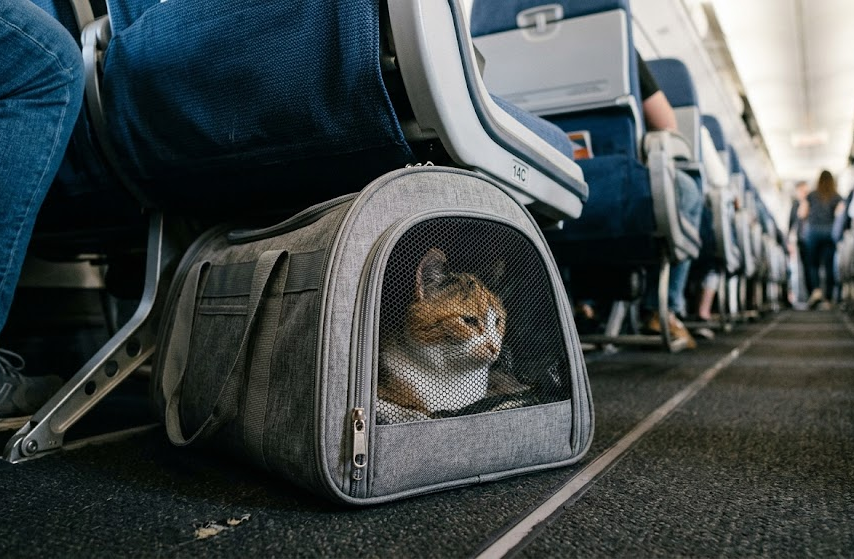
A soft-sided carrier is often the better choice for flying because it can compress slightly to fit under the seat. That little bit of flexibility matters when the space is close. A rigid carrier may technically match the listed numbers but still be less forgiving in real boarding situations.
How to Measure Your Cat and the Carrier
Before buying a cat carrier for plane travel, measure both the cat and the bag. A lot of boarding problems happen because owners only check the carrier’s outer dimensions and forget whether the cat can actually fit in a healthy way.
Measurement checklist
Measure your cat in a calm standing position and note:
- nose to base-of-tail length
- shoulder width at the widest point
- floor to top-of-head or ears while standing naturally
- current weight, because airline pet limits may also apply
Then compare those numbers with the carrier’s:
- interior length
- interior width
- interior height
- base shape, because sloped walls reduce usable space
The goal is not luxury-suite space. The goal is safe, realistic cabin comfort. Your cat should be able to reposition, not be wedged in like luggage.
How Much Room Should a Cat Have Inside?
This is where under-seat dimensions and comfort meet. Your airline may allow the carrier, but if your cat cannot stand, turn, and lie down comfortably, it is not a good travel choice.
A simple fit test is:
- your cat can stand without the top pressing hard on the back
- your cat can turn around with effort but without panic
- your cat can lie down in a normal resting position
- the carrier does not collapse inward so much that airflow is reduced
Kittens and small cats usually have an easier time with standard airline carrier sizes. Large cats, long-bodied cats, or broad-chested cats may need very careful airline selection because the carrier limit becomes the real bottleneck.
Soft-Sided vs Structured Carrier Notes
For most flights, a soft-sided airline approved pet carrier size is easier to work with than a fully structured carrier.
Soft-sided carrier advantages
- more likely to fit under tight seat dimensions
- lighter to carry through the airport
- often more comfortable against your leg in transit
- easier to store when not in use
Structured carrier advantages
- can feel sturdier for some cats
- may keep its shape better during loading and unloading
- can be useful for car travel outside the airport
The trade-off
For flying specifically, flexibility usually wins. A structured carrier can be fine if it truly meets the airline’s allowed size, but soft-sided models tend to be more forgiving at the gate and under the seat.
Mistakes That Can Cause Boarding Problems
If you want to avoid last-minute stress, these are the most common mistakes:
- assuming all airlines accept the same carrier size
- checking only product marketing instead of the airline pet policy
- using outside dimensions without thinking about usable interior space
- bringing a carrier that is too rigid for a tight under-seat fit
- ignoring aircraft-specific limits on smaller planes
- waiting until the airport to confirm pet reservations or documentation
One of the biggest mistakes is buying a carrier just because it is labeled airline approved. That label is a useful hint, not a universal promise.
How to Choose the Right Size Without Guessing
If you are shopping for airline cat carrier dimensions, use this order:
- check the airline’s current in-cabin pet carrier limits
- check whether your route includes a smaller aircraft
- measure your cat carefully
- compare the cat’s size with the carrier’s interior space
- favor a soft-sided model if the fit is close
- avoid pushing the absolute maximum if your cat is already a snug fit
If your cat is large enough that standard cabin carriers seem borderline, it is smarter to rethink the travel setup before booking than to gamble on airport approval.
FAQ
Do all airlines allow the same cat carrier size?
No. Airlines do not all use the same size rules. Even when the differences look small on paper, one extra inch in height can matter for under-seat clearance.
How much room should a cat have inside a travel carrier?
Your cat should have enough room to stand, turn, and lie down comfortably. If the carrier technically meets the policy but your cat is clearly cramped, it is not the right size.
Is a soft-sided carrier better for flying with a cat?
Usually, yes. A soft-sided carrier is often easier to fit under the seat and is more likely to work across slightly different under-seat shapes, which is why many travelers prefer it.
Final Takeaway
So, what size cat carrier is airline approved? Usually, it is a carrier close to the common cabin range that also matches your airline’s exact under-seat limits and your cat’s real body size. The smartest way to buy is to treat airline approved as a compatibility check, not a sticker you trust blindly: verify the airline, verify the dimensions, and verify your cat can travel comfortably inside.


Leave a Reply