


Are Dog Seat Belt Harnesses Safe? What to Know Before You Buy
Dog seat belt harnesses can improve travel safety when they fit correctly and use strong attachment hardware, but their protection depends heavily on design quality, fit, and testing claims. They are safer than letting a dog ride loose in most normal driving situations, yet they are not all built to the same standard and they should not be treated as a guarantee of crash-proof protection.
Quick Answer
If you are asking, are dog seat belt harnesses safe, the honest answer is yes, but only when the harness is designed for car travel, fits your dog properly, and connects to strong hardware that is meant for restraint use. A good dog car safety harness can reduce distracting movement, help limit ejection risk in some collisions, and keep your dog more stable during sudden braking. A weak design, poor fit, or flimsy tether can erase much of that benefit.
The value of a dog seat belt harness usually depends on five things:
- whether it is made specifically for car travel rather than walking only
- how well the chest panel and straps distribute force
- whether the metal hardware and attachment points feel genuinely sturdy
- whether the brand gives credible testing information instead of vague marketing language
- whether the harness matches your dog’s size, build, and behavior in the car
Are They Actually Safe?
A dog safety harness for car use is generally a worthwhile upgrade from clipping a leash to a collar or letting a dog roam freely on the rear seat. In everyday driving, the main benefit is control. The harness helps reduce lunging into the front seat, sudden movement during hard stops, and the chance that your dog becomes a projectile inside the cabin.
That said, “safe” needs context. Most dog seat belt harnesses are built to improve travel safety, not to eliminate every injury risk in a severe crash. Even a well-made harness works within limits set by speed, angle of impact, your vehicle’s seat geometry, and your dog’s size.
What a good car harness can help with
- keeping your dog from moving around the cabin too freely
- reducing driver distraction
- helping stabilize the body during sharp turns or sudden stops
- lowering the chance of your dog being thrown forward compared with riding unrestrained
- making routine trips calmer for dogs that settle better when gently secured
What it cannot promise
- zero injury risk in a major collision
- equal performance across every dog breed and body shape
- the same protection as a rigid crash-tested crate in every scenario
- reliable safety when paired with weak clips, long tethers, or a poor fit
What They Can and Cannot Protect Against
The biggest misunderstanding in many dog seat belt harness reviews is that any harness with a seat belt clip must automatically be protective. That is not true. Some products mainly act as movement limiters. Others are designed with broader chest coverage and stronger load-bearing construction that may offer better restraint performance.
A harness can be helpful in lower-speed incidents and abrupt braking because it spreads restraint force over the dog’s torso better than a collar. But if the attachment point is weak or the tether is too long, the dog can still build momentum before the restraint engages.
Why Fit and Attachment Design Matter
Fit is one of the most important safety factors. A dog seat belt harness safe enough for one dog may be a poor match for another if the chest shape, neck shape, or weight distribution is different.
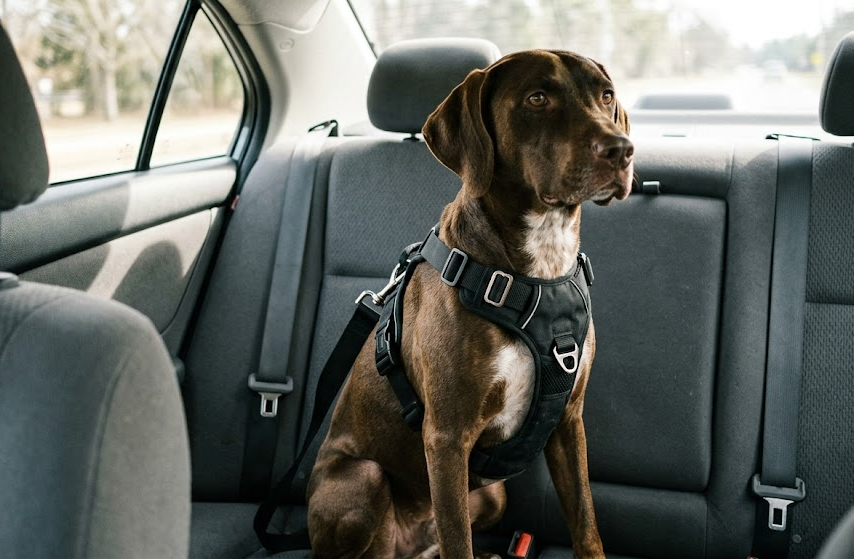
A useful car harness should sit securely around the chest without rubbing into the throat or allowing too much twisting. Broad chest coverage is often better than narrow strap-only designs because the force can spread across a larger area.
Signs of a better restraint-oriented design
- padded or structured chest plate
- reinforced stitching in load-bearing areas
- metal buckles or connectors where stress is highest
- a short, sturdy tether that avoids excess slack
- connection points positioned to reduce awkward twisting
Why hardware matters so much
Hardware failure can turn a promising harness into a weak one. Thin snap hooks, lightweight plastic parts, or cheap seat belt clips may be acceptable for walking accessories but are less reassuring for restraint use. Before buying, look closely at the tether connector, adjustment buckles, and the area where the strap meets the chest section. If the materials look minimal or decorative, trust that instinct.
How to Spot Weak or Misleading Safety Claims
One of the easiest ways to overspend on the safest dog seat belt harness idea is to believe packaging that sounds scientific without proving much. The phrase “crash tested” sounds impressive, but it can mean very different things depending on what was actually tested and how much detail the brand shares.
Better signs
- the brand explains what kind of testing was performed
- there is information about dog size range or test conditions
- the product is clearly marketed for car restraint use
- the harness design visibly supports restraint rather than just comfort walking
Red flags
- no explanation beyond “safety tested” or “durable”
- stock photos that hide the attachment system
- very long tethers that allow heavy forward movement
- ultra-thin straps with little chest support
- product descriptions that focus on fashion, colors, or casual walking features more than restraint design
Myth vs Fact
Myth: Any walking harness works fine in the car
Fact: A regular walking harness may help a little compared with clipping a dog by the collar, but it is not the same as a restraint-oriented design. Walking harnesses are usually optimized for comfort, training, and leash control, not crash force management.
Myth: If a harness says “crash tested,” it is automatically the best choice
Fact: Testing claims are only useful when they are specific and credible. You want enough detail to judge whether the claim reflects real restraint performance or just marketing language.
Myth: Bigger, stronger dogs only need thicker straps
Fact: Large dogs need more than thicker webbing. They need a system with appropriate fit, chest support, and attachment strength. A badly balanced harness can still twist, ride up, or load the wrong part of the body.
Pros and Cons
Pros
- improves overall travel safety versus riding loose
- helps reduce distraction for the driver
- may lower ejection risk and forward movement in some crashes
- often more practical than a crate for short everyday trips
- can help anxious dogs stay in one place when fitted correctly
Cons
- safety varies widely from one product to another
- poor fit can reduce effectiveness or create discomfort
- weak hardware and vague testing claims are common in the market
- it is not a magic substitute for all crash protection scenarios
- some dogs are better suited to a crash-tested crate or other setup
When to Replace a Worn Harness
Even a strong dog car safety harness should not be treated as permanent. Replace it sooner if you notice:
- frayed webbing
- stretched stitching
- cracked plastic parts
- bent or rusting metal hardware
- a seat belt attachment that no longer locks cleanly
- fit changes because your dog gained or lost weight
You should also replace the harness after a meaningful car accident or if the tether was subjected to a severe load. Damage is not always obvious at first glance.
Who Should Buy One — and Who May Need a Different Setup
A seat belt harness is often a smart buy for:
- dogs that ride regularly in the car
- owners who want a practical everyday restraint option
- medium or smaller dogs that settle well in the rear seat
- drivers who need to reduce movement and distraction on normal trips
A different setup may be better for:
- dogs that panic, spin, or fight restraint intensely
- very large dogs where vehicle space and force loads become more complex
- dogs with medical or mobility issues that make harness pressure a concern
- owners who prioritize maximum crash containment and are open to a properly sized crash-oriented crate
What to Look For Before You Buy
If you want a dog seat belt harness safe enough to be worth your money, use this shortlist:
- made specifically for car restraint use
- broad chest support instead of only narrow straps
- strong metal hardware in key load areas
- short tether design with minimal slack
- clear size guidance and fitting instructions
- credible testing language rather than empty buzzwords
- a return policy in case the fit is wrong
FAQ
Are all dog seat belt harnesses equally safe?
No. Safety varies a lot based on design quality, fit, hardware strength, and how honest the brand is about testing. Two harnesses can look similar online and perform very differently in real use.
Can I use a regular walking harness in the car?
You can, but it is usually not the best choice. A regular walking harness is not necessarily built for restraint loads, so it should not be assumed to offer the same protection as a purpose-built car harness.
What should I look for before buying a dog car harness?
Focus on restraint-oriented construction, broad chest coverage, sturdy hardware, short tether design, and clear testing claims. Fit matters just as much as product specs.
Final Takeaway
So, are dog seat belt harnesses safe? They can be a very sensible travel upgrade when they are well fitted, built with strong hardware, and marketed with credible testing claims. They are best viewed as a realistic risk-reduction tool — not a perfect shield — and the buyers who benefit most are the ones willing to look past hype and judge design quality carefully before they buy.


Leave a Reply