

How Should a Dog Harness Fit? A Simple Sizing and Adjustment Guide
A dog harness should be snug enough that it cannot slip off, but loose enough that you can fit two fingers under the straps without rubbing or limiting shoulder movement. In most cases, the right fit means the neck strap sits high on the chest, the chest strap stays behind the front legs, and the harness stays stable when your dog walks, turns, and sits.
If you are wondering how should a dog harness fit after buying one online, the easiest answer is this: secure, balanced, and comfortable. A harness that is too loose can twist, chafe, or let a dog back out. A harness that is too tight can restrict movement, press into the armpits, and make walks unpleasant. The goal is not the tightest fit. The goal is safe control without pressure points.
Quick Answer: The Fit Rule Most Owners Should Follow
Use this simple dog harness fit guide every time:
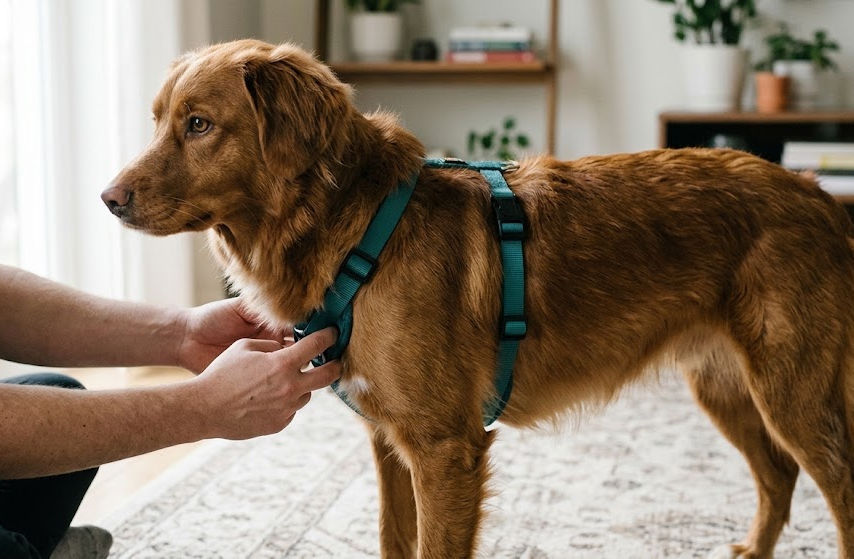
- You should be able to slide two fingers under each main strap.
- The neck strap should sit high enough that the harness cannot slip over the shoulders.
- The chest strap should sit behind the front legs rather than rubbing into the armpits.
- The harness should stay centered when your dog walks, instead of twisting to one side.
- Your dog should be able to move the shoulders freely, breathe normally, sit comfortably, and lie down without strain.
If any one of those points fails, the harness fit still needs adjustment.
Where the Harness Should Sit on the Neck, Chest, and Shoulders
Neck Strap Position
The neck strap should sit higher on the dog’s body than many new owners expect. It should rest around the base of the neck and upper chest, not low across the soft throat. If the neckline sits too low and loose, the dog is more likely to slip out during a sudden backward pull.
Chest Strap Position
The chest strap should wrap around the ribcage and sit a little behind the front legs. If it sits too close to the elbows or directly in the armpit area, rubbing is much more likely. This is one of the most common dog harness adjustment mistakes.
Shoulder Clearance
A good harness fit should not block natural shoulder movement. When your dog walks forward, the front legs should extend smoothly without the straps cutting across the shoulder joints. This is especially important for active dogs, puppies, and dogs that pull.
How Tight Is Too Tight or Too Loose?
Many owners ask how tight should a dog harness be, and the best answer is snug, not restrictive. The two-finger rule is a useful starting point, but it is not the only test. You also need to watch how the harness behaves in motion.
Signs the Harness Is Too Tight
- You cannot comfortably slide two fingers under the straps.
- The straps leave deep marks after a short walk.
- The harness presses into the armpits or chest when the dog moves.
- Your dog shortens the stride, hesitates, freezes, or resists walking.
- The harness shifts shoulder pressure forward and limits free movement.
Signs the Harness Is Too Loose
- The harness rotates to one side during normal walking.
- The chest strap hangs low or swings.
- The dog can back out when startled.
- The neckline gaps widely away from the body.
- The leash attachment point slides off center too easily.
A properly fitted harness should feel secure without looking squeezed. If you see both slipping and rubbing, the size may be wrong even if the straps are technically adjustable.
Step-by-Step Adjustment Guide
1. Start With the Manufacturer Size Chart
Before adjusting anything, check your dog’s girth and neck measurements against the brand’s size chart. If your dog falls between sizes, look at body shape as well as weight. Deep-chested dogs, fluffy-coated dogs, and puppies often need extra judgment beyond the label.
2. Loosen the Straps Before Putting It On
Start slightly loose instead of fighting a tight harness onto the dog. This makes it easier to place the harness correctly first, then fine-tune the fit once it is sitting in the right position.
3. Set the Neck First
Adjust the neck strap so it sits high and secure without pressing on the throat. You want a close fit here because this area often helps prevent escape.
4. Adjust the Chest Strap Behind the Front Legs
Tighten the chest strap until it sits flat against the ribcage without digging in. Check that there is enough room behind the elbows so the strap does not rub every step.
5. Walk Your Dog Indoors for a Fit Test
Let your dog take several normal steps, turn, sit, and lie down. A harness that looks fine while standing still can reveal problems as soon as the shoulders start moving.
6. Recheck After a Short Walk
After five to ten minutes, check again for twisting, hot spots, or red marks. New harnesses often need one more small adjustment after the first real walk.
If you need a practical example, an adjustable design such as this reflective padded dog harness is easier to fine-tune because you can rebalance the fit at more than one point instead of relying on a single chest adjustment.
Dog Harness Fit Checklist
Use this quick checklist before you head outside:
- Two fingers fit under the main straps without forcing them.
- Neck strap stays high and does not slide down the shoulders.
- Chest strap stays behind the front legs.
- Shoulder movement stays natural when your dog walks.
- Harness stays centered instead of rotating.
- No coughing, pinching, or freezing when the leash is attached.
- No red marks or missing fur after the walk.
If you cannot check every box, keep adjusting or reconsider the size.
Warning Signs the Harness Does Not Fit Correctly
Rubbing Under the Legs
Yes, a harness can rub under a dog’s legs. This usually happens when the chest strap sits too far forward, the harness is too loose and shifts around, or the body shape simply does not match that harness style very well.
Escaping or Backing Out
If your dog can reverse out of the harness, the neckline is probably too loose, too low, or the overall shape is wrong for that body type. Escape risk matters more for fearful dogs and strong pullers than for calm walkers.
Constant Twisting
A harness that twists every walk often means one of three things: it is too loose, unevenly adjusted, or not suited to your dog’s chest-to-waist proportions.
Limited Stride or Reluctance to Move
Dogs often tell you a fit problem before obvious marks appear. If your dog suddenly moves stiffly, scratches at the harness, or stops wanting to walk, do not assume it is stubbornness. Check for pressure points first.
Fit Differences for Puppies, Deep-Chested Dogs, and Strong Pullers
Puppies
Puppies should wear a snug harness, not a loose one. “Room to grow” sounds practical, but too much extra space creates rubbing and escape risk. For puppies, the better rule is to check the fit more often and resize sooner.
Deep-Chested Dogs
Deep-chested dogs often need more careful chest-strap placement because the harness can slide backward or twist if the proportions are off. Watch how the harness tracks along the ribcage rather than trusting the size label alone.
Strong Pullers
Strong pullers need security and stability more than softness alone. If the harness shifts dramatically when tension hits the leash, it may be the wrong cut even if it seems comfortable while standing still.
When to Size Up or Switch Styles
Size up when the harness is at its loosest useful setting and still feels restrictive, or when the chest strap sits too close to the armpits even after proper adjustment. Switch styles when the issue is not size but geometry.
A different harness style may be a better fix when:
- the neck fits but the chest strap always rubs
- the harness keeps twisting on one side
- the shoulder area looks blocked during movement
- your dog’s body shape does not match the harness design
- repeated adjustments still do not stop chafing or escape risk
FAQ
How tight should a dog harness be?
A dog harness should be tight enough that it cannot slip off, but loose enough that you can fit two fingers under the straps and your dog can move the shoulders naturally.
How do I know if a harness is too small?
A harness is too small if it leaves pressure marks, limits stride, sits in the armpits, or cannot be adjusted to stay behind the front legs comfortably.
Can a harness rub under a dog’s legs?
Yes. Rubbing under the legs usually means the chest strap is too far forward, the harness shifts too much, or the style does not match the dog’s shape well.
Should puppies wear a loose or snug harness?
Puppies should wear a snug harness with regular rechecks, not a loose one. Extra slack creates more problems than it solves.
Summary Takeaway
The right dog harness fit is secure, centered, and comfortable. If the neck strap stays high, the chest strap stays behind the front legs, the two-finger rule works, and shoulder movement stays free, you are close to the right fit. If the harness rubs, twists, slips, or blocks movement, keep adjusting or switch size or style before using it for regular walks.


Leave a Reply