

Best Interactive Dog Toys for Boredom: What Actually Keeps Dogs Busy?
A bored dog rarely stays quietly bored for long. Chewed table legs, nonstop barking, counter surfing, and “creative” destruction are often signs that your dog needs more than a quick walk and a random squeaky toy. The best interactive dog toys for boredom give dogs a job to do: sniff, solve, chase, chew, lick, or work for rewards.
What actually works depends on the dog in front of you. A high-drive young dog may need movement and problem-solving. A senior dog may prefer slower treat-dispensing play. Heavy chewers need durable options, while nervous dogs often do better with calmer enrichment toys that reward licking, sniffing, and steady engagement.
This guide breaks down which types of dog toys for boredom tend to work best, how to match them to your dog’s age and energy level, and how to keep toys interesting longer instead of watching your dog lose interest in ten minutes.
Signs Your Dog Is Bored vs Overstimulated
Before buying more toys, it helps to identify the real problem. Boredom and overstimulation can look similar at first, but they usually need different solutions.
Common signs of boredom
A bored dog often shows low-level frustration and tries to create entertainment alone. Typical signs include:
- chewing furniture, shoes, or household objects
- repeatedly bringing you toys, then pacing when you do not engage
- barking at windows or reacting to every tiny sound
- digging, shredding paper, or raiding trash bins
- restless wandering even after basic physical exercise
When these behaviors show up during long stretches at home, interactive dog toys for boredom can help redirect that energy into a specific task.
Common signs of overstimulation
An overstimulated dog may look “wild,” but the answer is not always more excitement. Watch for:
- frantic zoomies that do not settle
- grabbing at toys without sustained engagement
- barking that escalates during high-arousal games
- inability to focus on food puzzles or cues
- mouthiness that gets worse with fast chase play
If this sounds familiar, calmer enrichment tools such as lick mats, slower treat puzzles, and structured chew sessions usually work better than motion-heavy toys.
What Makes an Interactive Dog Toy Effective for Boredom?
The best dog boredom toys do one or more of these jobs well:
- extend time-on-task so your dog stays busy longer than with a simple plush toy
- engage natural instincts like sniffing, hunting, chewing, pawing, or chasing
- offer a challenge level your dog can solve without getting frustrated too fast
- create variety so the same toy does not feel stale after a few uses
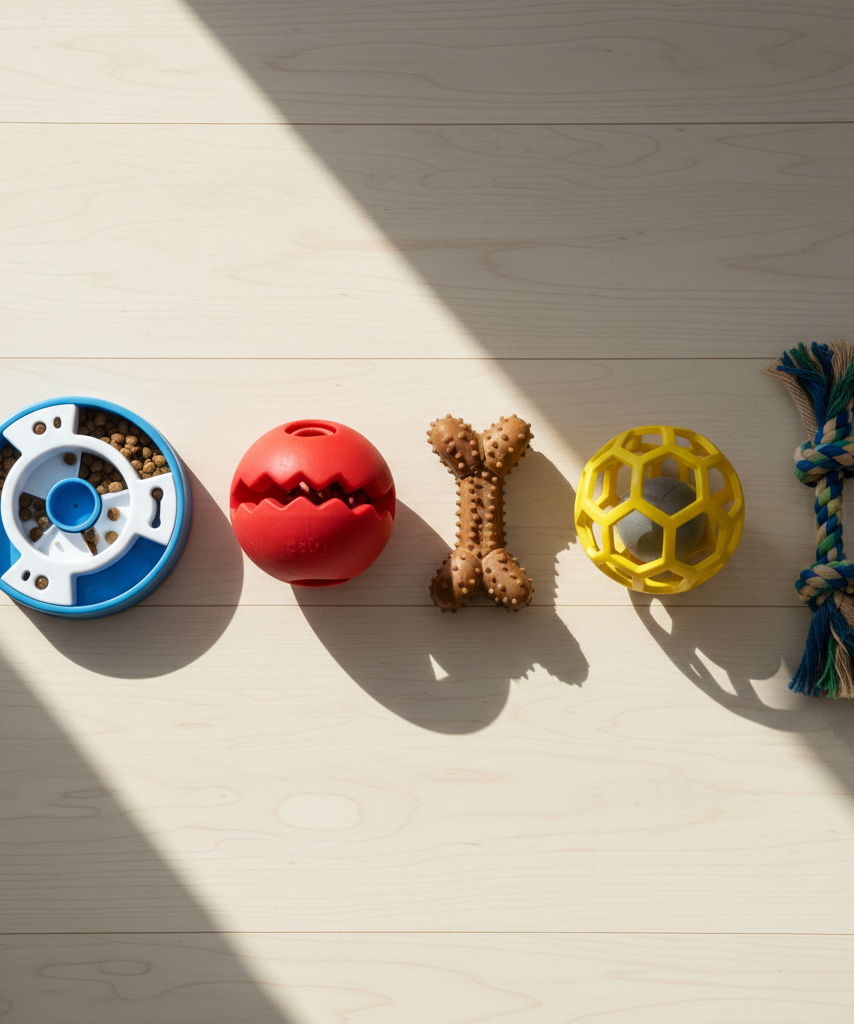
In practice, the most effective dog toys to help with boredom usually fall into four categories: puzzle toys, treat-dispensing toys, chew-based enrichment toys, and motion-based interactive toys.
Main Types of Interactive Dog Toys for Boredom
Puzzle toys: best for problem-solvers and food-motivated dogs
Puzzle toys ask a dog to slide, flip, nudge, or paw compartments to reach food. They are excellent for dogs that enjoy working with their nose and brain, especially when boredom comes from lack of mental stimulation rather than lack of physical activity.
Puzzle toys work best when:
- your dog enjoys treats enough to stay engaged
- you can start with easy wins before increasing difficulty
- your dog is not such a heavy chewer that they destroy plastic pieces
They are often one of the best interactive dog toys for boredom in apartments because they burn mental energy without requiring a lot of space.
Treat-dispensing toys: best all-around option for daily use
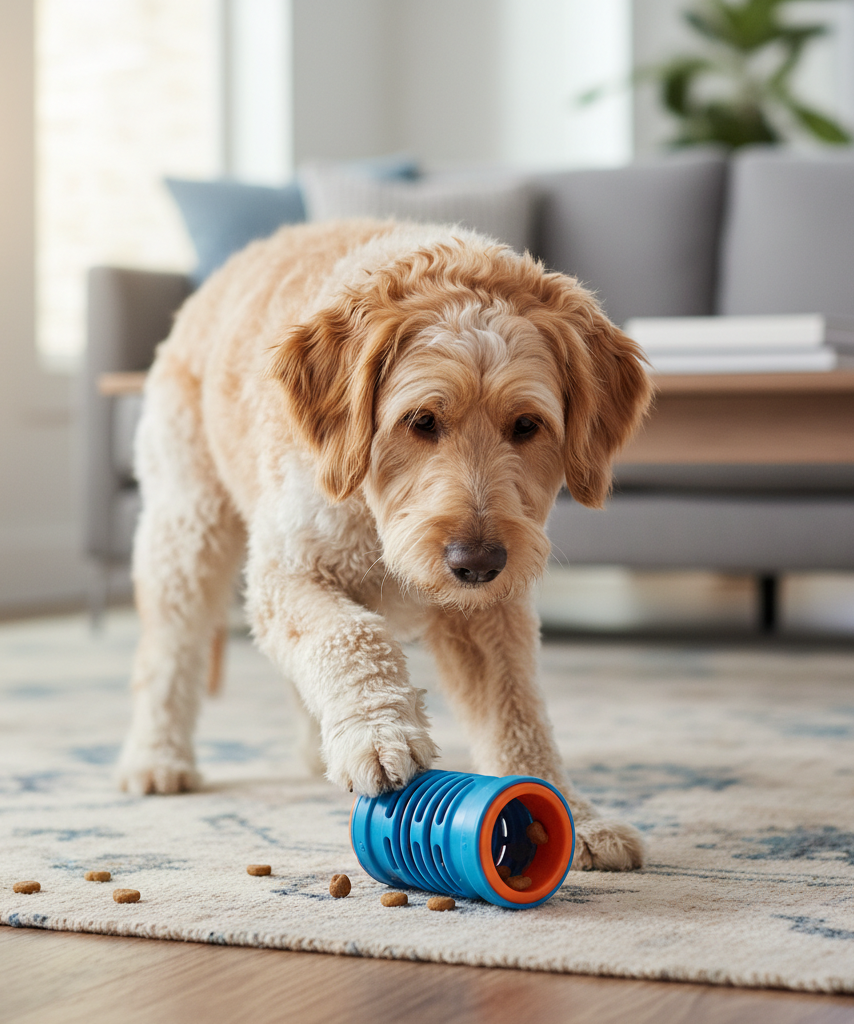
Treat-dispensing toys reward movement and persistence. Dogs roll, nudge, chew, or bat the toy around to release kibble or treats. For many households, this is the easiest category to use consistently because it combines enrichment with feeding.
They are especially effective for:
- dogs left alone for moderate periods
- fast eaters who need meals slowed down
- dogs that lose interest in non-food toys quickly
- owners who want a low-effort boredom routine
A good example of this style is a durable dispensing toy that rewards repeated interaction rather than dumping all the food immediately. If your dog does better with a toy that moves and pays off in small bursts, something like this treat-dispensing dog toy for small and medium dogs is the kind of product type that can keep food-motivated dogs busy longer than standard chew toys.
Chew enrichment toys: best for dogs that need soothing, not excitement
Some bored dogs are really under-enriched chewers. They do not need something that flashes, rolls, and bounces across the room. They need a safe outlet for jaw work and a longer-lasting task.
Chew-focused enrichment options can include:
- durable rubber chew toys stuffed with wet food or peanut butter
- frozen enrichment toys for slower licking and chewing
- textured chew toys that hold your dog’s interest through resistance
These are often the best dog toys for bored dogs that get destructive in the evening. Chewing can be regulating and calming, which matters for dogs that are tired but unable to settle.
Motion-based toys: best for high-energy dogs when used selectively
Automatic rolling, bouncing, or moving toys can be very effective for dogs that need active engagement. These toys create novelty because the toy itself moves unpredictably, which triggers chase and pursuit instincts.
But this category is also easy to misuse. Motion toys are usually best for:
- young, energetic dogs with strong prey or chase drive
- short supervised play sessions
- dogs that quickly lose interest in stationary puzzles
They are not always ideal for dogs that become frantic, obsessive, or noisy around moving objects. For the right dog, though, a smart rolling toy can provide a very strong boredom outlet during supervised indoor play.
Tug, flirt-pole, and interactive play toys: best when you can join in
Some interactive toys for dogs work best with human participation. Tug toys, flirt poles, and chase games can be powerful boredom relievers because they combine movement, engagement, and social interaction.
These options are great when your dog is not just bored by objects, but bored by lack of interaction. The downside is obvious: they do not occupy a dog independently for long. Think of them as high-value engagement tools, not solo babysitters.
Which Toy Type Actually Keeps Dogs Busy the Longest?
If your goal is simply “keep my dog occupied,” here is the practical ranking most owners will find true in real life.
Best for longest independent engagement
1. Stuffable treat toys and frozen chew toys – often best for steady, calm focus
2. Treat-dispensing toys – strong balance of movement, reward, and duration
3. Food puzzles – excellent mentally, but some dogs solve them too quickly
4. Motion-based toys – exciting, but engagement can come in shorter bursts
5. Plush or squeaky toys – fun, but usually not true boredom solutions
Best by dog personality
| Dog type | Toy style that usually works best | Why |
|---|---|---|
| Food-motivated, clever dogs | Puzzle or treat-dispensing toys | They enjoy solving and getting paid for it |
| Heavy chewers | Durable chew enrichment toys | They need resistance and safe jaw work |
| High-energy young dogs | Motion-based toys plus rotation | They need novelty and movement |
| Easily overstimulated dogs | Frozen lick and chew options | Calmer engagement lasts longer |
| Social dogs who want your attention | Tug and interactive play toys | They crave shared activity, not just objects |
So what actually keeps dogs busy? Usually not the loudest or most “high-tech” option. It is the toy that fits your dog’s instinct pattern and challenge level.
How to Match Toys to Energy Level and Age
Puppies
Puppies need boredom relief, but they also need safety and manageable challenges. Look for:
- soft to medium chew resistance
- simple food puzzles
- small treat-dispensing toys
- short activity cycles with supervision
Avoid overcomplicated puzzles that frustrate them or motion toys that encourage chaotic over-arousal.
Adult dogs
Healthy adult dogs usually have the widest range of options. Match by temperament:
- choose puzzles and dispensers for brainy, food-driven dogs
- choose motion toys for dogs that need active indoor engagement
- choose chew enrichment for dogs that unwind through jaw work
- combine categories for dogs that get bored fast
Senior dogs
Older dogs still get bored, but they often prefer lower-impact challenges. Better options include:
- easy treat puzzles
- slow feeder toys
- softer chew enrichment
- scent-based games that do not require intense movement
For seniors, comfort matters as much as challenge.
Safety and Supervision Tips
Not every dog toy is safe for every dog. A toy that keeps one dog busy for thirty minutes may be shredded in three minutes by another.
Use these guidelines:
- size toys correctly so they cannot be swallowed whole
- supervise new toy types until you know how your dog uses them
- remove broken toys, loose seams, or cracked hard plastic immediately
- avoid hard materials that risk tooth damage for aggressive chewers
- clean food-based toys thoroughly to prevent residue buildup
- rotate difficulty gradually instead of jumping from easy to impossible
Motion-based and electronic toys should also be monitored for battery housing strength, noise sensitivity, and overheating.
How to Rotate Toys to Keep Interest Longer
Even the best interactive dog toys for boredom stop working when they are always available in the same form.
A simple rotation system works better:
Use the three-bucket method
Keep toys in three groups:
- daily calm toys for chewing, licking, and quiet engagement
- brain-work toys for puzzles and treat challenges
- high-energy toys for chase, motion, and active play
Only offer a few at a time. Put the rest away for several days.
Change the reward, not just the toy
A treat-dispensing toy becomes more interesting when you vary what goes inside it:
- kibble for easy sessions
- higher-value treats for difficult days
- frozen wet food for longer play
- mixed textures to slow down solving
Match toy timing to the problem moment
Use the right toy at the right time:
- before meetings or work blocks, use food-based independent toys
- during the evening witching hour, use chew enrichment
- on rainy days, use puzzles plus a short active toy session
- after a walk, use calm licking or chewing tools to help your dog settle
Common Mistakes When Buying Dog Toys for Boredom
A lot of owners buy toys based on appearance, popularity, or marketing claims. That usually leads to a pile of toys the dog ignores.
Avoid these mistakes:
- buying only plush or squeaky toys when your dog needs a task
- choosing advanced puzzles before your dog understands the game
- using highly stimulating toys for dogs that already struggle to settle
- expecting one toy to solve boredom without exercise, training, and routine
- leaving every toy out all the time so novelty disappears
Boredom relief works best when toys are part of a wider enrichment plan, not a replacement for it.
Final Verdict: What Actually Works?
The best interactive dog toys for boredom are the ones that give your dog a meaningful job matched to their instincts.
For most dogs, treat-dispensing toys and chew-based enrichment tools are the most reliable first buy because they create longer engagement with less frustration. Puzzle toys are excellent for clever, food-driven dogs. Motion-based toys can work very well for high-energy dogs, but only when they increase focus instead of chaos.
If you want the short version, start here:
- choose treat-dispensing toys for everyday boredom relief
- choose chew enrichment toys for calming and settling
- choose puzzle toys for mental work
- choose motion toys for supervised high-energy bursts
That is what actually keeps dogs busy: not just “interactive” in the product title, but the right kind of interaction for the dog you have.

Leave a Reply