


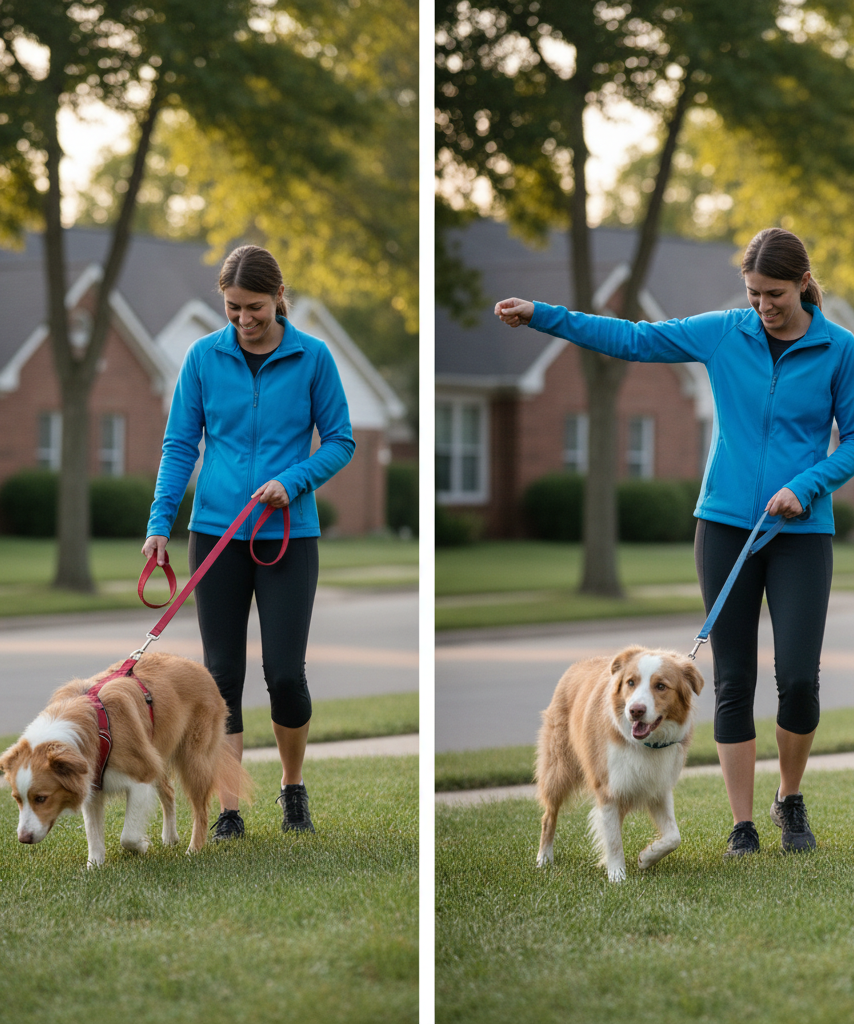
Harness vs Collar for Dogs That Pull: Which Is Better for Control?
If your dog pulls on walks, the better choice is usually a harness rather than a basic collar. For most pullers, a well-fitted harness gives better body control, reduces strain on the neck, and makes daily walks safer while training is still in progress. A collar can still make sense for calm walkers, dogs already trained not to lunge, or situations where identification and light leash guidance are the main goals.
That said, “harness vs collar for dogs that pull” is not a one-size-fits-all decision. The right setup depends on how hard your dog pulls, whether the pulling is steady or explosive, how sensitive your dog’s neck is, and whether you need management, training support, or both. This guide compares the two options from a control, comfort, and safety perspective so you can choose the best setup for your dog instead of repeating the same frustrating walk every day.
Why Pulling Changes the Gear Decision
A dog that pulls lightly and a dog that throws their whole body forward create very different handling problems. That is why the gear decision should start with behavior, not aesthetics.
Pulling creates a control problem and a safety problem
When a dog pulls hard against a collar, the force concentrates on the neck and throat area. That can make walks uncomfortable even if the dog seems determined enough to ignore it. With a harness, pressure is usually spread across the chest and torso instead of the trachea.
This matters most when your dog:
- surges toward dogs, people, or squirrels
- coughs, gags, or wheezes under leash pressure
- is small, delicate, flat-faced, or recovering from neck issues
- keeps leaning forward with full body weight
- turns every walk into a strength contest
If your real question is “best control for a pulling dog,” the answer is usually the option that gives you leverage without trading away safety. For many dogs, that points to a harness first.
The type of pulling matters
Not all pullers pull for the same reason. Some are simply excited. Others are under-exercised, reactive, fearful, or inconsistent because they have never learned leash pressure properly.
A collar may feel manageable with:
- mild, occasional forward pulling
- larger dogs that already respond to leash cues
- short calm neighborhood walks
- dogs that are mostly walking, not lunging
A harness is usually the better starting point for:
- young dogs still learning leash manners
- strong dogs that lean into pressure
- dogs that lunge suddenly
- dogs that cough or choke in collars
- owners who need more physical control while training catches up
Harness vs Collar: Which Gives Better Control?
If control means keeping your dog closer, turning them more easily, and reducing the chance that a walk spirals into a tug-of-war, a harness usually wins for pullers. But the details matter.
When a harness gives better control
A good harness helps because it gives you a larger control point over the dog’s body. Instead of steering from the neck alone, you are influencing the shoulders and chest. That makes it easier to redirect movement and reduce the harsh stop-start feeling common with collars.
Harnesses tend to work especially well when:
- your dog is powerful relative to your size
- walks include distractions and sudden changes of direction
- you need steadier handling, not just identification gear
- you are pairing the walk with leash training practice
Front-clip and well-designed control harnesses can be especially useful for dogs that charge forward, because they can interrupt straight-line momentum better than a flat collar alone.
When a collar can still make sense
A collar is not automatically wrong. It can be perfectly fine for dogs that do not pull much, already understand loose-leash walking, or only need a simple attachment point for calm everyday outings.
A collar may still be reasonable when:
- your dog walks politely most of the time
- you want a lighter setup for quick bathroom breaks
- the collar is mainly for ID tags and backup handling
- your dog finds bulky gear irritating
The problem starts when owners expect a basic collar to solve a pulling issue that is really about leverage, safety, and training. In that situation, it is usually the weaker tool.
Comfort and Safety Tradeoffs
The comfort question is where a lot of owners change their minds. A dog can tolerate a collar and still not be walking in the safest or most comfortable setup for repeated pulling.
Collar pressure is more concentrated
With a collar, leash pressure lands on a smaller and more sensitive area. For dogs that constantly hit the end of the leash, that repeated neck pressure is the biggest downside.
Potential collar drawbacks for pullers include:
- throat pressure during sudden lunges
- coughing or gagging during walks
- added strain for small breeds or dogs with airway issues
- less forgiving handling when timing is imperfect
Harness pressure is broader, but fit matters
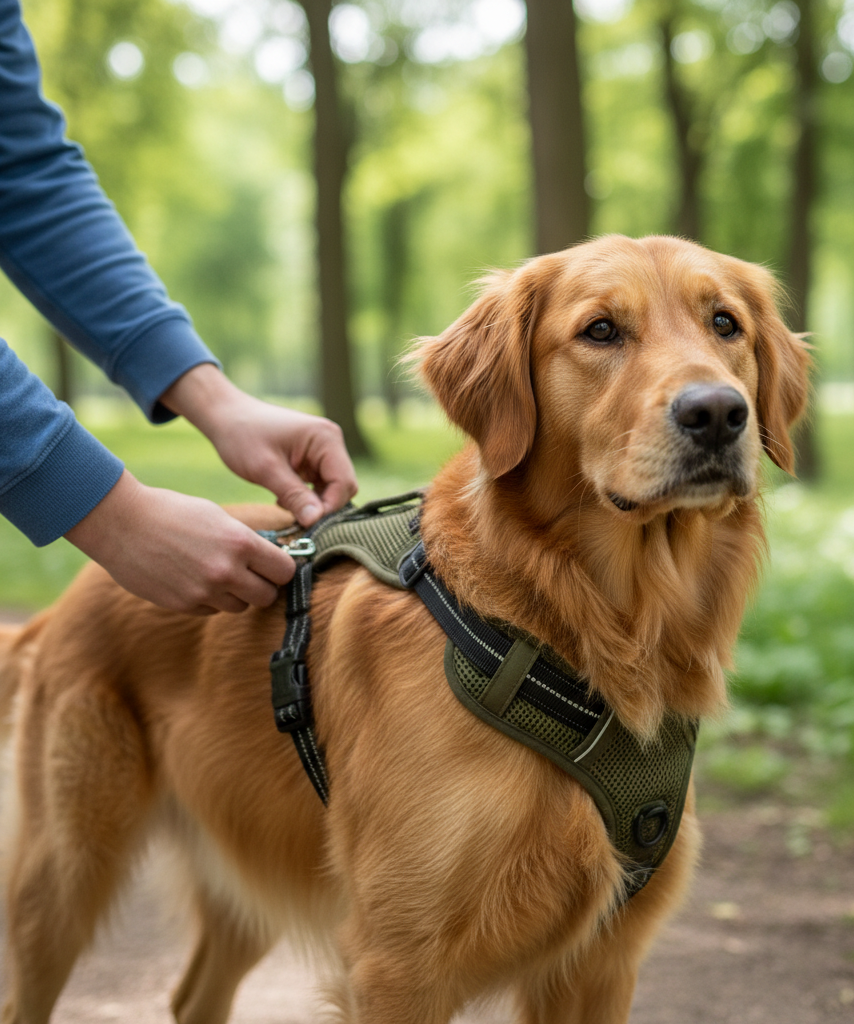
A harness is often safer for dogs that pull, but only if it fits well. Poorly fitted harnesses can rub, shift, restrict shoulder movement, or let escape-prone dogs back out.
To improve comfort and control, check that the harness:
- sits securely without pinching the armpits
- does not rotate dramatically during pulling
- allows full shoulder movement
- has snug but not tight strap adjustment
- stays stable when your dog turns or backs up
For everyday pulling management, a properly fitted harness usually offers the better balance of comfort and control.
Training Reality: Gear Helps, but It Does Not Replace Training
The most useful way to think about dog pulling control gear is this: gear manages the walk, training changes the habit.
A harness can buy you cleaner training reps
Many owners ask whether a harness teaches pulling. In practice, the bigger issue is whether the setup lets you train consistently without constant choking, frustration, or chaos. If the gear reduces stress and gives you more control, you can reinforce better walking more reliably.
A harness supports training when it helps you:
- reward a slack leash more consistently
- turn and redirect without yanking the neck
- stay calm when the dog gets excited
- avoid ending every walk in a physical struggle
A collar does not fix poor leash skills by itself
Some dogs do walk better in a collar, but that is often because they are already more responsive, calmer, or less physically intense. A collar by itself is not a training plan.
If your dog pulls hard every day, the gear decision should make training easier, not harder. That usually means choosing the option that gives you better control with less risk while you work on loose-leash habits.
What to Pair With Harnesses or Collars for Better Walks
The right walking setup is rarely just one item clipped on and forgotten. Pairing matters.
Best pairings for a pulling dog
If your dog pulls, useful setup choices often include:
- a standard fixed-length leash for better consistency
- a training lead when you need controlled practice space
- high-value treats for leash-position rewards
- a collar for ID tags even if the leash clips to a harness
That last point is important. Many owners end up using both: a harness for leash attachment and control, plus a collar for identification. That is often more practical than treating the question as a total either-or.
What to avoid if control is the goal
If you are trying to reduce pulling and improve handling, be cautious with:
- gear that fits loosely and shifts constantly
- overly long leashes in busy environments
- setups that are uncomfortable enough to increase frustration
- switching between inconsistent walking rules every day
So, Which Is Better for a Dog That Pulls?
For most dogs that pull, a harness is better than a collar for control because it improves handling while reducing neck strain. A collar still has a place for identification, calm walkers, and light leash use, but it is usually not the strongest main tool for a dog that regularly leans, lunges, or drags you forward.
A simple decision rule looks like this:
- choose a harness if your dog pulls hard, lunges, coughs in a collar, or needs safer day-to-day management
- choose a collar as the main walking attachment only if your dog is already relatively calm and responsive on leash
- use both when you want harness-based control plus an everyday place for tags and backup handling
Final Thoughts
If you are stuck on “dog harness or collar for walking,” focus less on tradition and more on what makes your actual walks safer and easier to manage. For a pulling dog, the better answer is usually the setup that gives you body control without loading the neck.
In other words, if your dog pulls regularly, start with a well-fitted harness, pair it with a sensible leash setup, and use training to build the loose-leash behavior you want. That tends to produce better control than hoping a basic collar will solve a pulling problem on its own.


Leave a Reply