


How Often Should You Clean a Pet Water Fountain? A Simple Maintenance Schedule
If you have ever looked at your pet’s fountain and thought, “Didn’t I just clean this?” — you are not imagining it. Pet fountains can develop slime, odor, hair buildup, and cloudy water faster than most owners expect, especially in homes with multiple pets or heavy daily use.
The short answer to how often should you clean a pet water fountain is this: do a quick refresh every day, a deeper clean every week, and a full breakdown clean at least once a month. Some cats and dogs will need an even tighter schedule depending on shedding, drool, food habits, and how much dust ends up in the bowl.
A simple routine makes pet water fountain maintenance much easier. It also helps your fountain last longer, keeps water tasting fresher, and gives picky cats or dogs fewer reasons to ignore it.
Why pet water fountains get dirty faster than owners expect
Moving water looks clean, but that does not mean the fountain stays clean for long. The same things that make fountains appealing to pets also create places for buildup.
Hair, saliva, food crumbs, and dust add up fast
Every sip brings a little contamination back into the water. Cats can leave loose fur behind. Dogs often add more drool. If the fountain sits near a feeding station, tiny bits of kibble or wet food can end up in the basin. Over a few days, that mix starts to coat surfaces and stress the filter.
Biofilm can form before the fountain looks obviously dirty
That slippery feeling on plastic or stainless surfaces is usually the first sign owners notice. It is often called slime, but it is really a thin layer of buildup that forms where water circulates constantly. Warm rooms, direct sunlight, and low water levels can make it appear faster.
Filters help, but they do not replace cleaning
Many owners assume a fresh filter means the whole fountain is still fine. It does not. Filters catch debris and help with odor, but they cannot scrub the pump, corners, spout, or basin walls. If you want to clean cat water fountain parts properly or keep a dog fountain fresh, hand-cleaning still matters.
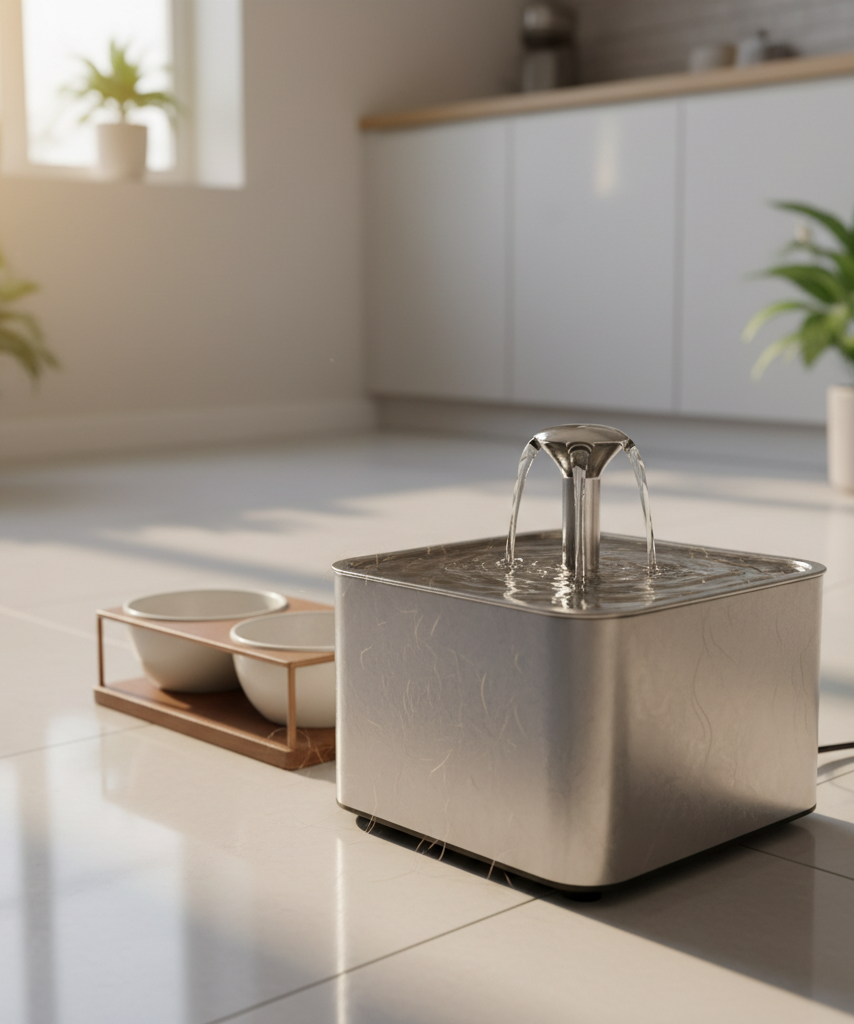
Daily, weekly, and monthly cleaning tasks
A realistic cleaning schedule is better than an overly ambitious one you will not keep. Most households do well with a three-layer routine.
Daily tasks: 2 to 5 minutes
Daily care is mostly about preventing the fountain from getting gross between deeper washes.
- Refill with fresh water
- Empty and replace water if it looks cloudy or has floating debris
- Wipe away visible hair, food bits, or slime around the drinking area
- Check that the water flow still looks normal
- Give the fountain a quick sniff for any sour or stale smell
If you are wondering how to maintain pet water fountain hygiene without turning it into a chore, this is the part that matters most. Small daily attention prevents bigger cleanup later.
Weekly tasks: full wash for most homes
For most cat and dog households, once a week is the sweet spot for real cleaning.
- Unplug the fountain.
- Dump all water.
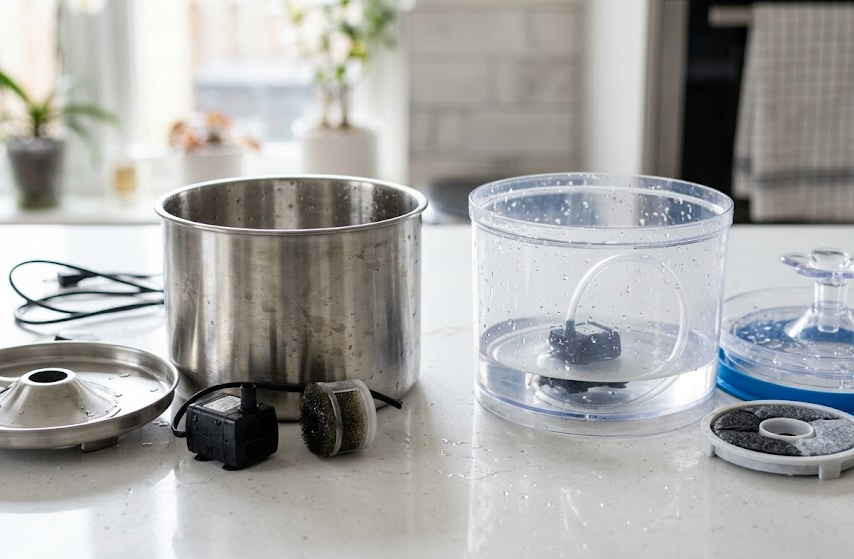
- Disassemble the removable parts.
- Wash the basin, lid, tower, and drinking surfaces with warm water and mild dish soap.
- Use a small brush to scrub tight corners and channels.
- Rinse thoroughly so there is no soap residue.
- Wipe the pump exterior and clean out any trapped hair.
- Reassemble and refill with fresh water.
This weekly reset is the heart of good pet water fountain maintenance. In homes with one tidy cat and a high-quality fountain, you might stretch it a little. In homes with a drooly dog, multiple pets, or a dusty room, you may need it every 3 to 5 days instead.
Monthly tasks: deep clean and filter check
At least once a month, do a more complete inspection.
- Open and clean inside the pump if your model allows it
- Check tubing or hidden water channels for buildup
- Replace the filter based on the brand’s instructions or sooner if it looks dirty
- Inspect cords, seals, and gaskets for wear
- Look for scratches, mineral deposits, or cracks that can trap grime
If your tap water is hard, mineral scale may show up sooner than expected. A vinegar soak for non-electrical parts can help with scale, but rinse everything very well before putting the fountain back into use.
A simple cleaning schedule by pet type and home setup
Not every home needs the exact same cadence. Here is an easy rule of thumb.
One cat in a low-mess home
- Fresh water check: daily
- Visible wipe-down: daily
- Full clean: every 5 to 7 days
- Filter check or change: every 2 to 4 weeks depending on model
Multiple cats sharing one fountain
- Fresh water check: daily, sometimes twice daily
- Visible wipe-down: daily
- Full clean: every 3 to 5 days
- Filter check or change: often sooner than the package minimum
One dog or a cat-and-dog household
Dogs usually bring more saliva and more mess to a fountain.
- Fresh water check: daily
- Visible wipe-down: daily
- Full clean: every 3 to 5 days
- Pump inspection: weekly
- Filter check: every 2 to 3 weeks, or sooner if odor appears
Homes with shedding pets, dust, or warm temperatures
If the fountain sits in a sunny spot, near litter, or next to a food station, shorten your schedule. Environmental mess often matters just as much as the pet.
Signs your fountain needs cleaning sooner
Even the best schedule should be flexible. If you notice any of these signs, clean the fountain earlier instead of waiting for your planned day.
Slimy surfaces
If the inside feels slick, the fountain is overdue. Slime tends to show up on plastic first, but stainless and ceramic models are not immune.
Bad smell or stale-tasting water
If you can smell the fountain while standing nearby, your pet probably notices it too. Cats in particular may start drinking less when water smells off.
Slower water flow
A weak stream often means the pump or intake area is clogged with hair or debris. That is a maintenance issue, not just a cosmetic one.
Cloudy water or floating debris
Once the water looks unappealing, do not just top it off. Empty it, wash the fountain, and restart with clean water.
Your pet starts avoiding the fountain
Some pets are surprisingly picky. If your cat goes back to the sink or your dog prefers another bowl, the fountain may need attention before you assume the product has failed.
Mistakes that shorten fountain life or reduce water quality
Good cleaning habits are not only about appearance. The wrong routine can reduce water quality and wear out the fountain sooner.
Waiting until the fountain looks dirty
By the time grime is obvious, the pump and filter are usually already working harder than they should.
Only changing the filter
A new filter is helpful, but it is not a substitute for washing the basin and cleaning the pump. This is one of the most common mistakes owners make when trying to clean cat water fountain systems quickly.
Topping off old water instead of replacing it
Adding new water to dirty water just dilutes the problem. It does not remove buildup, saliva, or trapped debris.
Using harsh cleaners or leaving soap residue behind
Strong chemical smells can turn pets away from the fountain. Use mild dish soap for routine cleaning, rinse thoroughly, and let parts air out if needed.
Ignoring the pump
The pump is where many fountain issues begin. If it gets jammed with hair or slime, the water flow drops, noise increases, and the unit may fail sooner.
Choosing the wrong spot for the fountain
Placing it in direct sun, right beside food, or in a dusty traffic area can make cleaning more frequent than necessary. A calmer, cooler location usually helps.
How to make fountain maintenance easier
If you want to keep the routine realistic, a few small changes help a lot.
- Keep a soft bottle brush or small cleaning brush near the sink
- Rinse the basin during your normal feeding routine
- Use filtered water if hard water leaves heavy deposits
- Keep an extra filter on hand so you do not delay maintenance
- Consider fountain materials that are easier to scrub, such as stainless steel or ceramic
- If you have multiple pets, consider a larger fountain so water stays fresher between refills
For shoppers comparing hydration products, easy disassembly and pump access matter just as much as appearance. A fountain that is annoying to clean usually gets cleaned less often.
Frequently asked questions
How often should you clean a pet water fountain in a two-cat home?
Usually every 3 to 5 days for a full clean, with daily water refreshes and quick wipe-downs.
Can I clean a pet fountain once a month?
Only for the deepest breakdown clean. For most homes, once a month is not enough for everyday sanitation.
What is the best way to maintain a pet fountain?
The best system is simple: refresh water daily, wash all main parts weekly, check the pump often, and replace filters on schedule.
Do dog fountains need more cleaning than cat fountains?
Often, yes. Dogs tend to leave more saliva and debris, which can lead to odor and buildup faster.
Final answer: the easiest schedule to remember
If you want the simplest answer to how often should you clean a pet water fountain, use this rule: fresh water and quick checks every day, a full clean every week, and a deeper pump-and-filter inspection every month.
That schedule works for many cat and dog households, and it is easy to tighten up when you notice slime, odor, shedding, or slower flow. Consistent pet water fountain maintenance is less about perfection and more about keeping your pet’s water fresh enough that they actually want to drink it.
Leave a Reply