


Dog Car Hammock vs Bench Seat Cover: Which Style Protects Your Back Seat Better?
A dog car hammock usually protects more of the back seat and helps stop your dog from sliding into the footwell, while a bench seat cover for dogs is the better pick if you still need room for rear-seat passengers. If your priority is maximum seat protection, muddy-paw control, and better containment during dog car travel, the hammock usually wins.
The real choice is less about fabric quality alone and more about how you use your back seat. Some pet owners need a fully protected dog zone for messy trips and jumpy dogs, while others need a simpler dog back seat protector that still leaves the seat practical for people. Once you compare containment, side coverage, cleanup, and passenger flexibility, the right style becomes much easier to pick.
Quick Answer by Travel Style
| Travel situation | Better choice | Why |
|---|---|---|
| Muddy park trips or wet dogs | Dog car hammock | Covers more surface area and catches more debris before it reaches the footwell |
| Nervous, jumpy, or restless dogs | Dog car seat cover hammock | Creates a more contained riding space |
| You often carry a rear passenger | Bench seat cover | Leaves the seat easier to share |
| Long drives with one dog in back | Dog car hammock | Better all-around back-seat protection and gap coverage |
| Occasional light travel with a calm dog | Bench seat cover for dogs | Simpler setup and often easier daily use |
Comparison Table: Hammock vs Bench Seat Cover
| Feature | Dog car hammock | Bench seat cover |
|---|---|---|
| Seat-bottom protection | Strong | Strong |
| Seat-back protection | Strong | Strong |
| Footwell gap coverage | Usually excellent | Usually limited |
| Helps reduce slipping forward | Yes | Less so |
| Rear passenger flexibility | Lower | Higher |
| Containment for messy dogs | Better | Moderate |
| Fast in-and-out access | Moderate | Better |
| Best for shared family seating | Usually not ideal | Better |
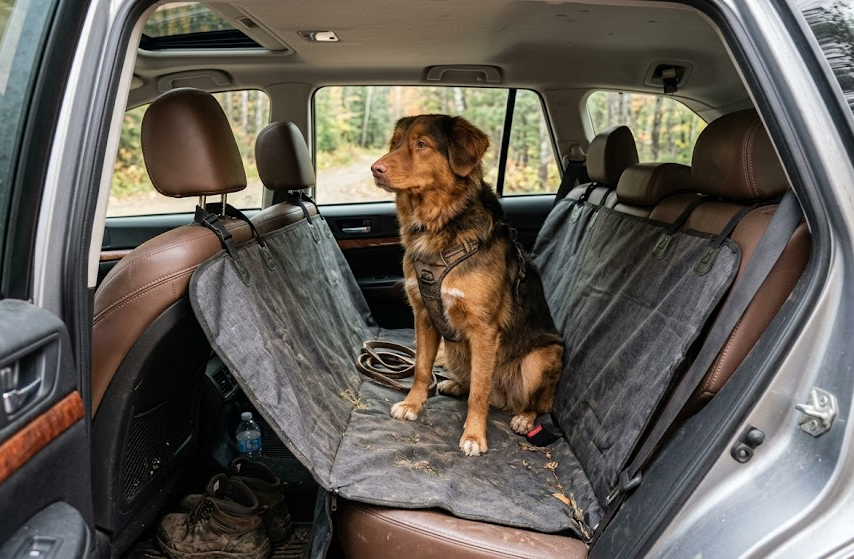
What a Dog Car Hammock Does Best
When people compare dog car hammock vs bench seat cover, the biggest performance difference is the open gap between the seat edge and the front seats. A hammock fills that space with an extra panel, which does two useful things at once: it protects more of the car interior and it gives your dog a more stable place to ride.
That matters most when your dog tends to:
- pace during car rides
- brace hard during stops
- shed heavily across the full back-seat area
- come back wet or muddy after hikes, beach trips, or rainy walks
A hammock-style dog travel seat cover usually keeps fur, dirt, and paw prints off more surfaces because it does not stop at the bench itself. It also helps reduce the awkward moment when a dog tries to climb toward the front and slips into the footwell gap.
Better protection for the back seat zone
A hammock protects the seat bottom, the seat back, and the space between rows. In real-world dog car travel, that extra panel is often what keeps sand, loose hair, and muddy splash from spreading lower into the cabin.
Better for jumpy or messy dogs
If your dog shifts constantly or launches onto the seat after outdoor play, a hammock normally gives better practical containment. It will not function like a crash-rated restraint on its own, but it can make the back seat feel more enclosed and controlled.
What a Bench Seat Cover Does Best
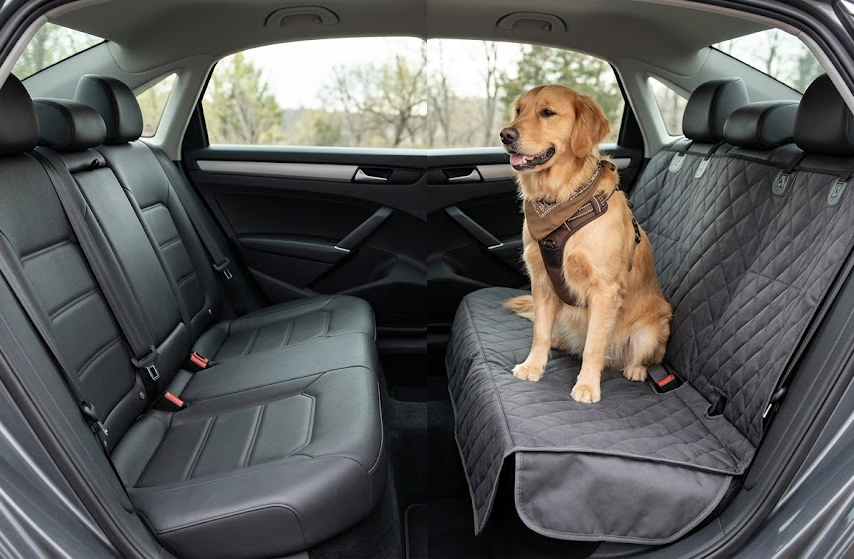
A bench seat cover for dogs works better when you need simpler protection without turning the entire rear row into a pet-only space. It lays across the bench area and usually leaves the footwell open, which is a disadvantage for containment but an advantage for flexibility.
This style makes more sense when:
- your dog is relatively calm in the car
- you sometimes seat a child or adult in the back
- you want faster installation and removal
- you need a cleaner everyday setup for mixed human-and-dog use
For many households, the bench style is the more convenient dog back seat protector because it does not change how the whole cabin works. You still get a barrier between your dog and the upholstery, but you keep easier access to seat belts and passenger seating positions.
Better when people still need the back seat
This is the deciding factor for a lot of buyers. If the rear bench has to do double duty for both dogs and humans, a bench cover is usually the easier answer. A hammock can become annoying when someone needs to sit back there regularly.
Better for quick everyday use
If your car switches between errands, school runs, and occasional dog outings, the bench style often feels less intrusive. It is easier to fold down, partially remove, or live with day to day.
Seat Protection vs Passenger Flexibility
This is where the decision really becomes clear. If you care most about seat protection, the hammock usually comes out ahead because it covers more space and helps trap mess before it moves forward or downward. If you care most about passenger flexibility, the bench seat cover wins because it interferes less with normal use of the back seat.
Think of it this way:
- choose a hammock when the back seat mostly belongs to the dog
- choose a bench cover when the back seat must still work for people
That is why the best dog car seat cover hammock is often not the best answer for a family that frequently carries rear passengers. The style is excellent for dog-focused travel, but not always for a shared-seating routine.
Scenario Guide: Which Style Fits Your Trips?
For muddy dogs after trails, parks, or rain
Choose the hammock. It usually gives better all-around coverage, especially when your dog jumps in with dirty paws and shakes off debris across the back-seat area.
For long road trips with one dog and no rear passengers
Choose the hammock. The extra coverage and footwell barrier generally make the ride cleaner and more controlled.
For commuting with both a dog and a rear-seat passenger
Choose the bench seat cover. Shared seating is where bench-style protection makes more practical sense.
For calm dogs on short local drives
A bench cover is often enough. If the dog is not launching around and your goal is basic upholstery protection, you may not need the full hammock structure.
Best Option for Jumpy, Large, or Messy Dogs
If your dog is excitable, heavy-shedding, or regularly dirty after outdoor activities, the hammock is usually the safer bet for protecting your back seat. The extra front panel helps reduce forward slipping, and the larger protected zone tends to handle mess more effectively.
That does not mean every hammock is automatically better than every bench cover. Material quality, anchor points, nonslip backing, and side-flap design still matter. But when you compare the two styles on structure alone, the hammock is usually the stronger choice for higher-mess and higher-movement dogs.
Buying Checklist for Fit and Material
Before buying either style, check these details:
- whether the cover matches your vehicle’s back-seat width and headrest layout
- whether the material is waterproof or only water-resistant
- whether the backing helps prevent sliding on leather or smooth cloth seats
- whether side flaps protect door-side edges during entry and exit
- whether seat-belt openings are usable if a human passenger still needs the rear seat
- whether the cover works with your dog’s harness attachment or travel restraint setup
- whether cleaning means wipe-down only or full machine washing
Vehicle shape matters too. A wide SUV back seat, a shallow sedan bench, and a split-fold rear row do not all interact with seat covers in the same way. The best dog car seat cover hammock or bench cover is the one that actually fits your seat geometry and travel routine.
Pros and Cons
Dog car hammock pros
- better whole-zone protection
- helps cover the footwell gap
- usually better for muddy and restless dogs
- often feels more secure for dog-focused travel
Dog car hammock cons
- less convenient for rear passengers
- can feel bulky in mixed-use family cars
- setup can be more involved depending on anchors and side panels
Bench seat cover pros
- easier for shared seating
- simpler day-to-day use
- easier access to seat belts and passenger space
- often enough for calm dogs and lighter mess
Bench seat cover cons
- less containment
- usually weaker gap coverage
- more debris can escape into lower cabin areas
FAQ
Is a dog car hammock better than a bench seat cover?
Usually yes for maximum seat protection and movement control. A dog car hammock covers more of the back-seat zone and helps limit slipping into the footwell, while a bench seat cover is better when you still need room for human passengers.
Do dog hammocks keep dogs from falling off the seat?
They can help reduce forward slipping into the footwell gap, especially during braking or restless movement, but they are not a substitute for a proper dog travel restraint or crash-tested harness setup.
Which seat cover is easier to clean after muddy trips?
A hammock is often easier to live with after muddy trips because it catches more mess in one protected area. A bench cover can still protect the upholstery well, but more debris may escape around the uncovered gap and lower cabin space.
Summary Takeaway
If your goal is the best dog car seat cover style for heavy mess, active dogs, and stronger all-around seat protection, choose a dog car hammock. If your goal is protecting the seat while still keeping the rear row usable for people, choose a bench seat cover. For most dog-only travel setups, the hammock protects the back seat better.


Leave a Reply