


Soft-Sided vs Hard-Sided Cat Carriers for Flying: Which Is Better for Cabin Travel?
For most in-cabin flights, a soft-sided cat carrier is the better choice because it is more likely to fit under the seat, while a hard-sided carrier may offer sturdier shell protection but is less forgiving when airline sizing is tight. If your priority is cabin compliance, easier under-seat fit, and a little more flexibility during boarding, soft-sided usually wins. If your cat is unusually destructive, you need a very wipe-clean shell, or you are dealing with a route or airline that allows a rigid carrier within the exact dimensions, hard-sided can still make sense.
Airline rules vary by carrier, aircraft type, and route, so always check the latest pet-in-cabin policy before flight day. In real-world cabin travel, the best cat carrier for flying is usually the one that fits the airline’s under-seat dimensions and keeps your cat calm enough to stay secure for the whole trip.
Quick Answer
- Choose a soft-sided cat carrier for most cabin flights because flexible walls are more likely to work with under-seat dimensions.
- Choose a hard-sided cat carrier only when the airline sizing clearly allows it and you specifically need the extra structure.
- Do not buy by label alone. “Airline approved cat carrier” is only useful if the actual measurements match your airline and aircraft.
- Put fit first, comfort second, and convenience third. A carrier that misses cabin sizing can ruin the whole plan.
Soft-Sided vs Hard-Sided Cat Carrier at a Glance
| Comparison point | Soft-sided cat carrier | Hard-sided cat carrier | Better for most cabin travelers |
|---|---|---|---|
| Under-seat fit | Flexible and easier to compress slightly within limits | Fixed shape with no give | Soft-sided |
| Airline compliance | Often easier for cabin travel | More likely to fail strict sizing | Soft-sided |
| Cat comfort | Usually lighter, cozier, and less boxy | Can feel sturdier but less forgiving | Soft-sided |
| Cleaning | Fabric can hold fur and accidents | Easier to wipe down | Hard-sided |
| Durability | Good if well made, but fabric and zippers can wear | Strong shell resists crushing better | Hard-sided |
| Airport handling | Easier to carry on shoulder or luggage handle | Bulkier in terminals | Soft-sided |
| Best use case | Cabin travel and under-seat storage | Car rides, vet trips, or cargo-style rigidity needs | Soft-sided for cabin |
Why Airlines Often Favor Soft-Sided Carriers
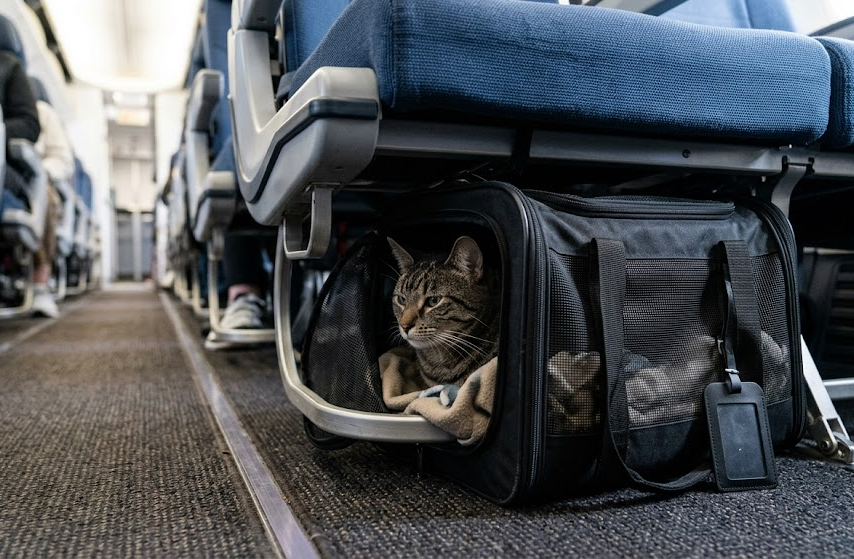
For cabin travel, the main issue is not which carrier looks tougher. It is whether the carrier can fit under the seat in front of you without turning boarding into a problem. That is where a soft-sided cat carrier airline approved for cabin use usually has the advantage.
Most airline under-seat spaces are awkward rather than generously rectangular. A soft-sided carrier can often flex slightly at the top or sides while still giving the cat enough room to lie down and turn modestly. A hard-sided cat carrier airline approved in theory may still be too rigid in practice if the seat hardware, support bars, or aircraft layout leave less usable space than the published dimensions suggest.
That flexibility matters in three ways:
- it improves the odds that the carrier will slide under the seat
- it reduces the chance of being stopped at the gate for a visibly oversized rigid shell
- it usually feels less cumbersome while walking through the airport
Why this matters for cabin travel
Cabin travel is a chain of small constraints: check-in, security, waiting areas, boarding, stowing the carrier, and sitting with a cat under the seat for the full flight. A carrier that is only barely compliant on paper can become stressful fast if it is awkward to maneuver.
When a Hard-Sided Carrier Still Makes Sense
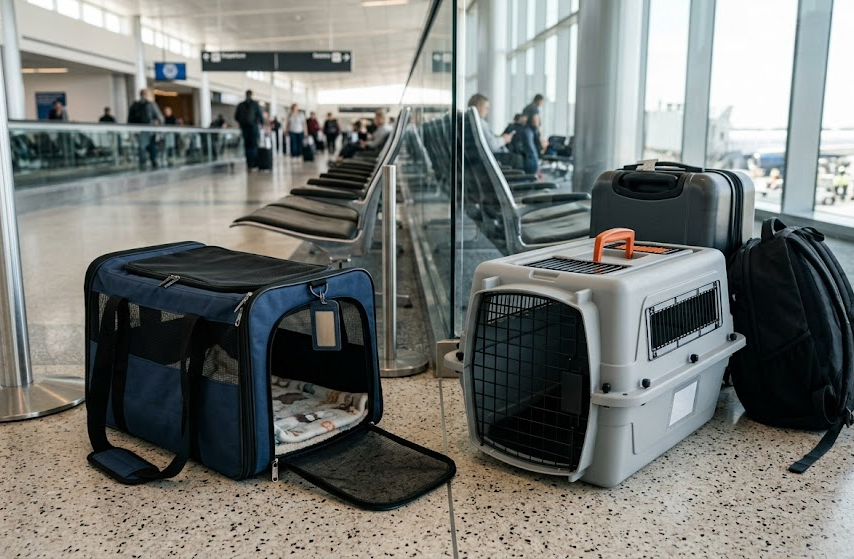
A hard-sided cat carrier is not automatically wrong for flying with a cat carrier in cabin travel. It is just more limited. If the dimensions clearly meet the airline’s under-seat rules and your cat does better in a more rigid, den-like shell, it can still be a workable choice.
Hard-sided models may make sense when:
- your cat scratches or chews through fabric carriers
- you need faster cleanup after stress accidents or motion sickness
- your airline allows a rigid carrier within the exact size rules
- the carrier will also be used heavily for car trips, clinic visits, or situations where easy sanitizing matters
The catch is simple: rigid walls do not negotiate with tight spaces. If the under-seat dimensions are close, the hard-sided option becomes a gamble. For most cat owners choosing a cat carrier for cabin travel, that alone is enough reason to lean soft-sided first.
Comfort, Ventilation, and Under-Seat Fit
The best cat carrier for flying is not just about passing the airline check. Your cat still has to stay inside it through transit, noise, temperature shifts, and unfamiliar surroundings.
Comfort
Soft-sided carriers often feel less harsh because they have a lighter frame, a slightly more forgiving shape, and a more bed-like interior. That can help a nervous cat settle. A hard-sided carrier can feel secure too, but some cats dislike the stiffer shell and tighter-feeling footprint.
Ventilation
A good soft-sided carrier usually offers mesh on multiple panels, which can help airflow and visibility. Hard-sided carriers often rely on slotted vents. Either style can work, but poor airflow is a bad trade in either category.
Under-seat dimensions
This is the practical decision hinge. Under-seat dimensions change by airline, route, and aircraft. A carrier advertised as airline-approved may still fail if:
- the published dimensions were based on another airline
- the measurement includes rigid wheels or frame edges
- the aircraft on your route has less usable under-seat clearance
- the check staff interpret the fit conservatively
For most in-cabin trips, soft-sided wins because slight flexibility gives you margin where hard plastic gives you none.
Cleaning and Durability Tradeoffs
This is the one area where hard-sided carriers often win cleanly.
Hard-sided advantages
- easier to wipe after an accident
- less likely to absorb odor
- shell holds shape better over time
- better resistance to crushing pressure in storage
Soft-sided advantages
- lighter to carry through long terminals
- easier to store at home
- usually more comfortable against your leg and lap during airport movement
- often easier to pack with a small liner, pad, or familiar blanket
If your cat is calm and your priority is flying with a cat carrier in the cabin, comfort and fit usually matter more than maximum shell toughness. If your cat is messy, panicky, or destructive, the durability side becomes more relevant.
Pros and Cons
Soft-sided cat carrier pros
- best fit for most airline cabin travel
- more forgiving around under-seat dimensions
- lighter for airport handling
- often more comfortable for cats during cabin travel
- easier to find in true in-cabin travel formats
Soft-sided cat carrier cons
- harder to deep-clean after accidents
- zippers and seams can wear out
- less crush-resistant than rigid shells
- poor-quality models may sag too much
Hard-sided cat carrier pros
- easier to sanitize
- better rigid protection from bumps and pressure
- good for cats that damage fabric carriers
- works well beyond flying, especially for routine transport
Hard-sided cat carrier cons
- less flexible for airline under-seat fit
- bulkier in airports and boarding lines
- more likely to conflict with cabin sizing on smaller aircraft
- can feel less cozy for some cats
Checklist Before Flight Day
Airline-Fit Checklist
Before you fly, check all of these:
- airline pet policy: confirm cabin pet rules for your specific airline and route
- under-seat dimensions: use the actual cabin dimensions, not a generic marketplace claim
- carrier measurements: measure length, width, and height yourself
- entry style: top and side openings can matter when handling a nervous cat
- ventilation panels: make sure airflow is adequate when the carrier is stowed
- base support: confirm the bottom stays stable when lifted
- liner and absorbency: add a washable pad in case of stress accidents
- zipper security: test every zipper and clip before travel day
- cat comfort trial: let your cat spend time in the carrier before the trip
- airport carry comfort: if the bag becomes miserable after ten minutes, it will feel worse after an hour
Which Is Better for Cabin Travel?
If you want one practical recommendation, it is this: for most people flying with a cat in the cabin, a soft-sided cat carrier is the better option because it gives you a better chance of fitting under the seat without sacrificing your cat’s comfort.
A hard-sided carrier is still worth considering when your cat needs a sturdier shell, cleanup is a major concern, or your airline’s size rules clearly allow that rigid footprint. But for ordinary in-cabin travel, hard-sided tends to lose on flexibility, and flexibility is exactly what cabin travel rewards.
That is why the smartest buying question is not “soft or hard?” in isolation. It is “which carrier will fit my airline’s under-seat dimensions, keep my cat calm, and stay manageable from security to landing?”
FAQ
Are soft-sided carriers better for flying with a cat?
Usually, yes. For cabin travel, soft-sided carriers are better for many cat owners because they are more likely to fit under the seat and are often easier to carry through the airport.
Will a hard-sided cat carrier fit under an airplane seat?
Sometimes, but only if the exact dimensions work with your airline and aircraft. Because the shell is rigid, a hard-sided carrier gives you less flexibility if the under-seat space is tighter than expected.
What do airlines require for cat carriers?
Most airlines require a secure, well-ventilated carrier that fits under the seat in front of you. They may also have rules for pet weight, route eligibility, booking limits, and carrier measurements, so always verify the current policy directly with the airline.
Summary Takeaway
For cabin travel, soft-sided cat carriers are usually better because under-seat dimensions are the real bottleneck, and flexible walls give you more margin. Hard-sided carriers still have strengths in cleaning and structure, but for most in-cabin flights, soft-sided is the safer default choice.
Leave a Reply