


Front-Clip vs Back-Clip Dog Harness: Which Is Better for Control?
If your main goal is better control on walks, a front-clip harness is usually the better choice for dogs that pull, lunge, or get overly excited. A back-clip harness is usually better for calm walkers, small training steps, and everyday comfort when pulling is not the main issue.
Dog owners often compare front clip vs back clip dog harness options as if one style is always better, but the right answer depends on your dog’s walking behavior, training stage, and how much steering help you actually need. The clip position changes how force moves through the body, which changes both control and comfort.
Quick Answer: Which Clip Style Suits Which Dog?
- Choose a front-clip harness if your dog pulls hard, surges toward distractions, or needs more redirection during training.
- Choose a back-clip harness if your dog already walks fairly politely and you want a simple, comfortable everyday setup.
- Choose a dual-clip harness if your dog is still learning, your walks are inconsistent, or you want the option to switch between comfort and control.
Front-Clip vs Back-Clip Dog Harness Comparison Table
| Feature | Front-Clip Harness | Back-Clip Harness |
|---|---|---|
| Best for control | Stronger steering and redirection | Light control for calm walkers |
| Best for dogs that pull | Usually better | Usually worse |
| Training support | Helpful during loose-leash work | Better after pulling improves |
| Everyday comfort | Good when fitted well | Often feels more natural to many dogs |
| Risk of encouraging pulling | Lower | Higher |
| Best use case | Pullers, distracted dogs, early training | Relaxed walkers, short routine walks |
How Front-Clip Harnesses Work
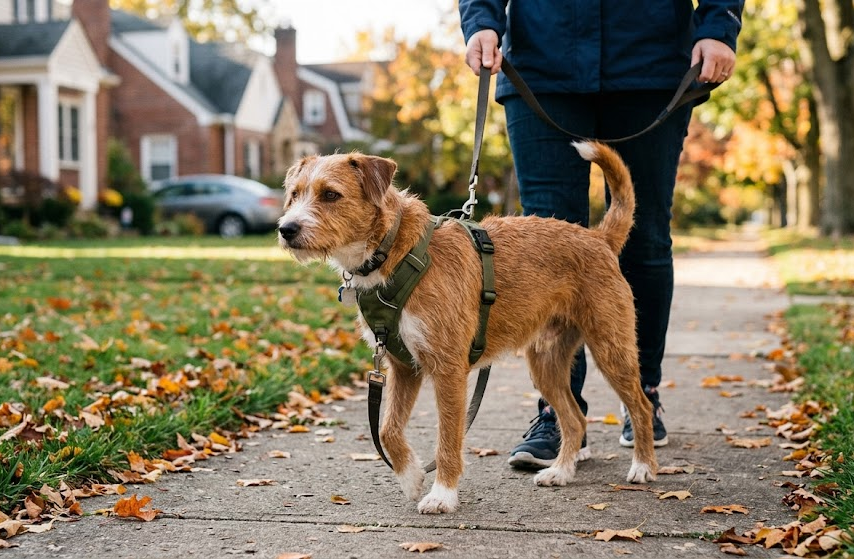
A front-clip harness places the leash attachment on the dog’s chest. When the dog pulls forward, the harness gently turns the dog back toward the handler instead of allowing full body weight to drive straight ahead.
That change in direction is why a front-clip harness is often called a no pull dog harness style. It does not magically train a dog on its own, but it makes pulling less rewarding and gives the handler better walking control.
Main Advantages of a Front-Clip Harness
- Helps reduce straight-line pulling
- Gives you more steering power around distractions
- Useful for loose-leash training
- Can help smaller handlers manage stronger dogs more safely
Main Drawbacks of a Front-Clip Harness
- Some dogs dislike the chest pressure at first
- Poor fit can rub around the shoulders or underarms
- It may twist to one side on certain body shapes
- It is a management tool, not a full training replacement
How Back-Clip Harnesses Work
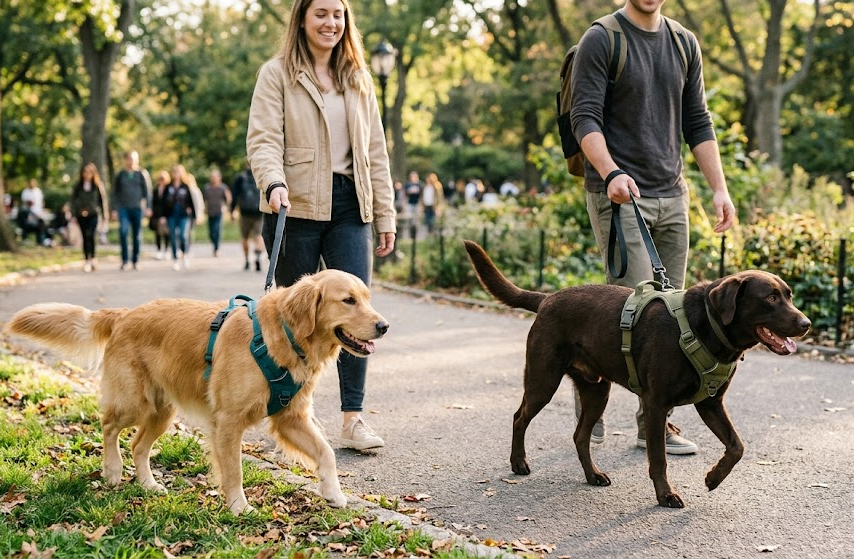
A back-clip harness places the leash attachment on the dog’s back. This setup feels simple, balanced, and easy to put on, which is one reason many owners start with it.
The tradeoff is control. When a dog pulls from a back attachment, the setup can let the dog lean into the leash more efficiently. For some dogs, that makes pulling feel easier instead of discouraging it.
Main Advantages of a Back-Clip Harness
- Comfortable for many calm walkers
- Easy to use for everyday walks
- Often a good option for small dogs that do not pull much
- Less gear frustration for dogs already walking politely
Main Drawbacks of a Back-Clip Harness
- Gives less steering help than a front-clip harness
- Can reinforce pulling in enthusiastic dogs
- Not usually the best harness for dogs that pull hard
- May leave handlers feeling like they have less leverage
Front-Clip vs Back-Clip Dog Harness: Best for Pullers, Puppies, and Calm Walkers
Best for Dogs That Pull
A front-clip harness is usually better for dogs that pull because it improves walking control and makes lunging less efficient. If your dog drags you toward squirrels, dogs, people, or smells, the chest attachment gives you a better chance to redirect before the walk turns into a tug-of-war.
Best for Puppies in Early Training
For puppies, the answer depends on energy and skill level. A front-clip harness can help manage pulling while you teach leash manners, but only if the harness fits correctly and the puppy is introduced to it gradually. If the puppy is very small, calm, or still adjusting to gear, a soft back-clip harness may feel easier at first.
Best for Calm Walkers
A back-clip harness is often enough for calm adult dogs that already walk nicely on leash. If control is not the main issue, comfort and simplicity may matter more than extra steering.
Best for Reactive or Highly Distracted Dogs
If your dog is reactive, overstimulated, or unpredictable on walks, a front-clip harness usually gives better handling support. It will not solve reactivity by itself, but it can reduce the amount of force you need to manage sudden movement.
When a Dual-Clip Harness Makes More Sense
A dual-clip harness gives you both a chest clip and a back clip. For many owners, this is the most flexible option because your dog may need different levels of control in different phases.
A dual-clip harness makes more sense when:
- your dog is improving but still pulls sometimes
- you want a front clip for training walks and a back clip for easy neighborhood walks
- more than one family member walks the dog
- your dog behaves differently in quiet areas versus busy places
That flexibility is often the best compromise between management and comfort.
Scenario Matrix: Which Harness Style Fits Your Walks?
| Scenario | Better Choice | Why |
|---|---|---|
| Strong puller on daily walks | Front-clip harness | Adds redirection and reduces straight-line pulling |
| Calm senior dog | Back-clip harness | Comfort matters more than extra steering |
| Puppy learning leash manners | Front-clip or dual-clip harness | Helps training, but fit and gradual introduction matter |
| Nervous dog in crowded areas | Front-clip harness | Gives more directional control |
| Dog who walks well in quiet areas but pulls in busy spaces | Dual-clip harness | Lets you switch by situation |
| Short routine potty walks with a polite dog | Back-clip harness | Simple and comfortable |
Common Fit and Handling Mistakes
Even the best dog walking control harness will fail if the fit is wrong or the leash handling is poor.
Common mistakes include:
- choosing a harness that sits too low on the shoulders
- leaving too much slack so the harness rotates or rubs
- expecting the harness alone to stop pulling
- clipping to the back on a dog that is still dragging the handler forward
- using a front-clip harness without any leash training or reward timing
A good harness should feel secure without restricting shoulder movement or causing chafing. After fitting it, test it indoors first and watch how your dog moves, turns, and sits.
Pros and Cons at a Glance
Front-Clip Harness Pros
- Better for control
- Better for dogs that pull
- Better for loose-leash training support
Front-Clip Harness Cons
- Can twist on some dogs
- Can rub if poorly fitted
- Not as simple for some owners
Back-Clip Harness Pros
- Comfortable and simple
- Great for calm walkers
- Easy everyday option
Back-Clip Harness Cons
- Less effective for pulling
- Offers less steering help
- Can make hard pullers feel stronger
Simple Buying Checklist
Before you choose, ask:
- Does my dog pull hard enough that control is the main problem?If yes, start with a front-clip harness.
- Is my dog already calm on leash?If yes, a back-clip harness may be enough.
- Do I want one harness that can adapt over time?If yes, a dual-clip harness is often the smartest buy.
- Does the harness fit without rubbing the shoulders or underarms?If no, do not buy based on clip style alone.
- Will I still train leash manners consistently?If no, do not expect gear alone to fix the problem.
FAQ
Is a front-clip harness better for dogs that pull?
Usually yes. A front-clip harness is better for dogs that pull because it gives more redirection and makes forward pulling less efficient.
Are back-clip harnesses bad for training?
No. Back-clip harnesses are not bad for training, but they are usually less helpful when pulling is the main issue. They work better after leash manners are more established.
When should I choose a dual-clip harness?
Choose a dual-clip harness when your dog needs both training support and comfortable everyday walking options, or when behavior changes depending on the environment.
Can a harness clip position change pulling behavior?
Yes, to a degree. The clip position changes how your dog’s force is directed, which can make pulling easier or less rewarding. It helps management, but training still matters.
Summary Takeaway
For most dogs that pull, a front-clip harness is the better choice for control. For calm walkers, a back-clip harness is often more than enough, and for dogs in transition, a dual-clip harness gives the most flexibility.


Leave a Reply