

Puzzle Toys for Dogs: How to Choose the Right Challenge Level
Picking the right puzzle toy is less about buying the most “advanced” option and more about matching the challenge to the dog in front of you. The best puzzle toys for dogs create focused problem-solving, steady engagement, and a satisfying payoff without tipping into confusion or frustration.
That balance matters because a beginner puppy, a clever adult herding dog, and a senior dog with slower movement can all need very different types of enrichment. A toy that is too easy becomes background noise. A toy that is too hard often turns into pawing, barking, chewing the edges, or walking away.
This guide explains how challenge level works in dog puzzle toys, what beginner, intermediate, and advanced options usually look like, and how to tell whether a puzzle is helping your dog think or just annoying them.
What Challenge Level Means in Dog Puzzle Toys
When people talk about challenge level, they usually mean how many steps a dog must complete before getting the reward and how much trial-and-error the toy requires.
A lower-level puzzle usually asks for one obvious action:
- nudge a flap
- lift a loose cover
- roll a treat ball
- sniff out food hidden in fleece or folds
A higher-level puzzle usually adds more layers, such as:
- multiple compartments
- moving sliders that must be opened in a sequence
- pieces that require paw control and nose work together
- false choices that slow the dog down before the reward appears
The right level is the one that keeps your dog engaged for several minutes while still allowing regular success. That is why dog puzzle toys for boredom work best when they feel winnable rather than random.
Beginner Dog Puzzle Toys: Best for First-Time Problem Solvers
Beginner dog puzzle toys should teach the game, not test patience. Dogs new to puzzle toys need quick wins so they understand that sniffing, nudging, pawing, and persistence lead to food.
What beginner-level puzzles usually look like
Most beginner puzzles have:
- visible treats or scent leaking from obvious openings
- one-step actions such as flipping or sliding a single cover
- soft foraging mats or simple treat-dispensing balls
- low resistance and easy movement
These are ideal for puppies, rescue dogs new to enrichment, and adult dogs that have never used mental stimulation toys for dogs before.
Good beginner fits
Beginner-level puzzles usually work best for:
- dogs that get excited fast and give up fast
- food-motivated dogs with little puzzle experience
- dogs recovering from crate rest or rainy-day boredom
- owners who want a low-frustration starting point
A good beginner session should look calm and curious. The dog sniffs, experiments, succeeds, and stays interested without escalating into frantic chewing.
Intermediate Puzzle Toys: Best for Dogs Ready for Multi-Step Challenges
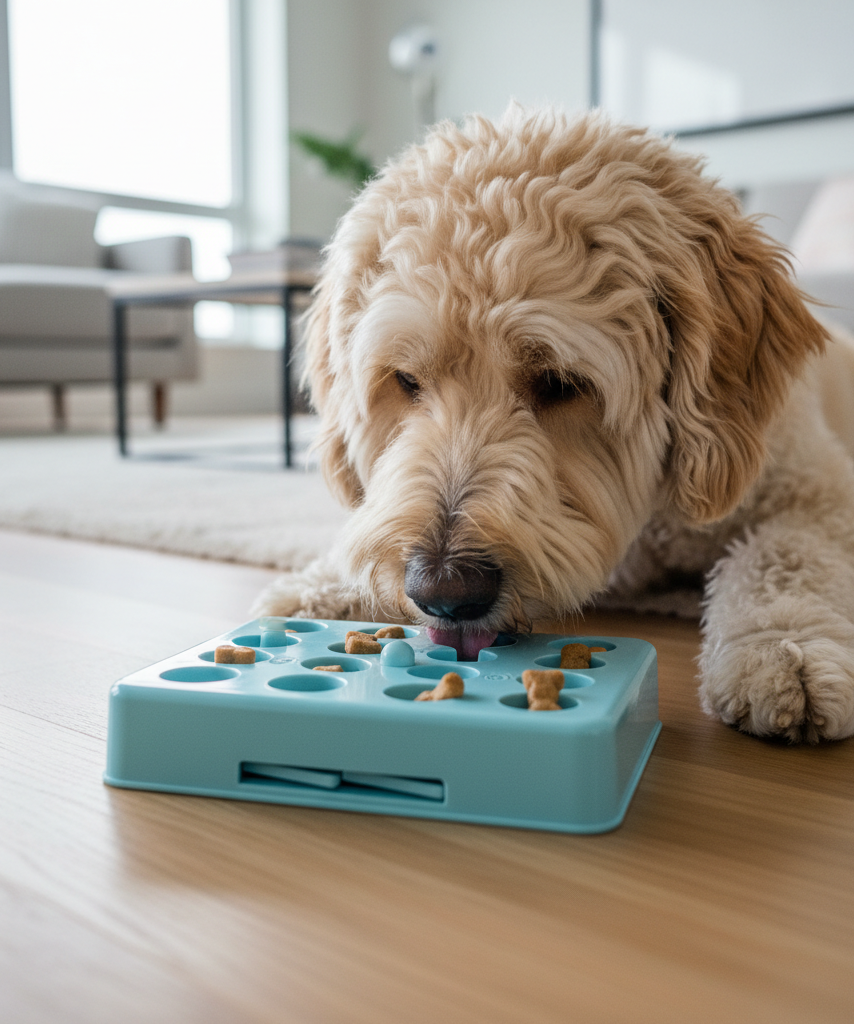
Intermediate puzzles sit in the sweet spot for many adult dogs. They ask for more persistence than a simple treat ball, but they do not require expert-level strategy.
Common intermediate puzzle formats
These usually include:
- sliding covers over hidden treats
- rotating layers with multiple scent points
- compartments that require two or three repeated actions
- combinations of flipping, nudging, and light paw work
This level is often where puzzle toys for dogs become genuinely useful for mental fatigue. The dog has to slow down, think, and repeat actions with purpose.
Signs your dog is ready for intermediate puzzles
Move up from beginner toys when your dog:
- solves simple puzzles in under a minute or two
- stops working because the toy feels too predictable
- uses nose and paws with confidence instead of random scratching
- stays engaged without becoming frantic
If your dog is blowing through easy food puzzles, this is usually the point where better interactive dog toys for boredom start making a noticeable difference.
Advanced Dog Puzzle Toys: Best for Experienced Problem Solvers
Advanced dog puzzle toys are for dogs that already understand how puzzle play works. These toys can be excellent for high-drive, food-motivated dogs, but they are also the easiest category to misuse.
What makes a puzzle advanced
Advanced puzzles often include:
- layered actions in a specific order
- tighter sliders or moving pieces that require control
- multiple dead-end compartments
- more time between effort and reward
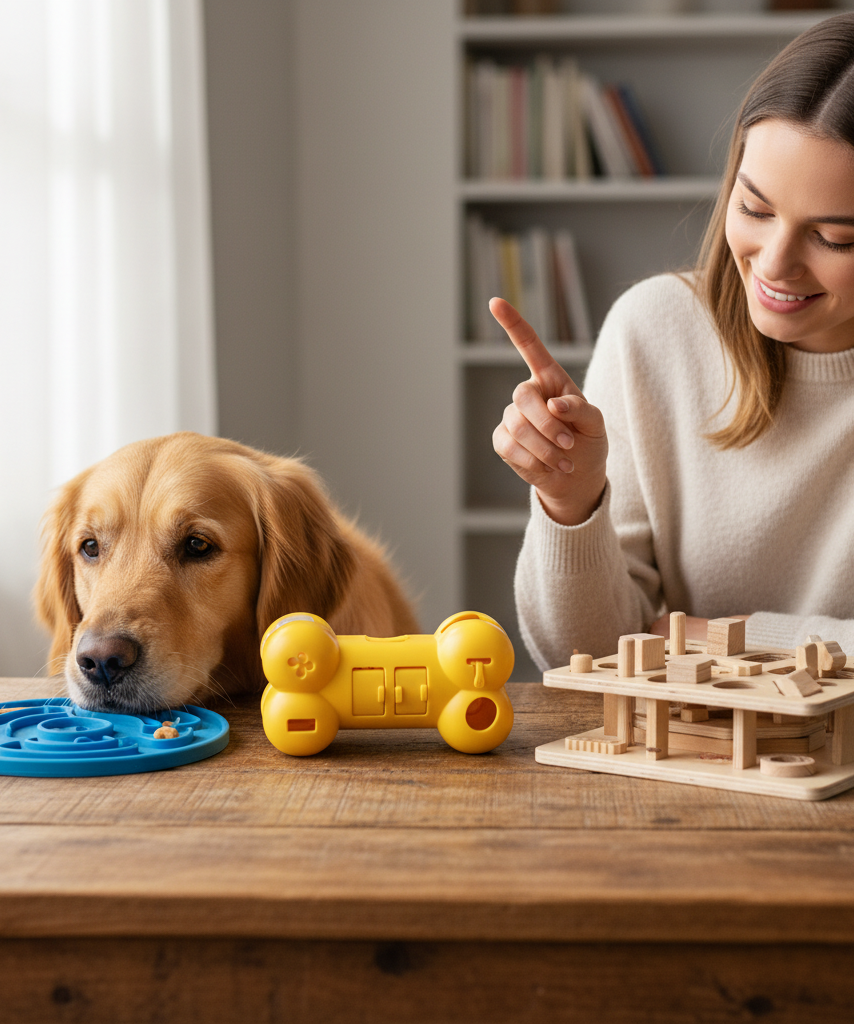
For dogs that already love problem-solving, a more structured option like this wooden dog puzzle toy for mentally stimulating enrichment fits the kind of advanced enrichment that works best after a dog has already mastered easier puzzles. The point is not that every smart dog needs a harder toy immediately, but that challenge should rise only when the dog is consistently successful at the current level.
Who should skip advanced puzzles at first
Do not start here just because your dog is energetic or a “smart breed.” Advanced puzzles are a poor first choice for:
- puppies with no puzzle history
- dogs that get frustrated quickly
- heavy chewers that attack toys when confused
- timid dogs that disengage after one failed attempt
Smart dogs still need a learning curve. Skipping that usually creates stress instead of enrichment.
How to Tell When a Puzzle Is Too Easy
An easy puzzle is not automatically bad. Easy toys are useful for warm-ups, confidence building, and low-energy days. But if the challenge stays too low forever, the toy stops doing much.
Signs the puzzle is below your dog’s ability level
Your dog may need a harder puzzle when they:
- solve it immediately every time
- stop using nose work and simply shove everything at once
- lose interest after the novelty wears off
- finish the toy with no visible concentration or persistence
When that happens, increase difficulty gradually rather than jumping straight to the hardest option on the shelf.
How to Tell When a Puzzle Is Too Hard
The bigger risk for most households is not buying too easy. It is buying too hard.
Frustration signals to watch for
A puzzle may be too hard if your dog:
- barks at the toy instead of working through it
- starts biting corners, lids, or moving parts aggressively
- paws wildly without using nose work
- quits after repeated failed attempts
- shows stress signals such as lip licking, whining, or walking away and returning repeatedly
A challenge should create effort, not helplessness. If frustration shows up early, go back one level or make the current toy easier by leaving some compartments partly open.
Breed, Age, and Temperament Matter More Than Hype
There is no universal “best” challenge level because dogs approach puzzles differently.
Breed tendencies can influence style
Some breeds or breed mixes naturally stay engaged with scent work, object manipulation, or repetitive food tasks longer than others. Herding and sporting dogs often enjoy sustained problem-solving, while some toy breeds or lower-drive dogs may prefer easier, shorter sessions.
But breed is only a clue, not a rule. Individual personality matters more.
Age changes puzzle tolerance
Puppies often need simpler toys with faster rewards and more supervision. Adult dogs can usually handle more complexity. Senior dogs may still love enrichment, but they often do better with lower-impact designs that are easier to move and clean.
Temperament decides frustration tolerance
This is often the deciding factor. A bold dog may happily keep experimenting. A sensitive dog may decide the toy is unfair after a few failed tries. If your dog tends to shut down or overreact, choose easier beginner dog puzzle toys and build confidence first.
Cleaning, Durability, and Safety Considerations
Challenge level is not the only buying filter. The best dog enrichment toys still need to be practical in real life.
Cleaning matters more than owners expect
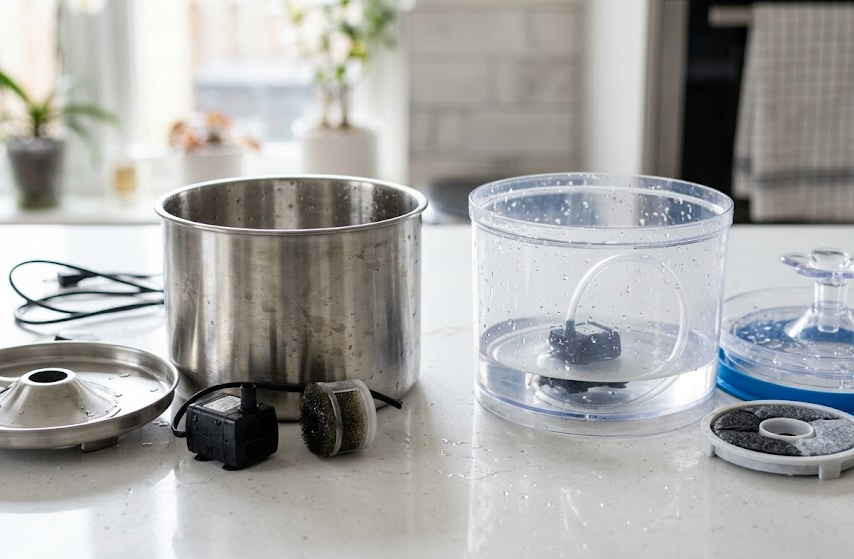
Food puzzles get gross quickly if residue builds up in corners, sliders, or fabric folds. Before buying, check whether the toy:
- comes apart easily
- has hard-to-reach crevices
- can be washed without trapping moisture
- uses materials that hold odor over time
Simple toys often get used more because owners are willing to clean them.
Match durability to play style
Some dogs solve puzzles carefully. Others body-slam them. If your dog becomes rough during food games, look for sturdier materials and avoid thin moving parts that can crack under repeated pressure.
Supervise new puzzles first
Even the best interactive dog toys for boredom should be supervised the first few sessions. You want to see whether your dog solves the toy thoughtfully, gets stuck, or tries to destroy it.
A Simple Way to Choose the Right Puzzle Level
If you want a quick buying rule, use this progression:
- start with a toy your dog can solve with help
- repeat until the dog understands how puzzle rewards work
- move to a multi-step toy only after easy puzzles become routine
- reduce difficulty again if frustration rises
- rotate toy types so challenge comes from variety, not constant escalation
A smart enrichment plan does not chase the hardest toy. It builds skill gradually.
Final Verdict
The best puzzle toys for dogs are the ones that match your dog’s current experience, confidence, and frustration tolerance. Beginner puzzles build understanding. Intermediate puzzles often deliver the best balance of effort and success. Advanced dog puzzle toys only shine when the dog has the skills to enjoy them.
If you are choosing between levels, go slightly easier rather than slightly harder. Success keeps dogs engaged. Frustration makes them quit. And when you match the challenge level well, dog puzzle toys for boredom become more than a novelty purchase—they become a reliable part of your dog’s enrichment routine.
Leave a Reply