

Dog Pulling on Leash? 7 Fixes That Actually Work
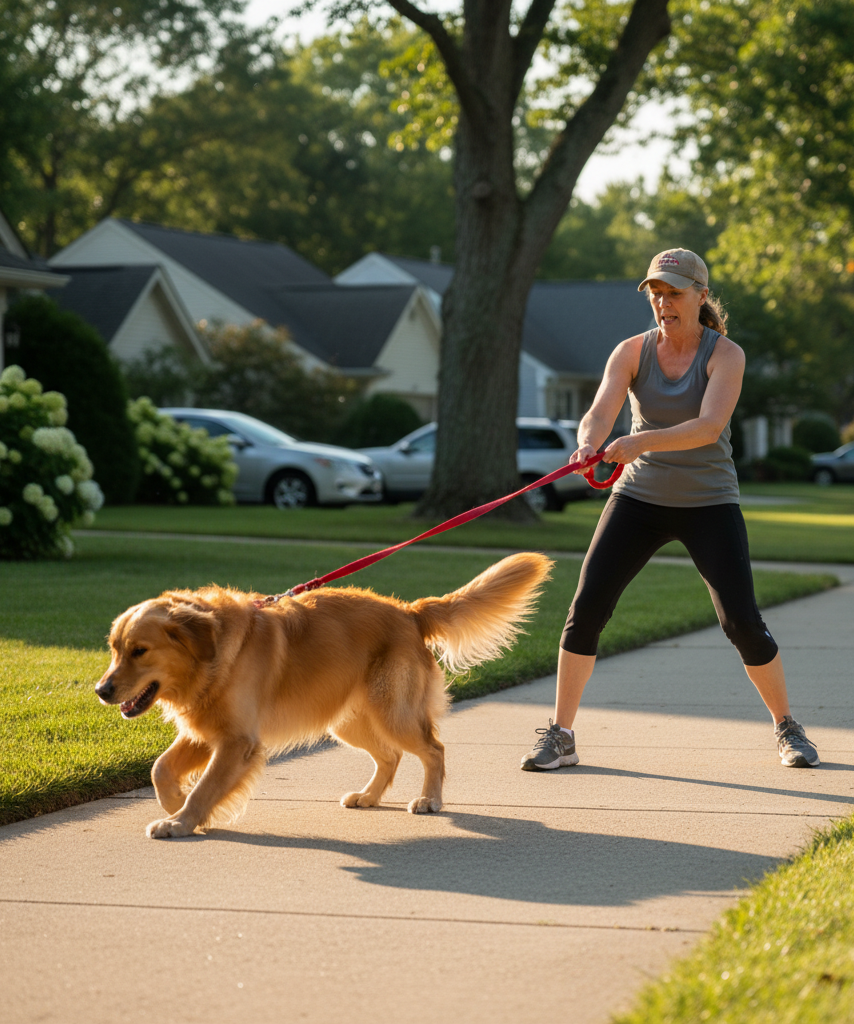
Walking your dog should feel relaxing, not like getting dragged down the street. If your dog pulls on the leash every time you head outside, you’re not alone. Leash pulling is one of the most common problems dog owners deal with, and the good news is that it can be improved with the right training approach.
The key is understanding that pulling usually works for dogs. When they lean forward, they get closer to smells, people, other dogs, and exciting places. If pulling helps them move faster, they’ll keep doing it. To change the behavior, you need to teach your dog that a loose leash is what gets them where they want to go.
Here are seven fixes that actually work.
1. Stop Walking the Moment Your Dog Pulls
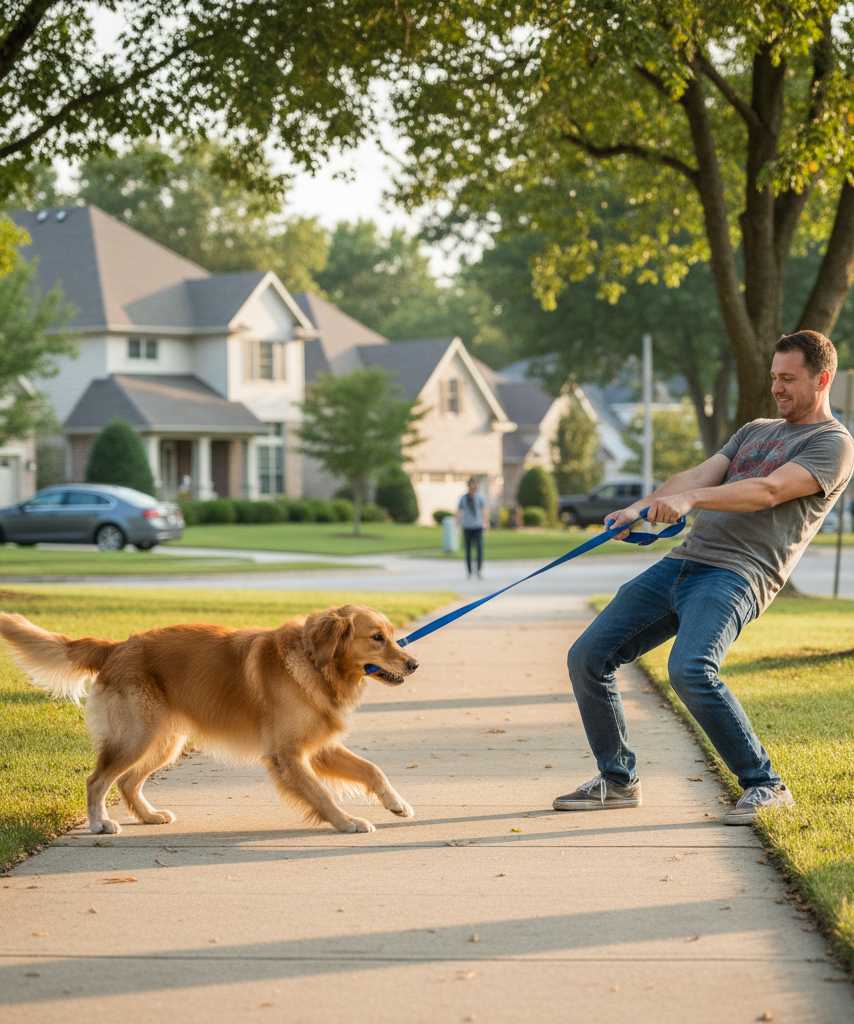
One of the simplest and most effective methods is to become completely still the second the leash goes tight. Do not keep moving forward. If you continue walking while your dog is pulling, you are accidentally rewarding the behavior.
Stand still and wait for your dog to release pressure on the leash. The moment the leash loosens, continue walking. Over time, your dog begins to understand that pulling makes the walk stop, while a loose leash makes the walk continue.
This method requires patience, especially in the beginning, but consistency matters more than speed. If you sometimes allow pulling and sometimes do not, your dog will stay confused.
2. Reward the Position You Want
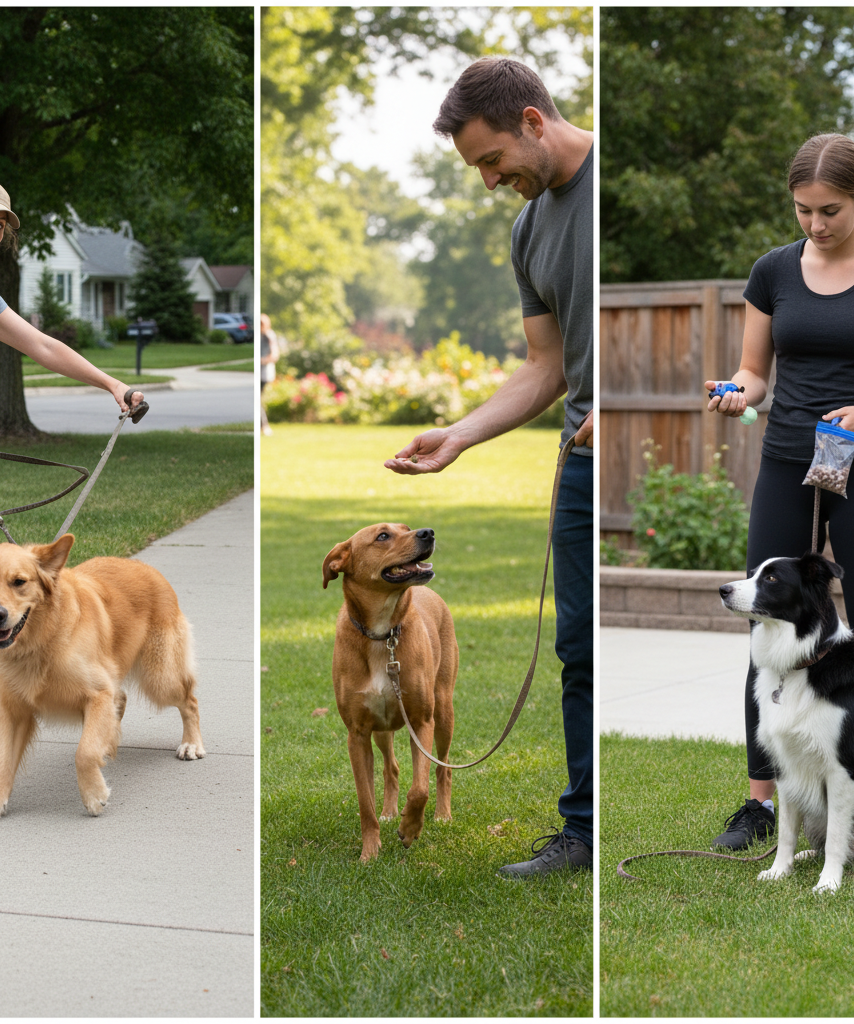
Dogs learn faster when you clearly reward the correct behavior. Bring small, high-value treats on your walk and reward your dog when they are walking beside you or checking in with you.
You do not have to wait for perfection. Start by rewarding even a few seconds of slack leash walking. As your dog improves, gradually expect a little more before rewarding.
You can also use praise, petting, or access to something your dog wants, but food tends to work fastest for leash training because it creates a strong, immediate connection.
3. Change Direction Before Pulling Becomes a Habit
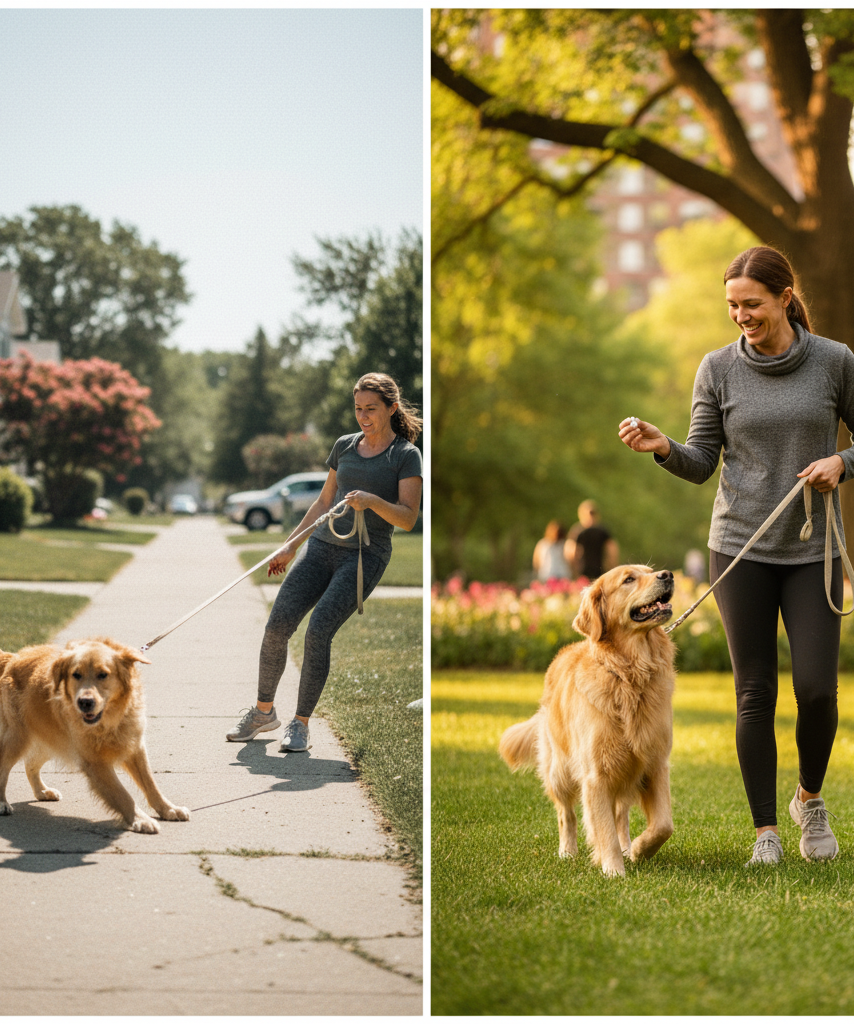
If your dog charges ahead in one direction, calmly turn and walk the other way. This teaches your dog they need to pay attention to you instead of assuming they can lead the walk.
Direction changes are especially helpful for energetic dogs that get overstimulated outside. Instead of turning the walk into a strength contest, you make it into a focus exercise. Your dog starts checking where you are going rather than forging ahead without thinking.
Keep your turns calm and predictable. You are not trying to yank your dog around. You are simply making yourself more relevant during the walk.
4. Use Better Gear
Training matters most, but the right equipment can make training easier and safer. For many dogs, a front-clip harness gives owners more control and reduces the dog’s ability to pull with full force. Unlike a standard back-clip harness, which can sometimes encourage pulling, a front-clip design helps redirect the dog back toward you.
Avoid equipment that causes fear or pain unless you are working directly with a qualified professional. Harsh tools may suppress behavior temporarily, but they do not always teach your dog what to do instead.
A comfortable harness, a standard leash, and reward-based training are enough for most dogs.
5. Practice in Low-Distraction Areas First
Many owners try to train loose leash walking in the most distracting environment possible. If your dog is surrounded by squirrels, people, cars, smells, and other dogs, they may be too excited to learn.
Start in a quieter place such as your driveway, hallway, backyard, or a calm section of the sidewalk. Once your dog succeeds there, slowly increase the difficulty. Training should build in layers.
If your dog can walk politely for ten steps in a quiet area, that is progress. Do not rush to expect perfect behavior in a busy park right away.
6. Make Sure Your Dog Gets Enough Exercise
Sometimes leash pulling is partly a training issue and partly an energy issue. A dog with pent-up energy is naturally more likely to surge forward on walks.
Make sure your dog has enough physical exercise and mental stimulation for their age, breed, and health condition. Short training games, puzzle toys, fetch sessions, sniffing activities, and structured play can all help.
This does not mean you should exhaust your dog before every walk, but a dog who has healthy outlets for energy is often easier to train and more able to focus.
7. Be Consistent Every Single Walk
The biggest reason leash training fails is inconsistency. If one family member allows pulling, another uses treats, and another lets the dog drag them to every tree, progress will be slow.
Everyone walking the dog should follow the same rules:
- Tight leash means stop
- Loose leash means move forward
- Good position gets rewarded
- Pulling never gets the dog where they want to go
Consistency turns random training moments into a clear system your dog can understand.
Common Mistakes That Make Pulling Worse
Some well-meaning habits can accidentally reinforce leash pulling:
- Walking faster to keep up with the dog
- Using a retractable leash during training
- Waiting too long to reward good behavior
- Training only when the dog is already overexcited
- Expecting instant results after just one or two walks
Leash manners improve through repetition. Small wins add up.
When to Get Extra Help
If your dog’s pulling is extreme, or if it is mixed with lunging, barking, fear, or reactivity, it may help to work with a certified dog trainer or behavior professional. Some dogs need a more customized plan, especially if the behavior is driven by anxiety or overstimulation rather than excitement alone.
There is no shame in getting help. Good training support can save time and reduce stress for both you and your dog.
Final Thoughts
If your dog pulls on the leash, the solution is not brute force. It is clarity, consistency, and practice. The most effective fixes teach your dog that staying connected to you is what makes the walk rewarding.
Start small, stay patient, and focus on rewarding the behavior you want to see more often. With time, even dogs that pull hard can learn to walk more calmly and politely.
A better walk is possible, and it usually starts with changing what happens the moment the leash gets tight.
Leave a Reply